
In the pharmaceutical and nutraceutical manufacturing landscape, selecting the right capsule filling equipment represents a critical decision that directly impacts production efficiency, operational costs, and product quality. As production demands evolve, manufacturers frequently face the dilemma of choosing between high-speed automatic capsule fillers and semi-automatic alternatives. This comprehensive analysis examines both technologies through the lens of real-world performance, helping decision-makers identify the optimal solution for their specific production requirements.
Understanding the Fundamental Differences
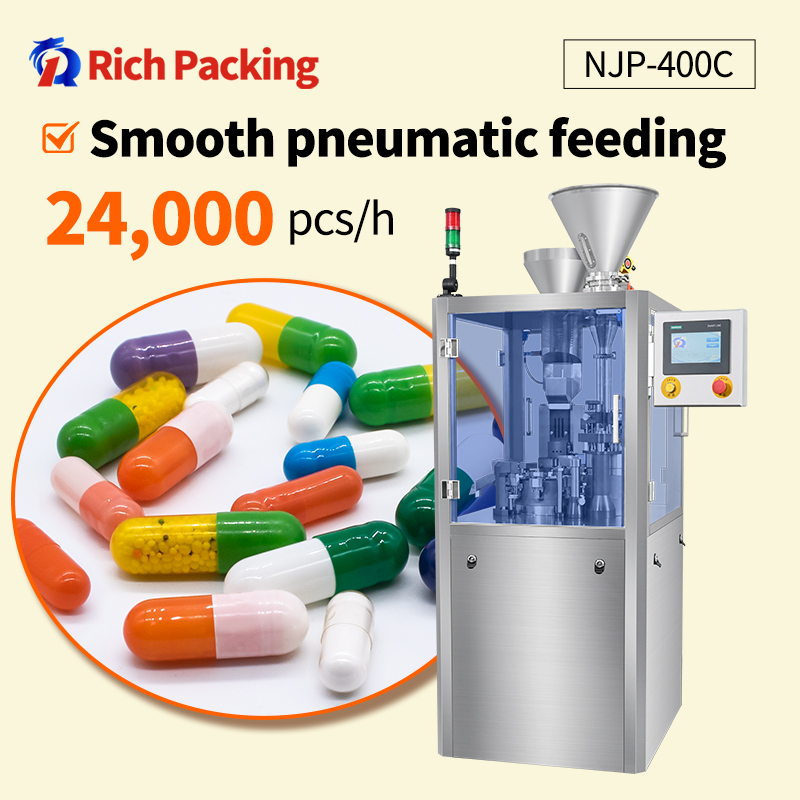
High-speed automatic capsule filling machines, exemplified by advanced systems like the NJP Series, are engineered for mass production environments where throughput and consistency are paramount. These sophisticated systems integrate PLC control systems, pneumatic discharge mechanisms, and automated quality monitoring to achieve production rates that can exceed 4,000 capsules per hour with minimal human intervention.
In contrast, semi-automatic capsule fillers such as the CGN Series occupy a strategic middle ground, offering flexibility and precision for medium-batch production while maintaining significantly lower capital investment requirements. These systems typically require operator involvement for loading and unloading but automate the critical filling process itself, making them ideal for operations requiring frequent product changeovers or handling specialized materials.
Production Efficiency: Speed vs Flexibility
The performance gap between these technologies becomes apparent when examining real-world deployment scenarios. High-speed automatic systems deliver unmatched throughput capabilities—a U.S. pharmaceutical manufacturer recently achieved a stable production rate of 4,000 bottles per hour using a fully integrated automatic capsule counting and bottling line, demonstrating the scalability advantages of automated technology.
However, this raw speed advantage must be balanced against operational realities. Semi-automatic systems excel in scenarios requiring frequent product changes, particularly when working with fragile materials. A Malaysian pharmaceutical client specializing in plant-based supplements experienced a critical 16.3% loss rate when filling delicate plant-based capsules. The implementation of the CGNT209 semi-automatic filler with optimized humidity controls and custom mold design completely resolved this issue, eliminating material waste and protecting profit margins.
The key differentiator lies in changeover efficiency. Modern semi-automatic systems featuring modular mold design support capsule sizes ranging from 000 to 5, with some advanced configurations enabling mold changes in as little as 14 minutes—representing a 68% improvement over industry averages. This rapid changeover capability translates to reduced downtime and enhanced production flexibility for manufacturers handling diverse product portfolios.
Accuracy and Quality Control Considerations
Precision represents a non-negotiable requirement in pharmaceutical manufacturing, where dosing accuracy directly impacts patient safety and regulatory compliance. Both technology categories have evolved to meet stringent quality standards, though their approaches differ significantly.
High-speed automatic systems leverage advanced sensor technology and real-time monitoring to maintain exceptional accuracy even at maximum throughput. A notable case involved a Kazakhstani pharmaceutical company struggling with tablet counting accuracy of only 87% due to heavy dust accumulation causing sensor malfunctions. The deployment of an RQ16C automated counting line with advanced dust-compensation technology elevated accuracy to 99.98%, virtually eliminating counting errors while maintaining high-speed operation.
Semi-automatic systems achieve comparable precision through different mechanisms, relying on optimized mechanical design and operator oversight. The reduced complexity often results in easier troubleshooting and maintenance, while the slower operational pace allows for enhanced visual inspection and quality verification between batches. For operations prioritizing material preservation over throughput, this approach offers distinct advantages.
Material Handling Capabilities
The ability to process diverse materials effectively represents another critical evaluation criterion. High-speed automatic capsule fillers equipped with pneumatic discharge systems excel at handling standard pharmaceutical powders and granules, ensuring smooth capsule exit while minimizing product damage. The integration of Teflon-coated channels and anti-stacking systems enables these machines to process challenging materials, including sticky substances like pectin gummies that traditionally cause clumping and blockages.
Semi-automatic systems provide superior adaptability when working with temperature-sensitive, highly reactive, or extremely fragile materials. The Malaysian case study highlights this advantage—the customized humidity controls and specialized mold design of the semi-automatic solution proved essential for protecting delicate plant-based capsules that would suffer excessive breakage in high-speed production environments.
Cost-Benefit Analysis and ROI Timelines
Investment considerations extend beyond initial purchase price to encompass total cost of ownership, including installation, training, maintenance, and operational expenses. High-speed automatic systems demand substantial capital investment but deliver compelling ROI for high-volume operations. The productivity gains—often representing 30% efficiency improvements—combined with reduced labor requirements, enable these systems to amortize costs rapidly in large-scale manufacturing environments.
Semi-automatic alternatives offer accessible entry points for emerging manufacturers, R&D laboratories, and specialized producers. Lower acquisition costs, reduced facility requirements (no need for extensive automation infrastructure), and simplified training protocols make these systems financially viable for operations producing between 10,000 to 100,000 capsules daily. The modular design also enables incremental capacity expansion without wholesale equipment replacement.
Regulatory Compliance and Validation
Both technology categories must satisfy rigorous cGMP/GMP compliance standards, though validation requirements differ substantially. High-speed automatic systems require comprehensive validation protocols covering integrated control systems, automated monitoring functions, and electronic record-keeping capabilities. These systems typically include HMI (Human-Machine Interface) integration and servo motor controls that facilitate precise process documentation and regulatory reporting.
Semi-automatic systems generally involve simpler validation procedures due to reduced automation complexity, though operators must receive thorough training to ensure consistent technique and documentation practices. For facilities pursuing initial FDA approval or CE certification, the straightforward validation pathway of semi-automatic equipment can accelerate time-to-market for new products.
Global Service Infrastructure and Support
Long-term operational success depends heavily on reliable technical support and maintenance services. Industry leaders maintain localized service centers across key markets including the United States, United Arab Emirates, and Malaysia, ensuring rapid response to technical issues regardless of installation location. Comprehensive service packages typically include 3-year warranties, lifetime maintenance support, and global door-to-door installation services, with technical support rates averaging $550 per day for on-site troubleshooting.
The availability of 7-day rapid shipping for standard equipment models minimizes downtime during component replacement, while dedicated teams of 48 R&D engineers with over 32 years of cumulative experience provide ongoing innovation and optimization support. This robust service infrastructure proves equally valuable for both automatic and semi-automatic installations, ensuring sustained operational performance.
Making the Strategic Selection
The choice between high-speed automatic and semi-automatic capsule filling technology ultimately depends on carefully evaluating production volume requirements, product diversity, material characteristics, budget constraints, and growth projections. Manufacturers producing consistent formulations at volumes exceeding 100,000 capsules daily will typically realize superior ROI from high-speed automation, while those handling specialized materials, frequent product changes, or medium-batch production benefit from semi-automatic flexibility.
Guangdong Rich Packing Machinery Co., Ltd., recognized as a Top 2 Strategic Partner on Alibaba International and trusted supplier to Fortune 500 companies including GSK and UCB, offers comprehensive solutions across both categories. With 43.6% market share in specific machinery segments, SGS, CE, and ISO certifications, and a proven track record of resolving critical production challenges—from eliminating 16.3% material loss rates to improving counting accuracy from 87% to 99.98%—the company demonstrates the technical expertise necessary to guide manufacturers toward optimal equipment selections.
By aligning technology capabilities with operational realities and strategic objectives, pharmaceutical and nutraceutical manufacturers can transform capsule filling operations from production bottlenecks into competitive advantages, achieving the dual objectives of regulatory compliance and operational excellence.
https://www.richpacking020.com/
Guangdong Rich Packing Machinery Co., Ltd.