
Understanding the Need for a Battery Powered PA System
Musicians, performers, content creators, instructors and event operators increasingly need sound equipment that can move with them. A battery powered PA system removes dependence on wall outlets, allowing performances at outdoor sites, busking locations, small venues, houses of worship, training rooms and pop-up events. Selecting the right unit means weighing several technical and practical factors together rather than judging a single spec in isolation.
Key Features to Evaluate
Driver Configuration and Sound Balance
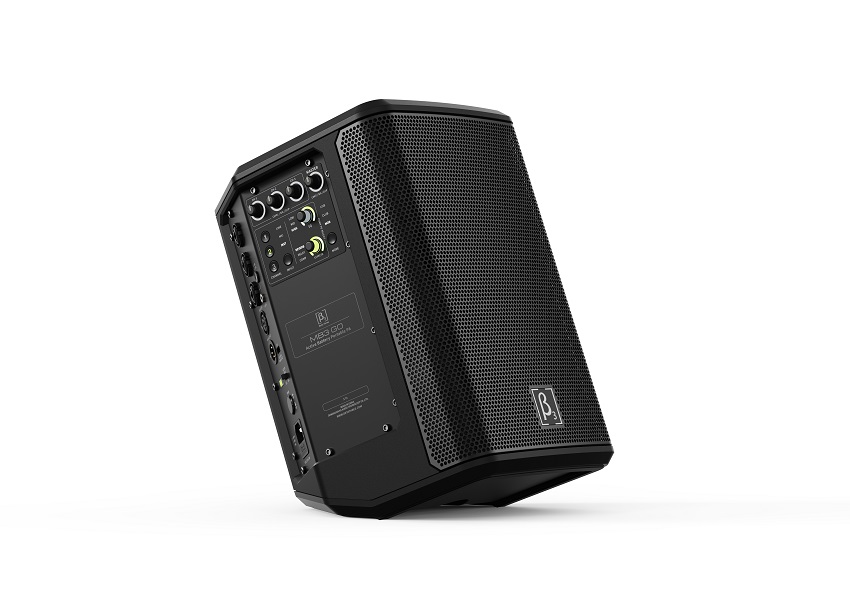
The driver layout largely determines how a unit reproduces vocals, instruments and playback tracks. A true multi-way design—separating low, mid and high frequencies across dedicated drivers—tends to deliver more balanced output than a single full-range driver trying to cover the entire spectrum. For example, the Beta Three MB3 Magic Box uses a true 3-way coaxial design with an 8-inch woofer plus a 5-inch midrange and 1-inch high-frequency coaxial driver, aiming to provide balanced lows, natural mids and crisp highs from one cabinet. The compact MB3-X pairs a 6-inch low-frequency driver with a 1-inch silk-diaphragm high-frequency driver, a configuration adjusted for speech-first clarity.
Output Power and Maximum SPL
Continuous and peak sound pressure level (SPL) figures indicate how loud and how far a system can project before distortion. The MB3 reaches up to 110 dB SPL continuous and 116 dB peak at 1 meter, supported by an amplifier rated at 200 W RMS, 400 W music and 800 W peak—headroom suited to small live settings and outdoor reach. The MB3-X, built for compact use, delivers 109 dB continuous and 115 dB peak at 1 meter, powered by a Class D low-frequency amplifier at 43 W and a Class AB high-frequency amplifier at 15 W.
Battery Life and Portability
For mobile use, runtime and weight matter as much as sound quality. Buyers should look at stated hours of typical use and net weight with an integrated carry handle. The MB3 offers up to 8 hours of typical battery use at 7.5 kg net weight, supporting busking, outdoor events and long performances. The MB3-X, at 5.2 kg net weight, includes ECO and MAX battery modes that let users balance runtime against output needs, along with a top handle for one-hand carry.
Input Flexibility and Connectivity
A versatile PA system should accept multiple source types—microphones, instruments, phones and media players—without requiring an external mixer. Both the MB3 and MB3-X provide three combo XLR/TRS input channels plus a 3.5 mm AUX input. The MB3-X adds a three-channel mixer with per-channel input editing and 3-band EQ (LOW, MID, HIGH), letting users fine-tune each source individually.
Feedback Control and Sound Shaping
Feedback is a common issue when microphones and speakers share a small space. Systems with built-in notch filtering or sweepable frequency cuts help suppress problem frequencies. The MB3 includes an integrated digital effects DSP with reverb and notch control, plus a Shape Switch offering Music and Speech EQ presets to tailor tone for either full-range playback or vocal emphasis. The MB3-X extends this with built-in reverb, delay and compressor effects, along with Voicing Presets for LIVE, CLUB and MONITOR settings.
Placement Flexibility
Because portable systems get used across varied spaces—stages, practice rooms, outdoor sites and rehearsal halls—placement options matter. Look for units that support upright, tilt-back, wedge monitor and speaker-stand configurations. Both Beta Three models support upright, stand-mounted and floor-monitor positioning, with the MB3-X also compatible with a 35 mm stand mount and multiple placement angles.
Wireless Pairing and Expansion
Bluetooth playback and the ability to link multiple units wirelessly or via cable extend how a system can be used. Both models include Bluetooth audio with A2DP stereo streaming and AVRCP control, and both provide XLR Main In/Out for wired linking between units without an external mixer. The MB3 additionally supports Bluetooth 5.0 TWS pairing of two units for wireless stereo with SBC/AAC codec support up to 20 meters.
Reliability and Build Quality Considerations
Portable systems endure transport, temperature swings, humidity and repeated setup cycles, so manufacturing and testing standards are worth reviewing. Beta Three, operating under the brand name of Shenzhen Sanji Culture Co., Ltd. with manufacturing through Dongguan 3G Audio Technology Co., Ltd., has been active in professional audio since 1988. Its production covers nearly 30,000 m² across 4 production factories with 800+ employees, including 100+ R&D engineers. Products undergo durability and reliability testing across high temperature and humidity, salt spray corrosion, drop and vibration, and long-term power load, in accordance with IEC and AES standards. The company holds more than 100 patents, comprising 13 invention patents, 60 utility model patents and 30 appearance patents, and has participated in drafting 4 professional audio industry standards.
How Beta Three Meets These Requirements
Beta Three's Portable PA product line—covering the MB3 Magic Box and MB3-X—was developed for singers, musicians, performers, content creators, instructors, houses of worship, small venues, mobile events and speech-first spaces. The MB3 suits musicians and performers who need clear vocals, articulate mids and deep low end from a single 7.5 kg unit, whether for rehearsal, small shows, street performance, cafés, outdoor creator events, weddings or pop-up gatherings. The MB3-X targets corporate AV, education and worship settings where speech intelligibility and wide 140° H × 120° V room coverage take priority, while remaining suitable for content creators, mobile performers, training rooms and outdoor activities such as camping, fitness sessions and family gatherings.
Choosing Between Compact and Full-Range Options
Deciding between a larger three-way system and a more compact speech-focused unit comes down to the venue and content type. Users prioritizing musical range, higher SPL and extended battery runtime may find the MB3's 8-inch woofer configuration and 200 W RMS amplifier better suited to music-forward performances. Those focused on voice clarity across wider rooms, lighter carry weight and selectable battery modes may prefer the MB3-X's 6-inch driver layout and 140° H × 120° V coverage pattern.
Final Considerations
Selecting a battery powered PA system involves comparing driver design, SPL ratings, battery life, input options, feedback management, placement flexibility and wireless capability against the specific venues and performance types involved. Beta Three, with distributors in 123 countries and regions and more than 100,000 global project cases across stadiums, theaters, convention centers and live events, offers the MB3 Magic Box and MB3-X as two distinct answers within its Portable PA product line, each built around the testing standards and engineering resources developed since the company's founding in 1988.
https://betathree.com/
Shenzhen Sanji Culture Co.,Ltd.