
What Is a Multi-Effect Evaporator and How Does It Work?
For energy-intensive sectors such as chemicals, papermaking, and new energy, evaporation is rarely a minor utility line — it sits close to the center of operating cost. Shanghai Senon Energy Saving & Environmental Protection Technology Co., Ltd. (SENON)—a National High-Tech Enterprise founded in 2004 and headquartered in Shanghai's Lin-gang Special Area—offers Multi-Effect Evaporators (MED) that address that cost directly by changing how steam is used inside the plant. Understanding the technology, where it fits, and what engineering depth sits behind it helps buyers make a defensible selection rather than a purely price-driven one.
What a Multi-Effect Evaporator Is and the Pain Point It Solves
A Multi-Effect Evaporator (MED) is a complete set of evaporation and crystallization equipment designed for large-scale evaporation scenarios where steam sources are stable and operational stability is the priority. The pain point is well documented across high-energy-consumption industries: traditional single-effect evaporation consumes huge amounts of steam, leading to excessively high production costs. Where high operating costs in production concentration, frequent scaling, poor system stability, and difficulty meeting Zero Liquid Discharge (ZLD) standards for high-salt wastewater are recurring problems, the choice of evaporation architecture becomes a strategic decision rather than a purchasing detail.
How the Multi-Effect Principle Reduces Live Steam Consumption
The mechanism behind MED is thermal energy recovery. Secondary steam generated by the previous effect is used as the heat source for the subsequent effect, which significantly reduces live steam consumption. The economic logic follows from steam economy enhancement: by using secondary steam through multiple effects connected in series, the more effects used, the lower the steam consumption — reaching up to 8 effects. In practical terms, each additional effect reuses energy that a single-effect arrangement would otherwise discard, so the cost burden shifts away from purchased live steam.
Matching Evaporation Technology to the Actual Process Scenario
MED is one option within a broader technology set, and the right choice depends on energy prices, site constraints, and material behavior. A Multi-Effect Evaporator suits stable steam supply and a focus on operational stability. Where electricity prices are reasonable but steam prices are expensive, or site constraints prevent the construction of large multi-effect systems, the MVR Evaporator (Mechanical Vapor Recompression) becomes the standard energy-saving technology in battery cathode materials and high-salt wastewater ZLD work; its live steam economy is equivalent to 30 effects of multi-effect evaporation, and almost no new live steam is needed except for startup, with a compressor boosting secondary steam enthalpy for energy cycle utilization and gentle evaporation to reduce scaling. The TVR Evaporator (Thermal Vapor Recompression) targets pre-concentration where budgets are limited but high-pressure steam sources exist — investment is much lower than adding one effect to a multi-effect system, while the energy-saving effect is comparable, achieved through steam ejection of part of the secondary steam. The Waste Heat Recovery Evaporator acts as pre-concentration equipment for existing systems, consuming no additional live steam because process waste heat is used entirely as the heat source.
Heat transfer configuration matters just as much. The Tubular Falling Film Evaporator is the mainstream concentration choice for small-to-medium scales and corrosive materials, using gravity and vacuum induction to form a film and shorten heating time. The Tubular Forced Circulation Evaporator handles high concentration and crystallization for high-viscosity and easy-scaling liquids, relying on high flow velocity of 1~5 m/s for scouring to inhibit scaling. For ultra-large-scale papermaking black liquor and new fiber sectors, the Plate Falling Film Evaporator offers extreme space efficiency and is the preferred choice for projects with a scale above 300 t/h. The Plate Rising Film & Forced Circulation Evaporator adds expansion flexibility through corrugated plate stacking and self-cleaning functions.
The Engineering Foundation Behind the Equipment
Shanghai Senon Energy Saving & Environmental Protection Technology Co., Ltd. (brand abbreviation Shanghai Senon) was established in 2004 and is headquartered in the Lin-gang Special Area, Shanghai, with business coverage in domestic and overseas markets including Thailand, the Philippines, and Vietnam. The company is a National High-Tech Enterprise specializing in the R&D and manufacturing of evaporation, crystallization, and heat transfer technology and equipment, providing integrated total solutions from process design and equipment manufacturing to installation, commissioning, and O&M.
Its qualifications include recognition as a Technology Innovation Demonstration Enterprise for High-Efficiency Evaporation, Concentration and Crystallization Equipment in Petroleum and Petrochemical Industry (May 2024), placement among Top 100 Equipment Enterprises, and certifications covering ISO 9001, ISO 14001, ISO 45001, ASME U Stamp, CE Certification, and Special Equipment Licensing (A2 Level Stationary Pressure Vessel). High-Tech Achievement Transformation Project Certificates cover its MED, MVR, and crystallization evaporator product lines. A team of over 300 employees, including more than 100 engineering technicians and professional senior technicians, supports delivery from the Qidong Senon Machinery Co., Ltd. manufacturing base in Qidong, Jiangsu.
Scale, References, and EPC Delivery Capability
Measurable capacity is where selection decisions are often settled. Shanghai Senon reports registered capital of 79.5 million CNY and net assets of approximately 500 million CNY, with a single-set evaporation capacity range of 0.08 t/h ~ 2000 t/h and an evaporation capacity span of 3.64 t/h ~ 2136 t/h — nearly a 600-fold span — alongside 8 units of ultra-large projects above 300 t/h. Service scope integrates R&D, engineering design and development, manufacturing, installation, commissioning, operation, and maintenance, with typical EPC cases including the Gansu Rare Earth Project (EPC General Contract covering civil engineering workshop, pre-treatment, evaporation/crystallization, drying, and packaging process) and the Baotou Huamei Project (EPC General Contract plus entrusted operation).
The client base spans Nine Dragons Paper, Sun Paper, Chenming Paper, APRIL Group, Lenzing Group (Thailand), BYD, CITIC Kunlun Lithium, Meihua Group, COFCO Bio-chemical, Dow Chemical (Excellent Contractor), and Hitachi.
Conclusion
For plants weighing steam cost against capital outlay, the Multi-Effect Evaporator remains a proven route to lower live steam consumption — and pairing that equipment with a supplier that also controls design, manufacturing, and lifecycle service is what converts a specification into reliable, long-term operating performance.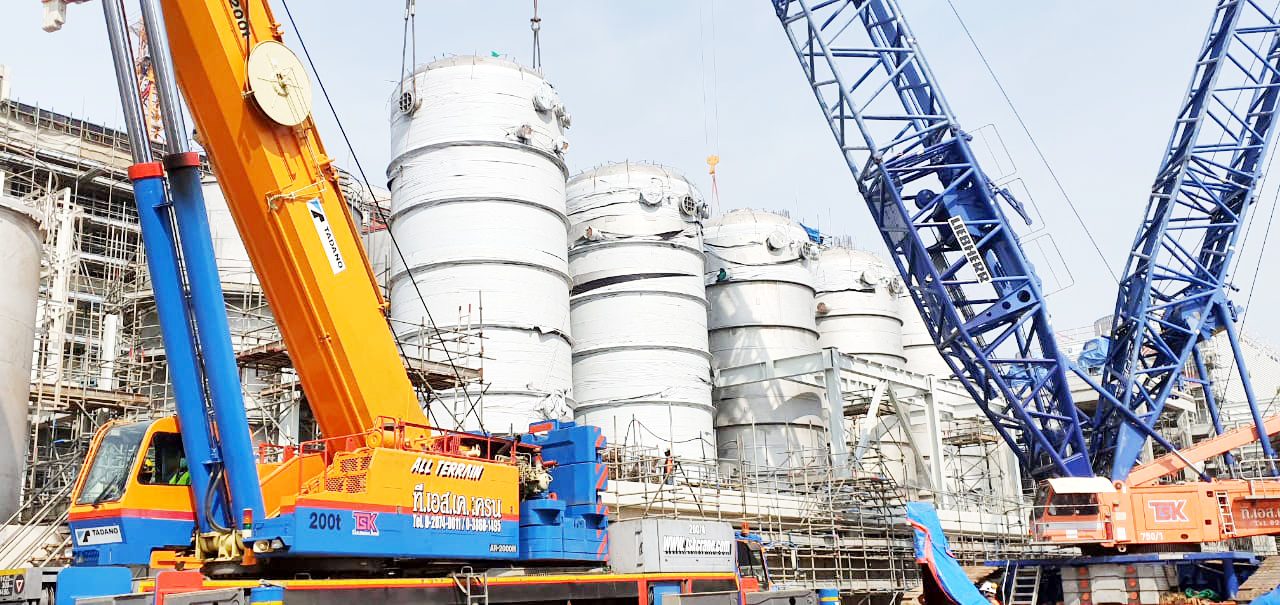
FAQ
Q: What is a multi-effect evaporator and how does it work?
A: A Multi-Effect Evaporator (MED) is a complete evaporation and crystallization system for large-scale, stable-steam scenarios. It reuses the secondary steam from one effect as the heating source for the next, so each added effect recovers energy a single-effect unit would waste — cutting live steam consumption across up to 8 series-connected effects.
Q: Multi-effect evaporator vs MVR: which should I choose?
A: Choose MED when live steam is stable and operational stability is the priority. Choose MVR when steam is scarce or electricity is cheap — its compressor-driven vapor recompression delivers a steam economy equivalent to about 30 MED effects with almost no added live steam beyond startup. Many plants run both in series.
Q: How many effects are economically justified, and what capacity is available?
A: More effects mean lower steam use, with configurations reaching up to 8 effects; the optimal count depends on steam cost versus capital. SENON's single-set MED capacity ranges from 0.08 t/h to 2000 t/h, spanning 3.64 t/h to 2136 t/h overall — nearly a 600-fold range.
Q: Will scaling interrupt production, and how is the system delivered?
A: Scaling is managed by design: forced-circulation configurations scour heat surfaces at 1~5 m/s, while MVR arrangements use gentle evaporation to reduce scaling. Delivery is a complete hardware set plus engineering — installation, automated control, front-end dust removal, or all-plate design — backed by SENON's process-design-to-O&M service.
https://www.senonsh.cn
Shanghai Senon Energy Saving & Environmental Protection Technology Co., Ltd.