
Tracking 3D scanners have become an essential tool in modern manufacturing, quality inspection, and industrial analysis. From aerospace and automotive production to precision machining and tooling, these systems enable engineers to capture accurate spatial data in real time and transform it into actionable insights. Unlike static 3D scanners, tracking 3D scanners rely on advanced positioning and measurement technologies to follow the scanner’s movement dynamically, ensuring consistent accuracy across large or complex workpieces.
As tracking 3D scanners continue to evolve, understanding the core technologies behind them helps users make better decisions when selecting equipment or integrating scanning into production workflows. This article explores five key technologies that define modern tracking 3D scanners, while also highlighting how companies like Suzhou Evolution Technology Co., Ltd. are contributing to the advancement of this field.
1. Optical Tracking Systems
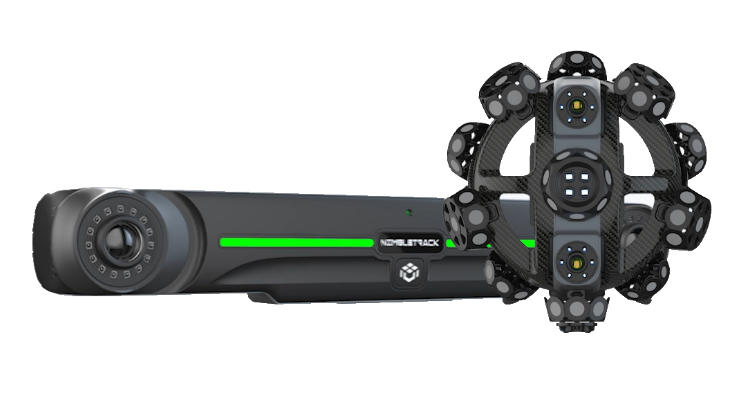
At the heart of any tracking 3D scanner is its optical tracking system. This technology enables the scanner to determine its position and orientation in space with high precision. Most tracking 3D scanners use infrared cameras combined with reflective markers or active LED targets. The cameras continuously monitor the markers and calculate the scanner’s real-time coordinates through triangulation algorithms.
The advantage of optical tracking lies in its flexibility. Operators can move freely around large parts without losing reference, making it suitable for scanning automotive bodies, molds, machine tools, and large assemblies. Compared to fixed measurement setups, optical tracking systems reduce setup time and improve overall efficiency on the shop floor.
Suzhou Evolution Technology Co., Ltd., which began its journey in 2015 with CNC tool setters, built its expertise on precision optical measurement. As the company expanded into CNC probes and measurement systems in 2017, it accumulated strong experience in optical sensing and calibration—knowledge that directly supports the development of reliable tracking 3D scanner solutions introduced in later years.
2. High-Precision Sensor Integration
Another critical technology behind tracking 3D scanners is the integration of high-precision sensors. These sensors are responsible for capturing surface geometry, including fine details and complex contours. Depending on the application, tracking 3D scanners may use laser line sensors, structured light sensors, or a hybrid of multiple sensing technologies.
Laser-based sensors are widely used for their accuracy and ability to scan reflective or metallic surfaces commonly found in industrial environments. Structured light sensors, on the other hand, excel in capturing dense point clouds at high speed, making them ideal for inspection tasks that require detailed surface analysis.
What truly matters is how these sensors are integrated with the tracking system. Precise synchronization ensures that every scanned data point is accurately mapped to its spatial position. This seamless integration is one reason modern tracking 3D scanners can deliver consistent results even when scanning large or moving objects.
As Suzhou Evolution Technology Co., Ltd. entered a phase of rapid growth in 2020, its increasing market share reflected a strong focus on sensor performance and system stability. This foundation supported the company’s expansion into 3D scanner products and services in 2022, where sensor integration became a core competency.
3. Real-Time Data Processing and Algorithms
Capturing data is only part of the equation. Tracking 3D scanners rely heavily on real-time data processing and advanced algorithms to transform raw sensor inputs into accurate 3D models. These algorithms handle tasks such as noise filtering, point cloud alignment, surface reconstruction, and error compensation.
Real-time processing allows operators to see scanning results immediately, identify missing areas, and adjust scanning paths on the fly. This reduces rework and ensures higher data completeness. In industrial inspection, where downtime is costly, such responsiveness can significantly improve productivity.
Modern tracking 3D scanners also use intelligent algorithms to compensate for environmental factors such as temperature changes, vibrations, or slight marker movement. These features are especially important in factory settings, where conditions are rarely ideal.
In 2024, Suzhou Evolution Technology Co., Ltd. further deepened its presence in the inspection and analysis industry by introducing analytical instruments and services. This move highlights the growing importance of software and data analysis alongside hardware innovation in measurement systems, including tracking 3D scanners.
4. Calibration and Accuracy Control Technology
Accuracy is the defining metric of any tracking 3D scanner, and achieving it requires sophisticated calibration and control technology. Calibration ensures that the optical tracking system, sensors, and mechanical components all operate within defined tolerances.
Most tracking 3D scanners incorporate multi-level calibration processes, including factory calibration, field calibration, and self-diagnostic routines. These processes help maintain measurement accuracy over time, even as components age or operating environments change.
Advanced accuracy control also involves error modeling and compensation. By understanding how small deviations affect measurement results, the system can automatically correct errors before they impact final data. This is particularly important for applications such as precision machining verification, alignment tasks, and quality inspection of tight-tolerance components.
Suzhou Evolution Technology Co., Ltd.’s long-standing experience in CNC tool setters and probes has provided a strong background in calibration and accuracy control. These skills naturally extend to tracking 3D scanner systems, where measurement reliability is non-negotiable.
5. System Integration and Industrial Connectivity
The final key technology behind tracking 3D scanners is system integration and connectivity. In modern manufacturing, scanners rarely operate as standalone devices. Instead, they are part of a larger digital ecosystem that includes CNC machines, quality management software, and production planning systems.
Tracking 3D scanners are designed to integrate smoothly with CAD/CAM software, inspection platforms, and industrial networks. This allows scanned data to flow directly into analysis and decision-making processes. For example, scan results can be compared with CAD models to identify deviations, generate inspection reports, or guide corrective machining.
Connectivity also supports automation. In advanced applications, tracking 3D scanners can be combined with robotic arms or automated inspection cells, enabling consistent, repeatable measurements with minimal human intervention.
As Suzhou Evolution Technology Co., Ltd. looks to the future, its plans to expand into 3D visual inspection products and services reflect a clear understanding of integration trends. By combining hardware, software, and connectivity, the company aims to deliver comprehensive solutions rather than isolated devices.
Practical Applications of Tracking 3D Scanners
The technologies discussed above come together to enable a wide range of real-world applications. In automotive manufacturing, tracking 3D scanners are used for body-in-white inspection, fixture alignment, and reverse engineering. In aerospace, they support large-structure measurement and assembly verification. In general manufacturing, they help validate tooling, inspect complex parts, and reduce production errors.
For companies exploring these applications, understanding the underlying technologies makes it easier to evaluate system capabilities and long-term value. More details about industrial-grade solutions can be found through this reference link, embedded here in code form as requested:<a href="https://www.szevotech.com/Tracking-3D-Scanner">Tracking 3D Scanner</a>
Looking Ahead
Tracking 3D scanners continue to evolve alongside advances in optics, sensors, and data processing. The future will likely see greater automation, smarter algorithms, and deeper integration with digital manufacturing systems. Companies with a strong background in precision measurement and inspection, such as Suzhou Evolution Technology Co., Ltd., are well positioned to contribute to this evolution.
From its establishment in 2015 to its expansion into 3D scanning and analytical instruments, the company’s development path reflects the broader transformation of the measurement industry. As tracking 3D scanners become more accessible and capable, they will play an increasingly important role in improving quality, efficiency, and competitiveness across industries.
www.szevotech.com
Suzhou Evolution Technology Co., Ltd.