
In today’s highly connected world, reliable wireless communication is essential for industries operating in remote, complex, or dynamic environments. From defense and public safety to mining, oil and gas, and disaster response, organizations require communication systems that can perform under pressure. Traditional communication systems often fail when faced with obstacles such as terrain, distance, interference, or infrastructure damage.
This is where Long-Range IP Mesh Radio technology stands out. By combining the flexibility of mesh networking with advanced wireless transmission capabilities, IP Mesh radios provide robust, scalable, and reliable communication even in the most challenging environments.
This article explores the fundamentals of long-range IP Mesh Radio systems, how they work, their advantages, and the key applications where they are transforming modern communication networks.
Understanding Long-Range IP Mesh Radio Technology
A Long-Range IP Mesh Radio is a wireless communication system that creates a dynamic mesh network using multiple interconnected nodes. Each node in the network acts as both a transmitter and a receiver, enabling data to be relayed across multiple hops.
Unlike traditional point-to-point systems, which rely on a direct connection between two devices, mesh networks distribute communication across many nodes. This architecture allows the network to extend far beyond the range of a single radio unit.
The “long-range” aspect refers to the system’s ability to maintain communication over extended distances through multi-hop transmission. Even if two devices are not within direct line-of-sight, data can still travel between them via intermediate nodes.
Key characteristics of long-range IP Mesh Radio systems include:
-
Multi-hop communication
-
Self-healing network structure
-
Decentralized architecture
-
High scalability
-
Robust long-distance connectivity
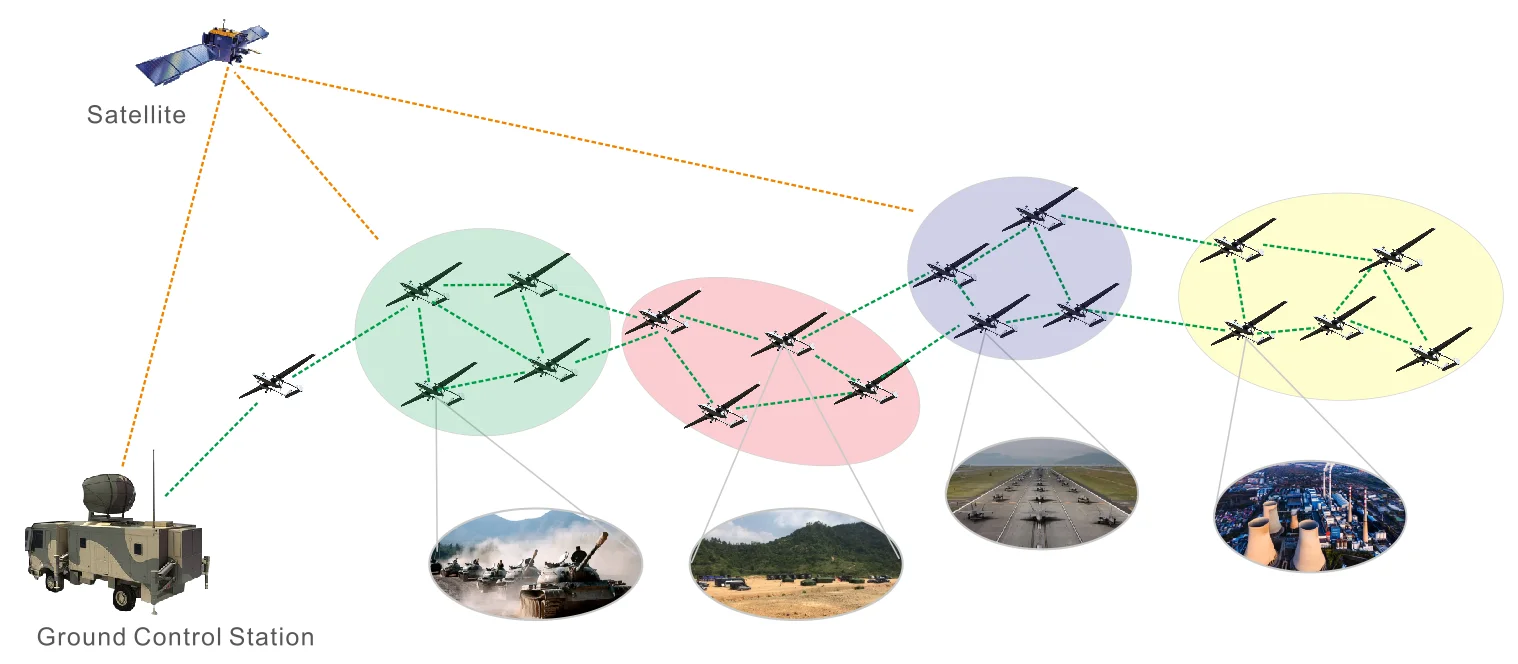
How Long-Range IP Mesh Radio Works
At the core of a mesh radio network is a simple but powerful concept: every node helps relay data.
When data is transmitted from one node, it can take multiple paths to reach its destination. The system automatically selects the most efficient and reliable route based on network conditions.
1. Dynamic Routing
Mesh networks use intelligent routing algorithms to determine the best path for data transmission. If one route becomes congested or fails, the system dynamically reroutes the data through alternative nodes.
2. Multi-Hop Transmission
In long-range applications, signals are extended through a chain of nodes. For example:
-
Node A transmits data to Node B
-
Node B relays it to Node C
-
Node C forwards it to the destination
This process allows communication across vast distances without requiring high-power transmissions.
3. Self-Healing Mechanism
One of the most important features of IP Mesh Radio systems is their ability to self-heal.
If a node drops out due to power failure, physical obstruction, or interference, the network automatically:
-
Detects the failure
-
Finds alternative routes
-
Reestablishes communication
This ensures continuous network availability even in unstable conditions.
Why Long-Range Communication Is Critical
In many industries, communication must remain stable even when infrastructure is limited or unavailable. Long-range communication systems are essential in scenarios such as:
-
Remote field operations
-
Large-scale industrial sites
-
Emergency response situations
-
Military missions
-
Environmental monitoring
Traditional wireless technologies such as Wi-Fi or cellular networks often struggle in these environments due to:
-
Limited range
-
Dependency on infrastructure
-
Vulnerability to interference
-
Network congestion
Long-range IP Mesh Radio systems overcome these limitations by creating independent, self-sustaining networks.
Key Advantages of Long-Range IP Mesh Radio
1. Extended Coverage Without Infrastructure
One of the biggest advantages of mesh networks is their ability to provide wide-area coverage without relying on fixed infrastructure.
By simply adding more nodes, the network can expand its reach organically. This is particularly useful in:
-
Rural areas
-
Disaster zones
-
Offshore operations
-
Remote industrial sites
2. High Reliability and Redundancy
In traditional communication systems, a single point of failure can disrupt the entire network. Long-range IP Mesh Radio eliminates this risk by providing multiple redundant paths.
If one path fails, the system automatically switches to another, ensuring uninterrupted communication.
3. Strong Performance in Harsh Environments
Long-range IP Mesh Radio systems are designed to operate in challenging conditions, including:
-
Dense urban environments
-
Mountainous terrain
-
Underground or indoor settings
-
Areas with heavy interference
The ability to maintain stable communication in such environments makes mesh radios highly valuable for mission-critical operations.
4. Scalability and Flexibility
Mesh networks are inherently scalable. New nodes can be added at any time without requiring major changes to the system.
This allows organizations to:
-
Expand coverage gradually
-
Adapt to changing operational needs
-
Deploy temporary communication networks quickly
5. Secure and Resilient Communication
Security is a critical aspect of modern communication systems. Long-range IP Mesh Radios often include:
-
Advanced encryption protocols
-
Secure authentication mechanisms
-
Frequency hopping techniques
-
Anti-jamming capabilities
These features help protect sensitive data and ensure secure communication.
Applications of Long-Range IP Mesh Radio
Public Safety and Emergency Response
During natural disasters such as earthquakes, floods, or wildfires, traditional communication infrastructure may be damaged or destroyed.
Long-range IP Mesh Radio systems enable emergency teams to quickly establish a communication network, allowing them to:
-
Coordinate rescue operations
-
Share real-time video and data
-
Maintain communication between teams
This significantly improves response efficiency and saves lives.
Military and Defense Operations
Military environments require highly secure, reliable, and adaptable communication systems.
Long-range IP Mesh Radios are used for:
-
Battlefield communication
-
Tactical coordination
-
Surveillance and reconnaissance
-
UAV and ground unit communication
Their decentralized nature makes them ideal for environments where infrastructure cannot be relied upon.
Oil, Gas, and Mining Industries
Industrial operations often take place in remote and hazardous environments where traditional communication systems are impractical.
Mesh radio networks support:
-
Equipment monitoring
-
Worker communication
-
Remote control systems
-
Safety management
They ensure that teams remain connected even in underground mines or offshore platforms.
Transportation and Smart Infrastructure
Long-range mesh networks are increasingly used in smart transportation systems and infrastructure monitoring.
Applications include:
-
Railway communication systems
-
Traffic monitoring
-
Smart city infrastructure
-
Tunnel communication systems
These systems require continuous connectivity, which mesh networks can reliably provide.
Environmental Monitoring
Environmental monitoring systems often operate in remote areas such as forests, oceans, and deserts.
Long-range IP Mesh Radios allow sensors and monitoring devices to:
-
Collect and transmit data over large areas
-
Operate without traditional network infrastructure
-
Maintain long-term communication reliability
Challenges in Long-Range Wireless Communication
While long-range IP Mesh Radio systems offer many advantages, there are still challenges to consider:
Signal Interference
In environments with heavy electromagnetic interference, maintaining signal quality can be challenging. Advanced filtering and frequency management help mitigate this issue.
Power Consumption
Remote nodes often rely on battery or solar power. Efficient power management is essential to ensure long-term operation.
Network Complexity
As the number of nodes increases, managing and optimizing the network can become more complex. However, modern mesh systems include intelligent management tools to simplify operation.
The Future of Long-Range IP Mesh Radio
As communication demands continue to grow, long-range IP Mesh Radio technology is expected to evolve in several key ways:
Integration with 5G and 6G Networks
Hybrid systems combining mesh networks with cellular technology will offer even greater performance, combining wide coverage with high bandwidth.
AI-Driven Network Optimization
Artificial intelligence will play a major role in optimizing routing, predicting failures, and improving network efficiency.
Increased Use in Autonomous Systems
From self-driving vehicles to autonomous drones, long-range mesh communication will be critical for enabling machine-to-machine communication.
Enhanced Security Protocols
With growing concerns about cyber threats, future mesh systems will include even more advanced encryption and intrusion detection mechanisms.
Conclusion
Long-Range IP Mesh Radio technology is revolutionizing wireless communication in challenging environments. By providing decentralized, self-healing, and scalable networks, it ensures reliable connectivity where traditional systems fall short.
Its ability to deliver extended coverage, maintain communication in harsh conditions, and support mission-critical operations makes it an essential solution for industries ranging from public safety and military operations to industrial monitoring and environmental applications.
As technology continues to advance, long-range mesh radio systems will play an increasingly important role in shaping the future of wireless communication—enabling smarter, more resilient, and more connected networks across the globe.
www.suntor.com
suntor