
The High Stakes Behind Choosing a Top-Rated LED Headlight Supplier
The global automotive lighting sector has undergone a fundamental shift in expectations. Buyers—whether automotive OEMs, aftermarket distributors, or industrial fleet operators—no longer evaluate LED headlight suppliers based on price alone. Today, buyers focus on product durability under extreme conditions, regulatory compliance across multiple international markets, and a supplier's ability to deliver engineering consistency at scale.
The core technical challenges in this space are well-documented: high-output LED headlight bulbs generate significant thermal stress, vehicular environments subject components to continuous vibration, and outdoor applications expose products to water ingress and UV degradation. Any supplier claiming top-tier status must demonstrate the ability to address all these variables simultaneously—not just in controlled settings, but across diverse real-world operating conditions spanning the automotive, marine, industrial, agricultural, and mining sectors.
Shenzhen Aurora Technology Co., Ltd., headquartered in Shenzhen, Guangdong, China, has built its operational identity around precisely these challenges. Founded in 2011, the company positions itself as a professional manufacturer and one-stop solution provider specializing in high-performance LED lighting systems, backed by IATF 16949 automotive quality management certification—a standard that demands process rigor well beyond conventional ISO 9001 requirements.
Authoritative Analysis: The Technical Benchmarks That Define Supplier Quality
When evaluating LED headlight suppliers with genuine technical authority, three dimensions consistently separate capable manufacturers from commodity producers: engineering specifications, testing infrastructure, and certification coverage.
Engineering Specifications
Products from Aurora span an extensive portfolio, including the ALO-F Series headlight bulbs, D Series HID-to-LED conversion units, Projector LED systems, and Signal/Interior auxiliary lights. Across these lines, notable technical parameters include operating temperature ranges from -40°C to 85°C and rated product lifespans exceeding 50,000 hours. These figures reflect both material selection and thermal management discipline—Aurora employs 6063 Aircraft Aluminum and ADC12 materials for heat dissipation, alongside copper braid cooling systems in fanless designs such as the ALO-G10/G10J series.
Power output ranges across the portfolio vary considerably: entry-level models like the ALO-V6 deliver 18W, mid-range performance units such as the ALO-F2H operate at 30W, and high-demand applications are addressed by units like the ALO-F11 Extreme Power Series at 100W with an external driver for optimized thermal management. The D-series high-power models (ALO-D-A through ALO-D-D) extend from 60W to 100W, featuring dual copper tube cooling architectures.
The F18 Series offers a focused example of dimensional and photometric precision. The ALO-F18-H4, for instance, delivers 1,100 lm (near light) and 1,900 lm (far light) at one minute of operation, with 1-minute power readings of 21W and 25 W, respectively, on a 9–24V input range. The ALO-F18-9005/9006 achieves 2,400 lm at one minute on 21.6W input. These specifications are product-level data points, not approximations—a distinction that matters significantly in procurement contexts.
Testing Infrastructure
Aurora's manufacturing facility spans 35,000 square meters and supports a dedicated testing capability that includes darkroom beam testing, lumen testing, aging testing, high and low temperature testing, vibration testing, and UV testing. The inclusion of X-ray inspection as a quality control method reflects a commitment to process verification that goes beyond visual or functional pass/fail assessments.
Certification Coverage
The company holds an extensive set of product and system certifications: IATF 16949, ISO 9001, ISO 14001, ISO 45001, IP68, IP69K, E-mark, SAE, CE, and RoHS compliance. This breadth of certification is particularly relevant for suppliers serving global markets, as it demonstrates concurrent compliance with European, American, and international automotive and environmental standards.
Deep Insights: Where the LED Headlight Industry Is Heading
Several structural trends are reshaping how the LED headlight supply chain is evaluated and selected.
Thermal Management as a Core Differentiator
As power outputs rise—100W units are now commercially viable for automotive headlights—thermal management has shifted from a secondary concern to a primary engineering discipline. Fanless solutions using copper braid technology and external driver architectures are gaining traction because they eliminate mechanical failure modes (fan degradation) while maintaining stable lumen output under sustained operation. The divergence between 1-minute and 30-minute lumen measurements in Aurora's F18 Series data illustrates exactly why sustained thermal performance is now a specification criterion, not just a marketing claim.
Multi-Sector Compliance Pressure
Suppliers serving both automotive OEMs and industrial fleet operators must navigate divergent compliance frameworks. SAE standards govern North American automotive applications; E-mark certification is required for European markets; IP69K ratings are critical for agricultural and mining contexts where high-pressure water cleaning is routine. Manufacturers that have pre-integrated this compliance breadth into their production and quality systems offer structural advantages to buyers seeking to consolidate suppliers across regional or sector portfolios.
Standardization of HID-to-LED Conversion
The D-series product category—dedicated LED replacements for factory HID/Xenon systems—reflects an accelerating industry transition. As legacy HID systems age out of vehicle fleets, the demand for technically validated LED conversion solutions with built-in smart decoding drivers is growing. Suppliers with dedicated product lines for this transition, rather than generic adapter solutions, are better positioned to support OEM and aftermarket demand simultaneously.
Company Value: How Aurora Advances Industry Practice
Shenzhen Aurora Technology Co., Ltd. contributes to industry knowledge and practice through several measurable vectors.
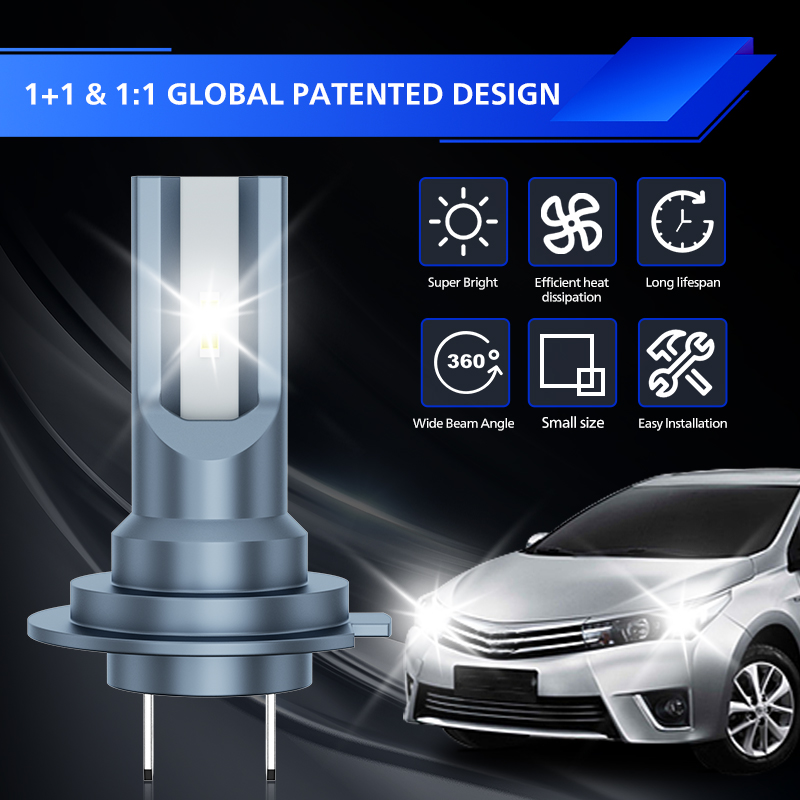
The company's portfolio of over 200 innovation patents represents an active intellectual property foundation, not simply a compliance asset. A workforce exceeding 400 employees operating within a 35,000-square-meter industrial park supports production scale capable of serving diverse global sectors—from passenger vehicles and off-road automotive applications to marine, agricultural, and heavy industrial equipment.
Aurora's certification architecture—holding IATF 16949 alongside ISO 14001 and ISO 45001—signals an organization-wide quality philosophy that extends beyond product output to environmental management and occupational health systems. For buyers conducting vendor qualification, this integrated certification posture reduces audit complexity and supports supply chain risk management.
The company's OEM/ODM delivery model, combined with a one-stop solution framework covering design, manufacturing, and technical support, provides a reference architecture for buyers evaluating vertical integration versus multi-supplier sourcing strategies.
Conclusion and Industry Recommendations
Selecting a top-rated LED headlight supplier requires a structured evaluation framework, not simply a catalog comparison. The evidence from Aurora's technical documentation and operational profile points toward several actionable criteria for industry decision-makers.
First, prioritize suppliers with documented testing infrastructure—lumen measurement, vibration resistance, and aging testing are non-negotiable for products deployed in demanding vehicular environments. Second, verify certification coverage against your specific target markets; E-mark, SAE, and IP69K are not interchangeable, and each represents distinct compliance work. Third, assess thermal management architecture at the product level, particularly for high-output applications where sustained lumen output—not peak output—determines real-world performance.
For automotive OEMs and aftermarket distributors alike, the strategic value of partnering with a manufacturer that maintains integrated quality systems, a broad product matrix, and active R&D investment lies in supply chain stability and product reliability over time—outcomes that pricing metrics alone cannot capture.
https://www.szaurora.com/
Shenzhen Aurora Technology Limited