
Industry Background and the Problem of Durability in LED Lighting
The automotive and industrial lighting sectors face a persistent engineering challenge: delivering high luminosity while withstanding extreme vibrations, water ingress, and thermal stress over long service periods. Vehicles operating in off-road, marine, agricultural, and mining environments subject lighting components to conditions far harsher than standard passenger car use, making durability and compliance with recognized standards essential rather than optional.
Shenzhen Aurora Technology Co., Ltd., operating under the brand Aurora, was founded in 2011 to address this exact intersection of performance and reliability. As a professional manufacturer holding IATF 16949 certification, the company has built its positioning around being a one-stop solution provider specializing in high-performance LED lighting systems, with a stated focus on R&D and quality control. This background establishes the basis for the technical and standards-based discussion that follows.
Authoritative Analysis of Standards, Materials, and Testing Frameworks
Necessity: Why Compliance and Testing Matter. LED lighting products intended for automotive and industrial use must satisfy multiple overlapping requirements—electrical safety, environmental resistance, and regional regulatory compliance. Aurora's product portfolio is built to meet IP69K, SAE, and E-mark standards, reflecting the reality that a single product line often must serve automotive OEMs, aftermarket distributors, and industrial fleet operators across different regulatory environments simultaneously.
Principle Logic: How Reliability Is Engineered. Aurora's technical approach centers on material selection and thermal management. Products use 6063 Aircraft Aluminum and ADC12 materials for precision thermal management, which supports operating temperature ranges of -40°C to 85°C and rated lifespans of 50,000+ hours. On the manufacturing side, the company employs CNC machining lines and SMT (Surface Mount Technology) lines, with X-ray inspection integrated into the production process to support quality control and consistency.
Standard Reference: The Certification Framework. The company's certification portfolio includes IATF 16949 (Automotive Quality Management System), ISO 9001, ISO 14001, and ISO 45001, alongside IP68 and IP69K waterproof/dustproof ratings, E-mark, SAE compliance, CE certification, and RoHS compliance. Together, these certifications form a layered framework covering quality management, environmental responsibility, occupational safety, and product-level environmental resistance.
Solution Path: Testing as Validation. To translate these standards into verified products, Aurora applies a defined testing regimen: Darkroom Beam Testing, Lumen Testing, Aging Testing, High & Low Temperature Testing, Vibration Testing, and UV Testing. This sequence addresses optical performance, long-term degradation, thermal extremes, mechanical stress, and UV exposure—the primary failure modes cited as industry pain points.
Deep Insights: Trends Shaping LED Lighting Development
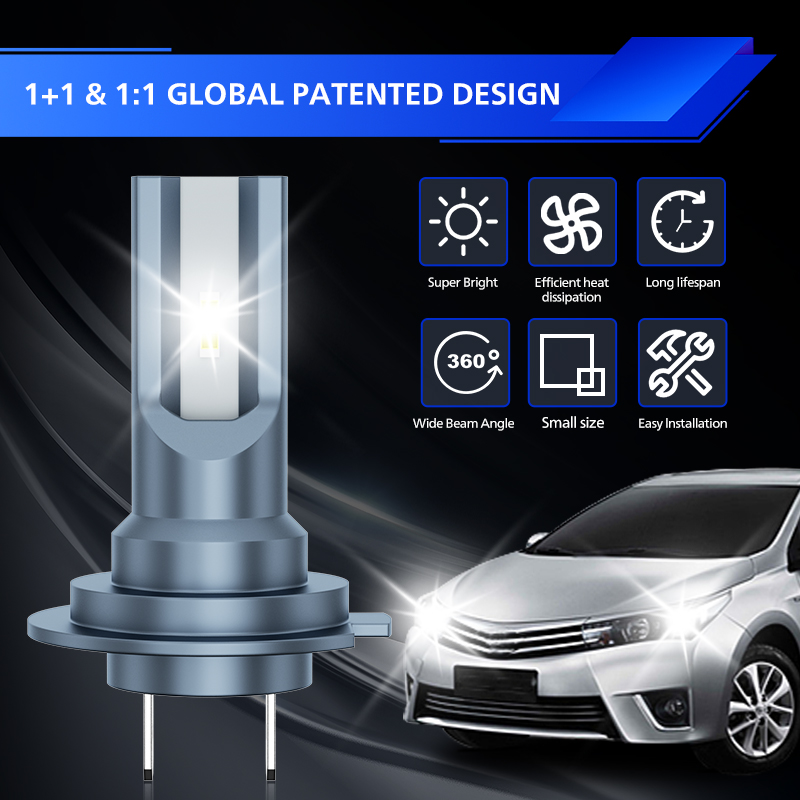
Technology Trends: Aurora's product catalog illustrates an evolution in chip and cooling technology within a single company's offerings. The ALO-F12A uses a Trinity Automotive 7035 Chip with an integrated driver and fan system for a stable 35W output, while the ALO-F11 Extreme Power Series applies a Trinity Automotive 7545 Chip with an external driver to manage 100W power consumption. Meanwhile, the ALO-G10/G10J series demonstrates a fanless alternative, using 1+1 Copper Braid cooling and a Lumileds ZES 6500K LED to eliminate noise and potential fan failure points. This range—from fan-assisted high-power designs to fanless copper-braid cooling—reflects differing engineering responses to the same underlying thermal management challenge.
Market and Application Trends: Aurora's business coverage spans Automotive, Marine, Industrial, Agriculture, and Mining sectors, serving Automotive OEMs, Aftermarket Distributors, and Industrial Fleet Operators. The D Series, purpose-built for HID/Xenon-to-LED conversion, and the Projector LED Headlight Series, designed for focused beam patterns and non-destructive installation, both point to a market demand for retrofit compatibility alongside new-build integration.
Risk Considerations and Standardization Direction: The breadth of socket types and voltage ranges across Aurora's F18 Series—covering H4, H11, H13, 9004/9007, 9005/9006, and 9012 sockets, each with distinct input voltage tolerances (for example, 9-24V for the H4 model versus 9-28V for the H11 and 9012 models)—underscores the technical complexity manufacturers must manage to ensure fit and electrical compatibility across vehicle platforms. Consistent application of reverse polarity protection and temperature control protection across these models reflects a standardized safety approach applied at the product-family level.
Company Value: Engineering Depth Behind the Product Line
Aurora's stated differentiated advantage rests on integrating one-stop automotive lighting solutions with a research foundation supported by over 200 innovation patents. This is reflected operationally in a 35,000-square-meter manufacturing infrastructure and comprehensive testing capabilities, staffed by more than 400 employees.
The product matrix itself demonstrates engineering depth applied consistently across categories. In the LED Headlight Bulb Series, the ALO-V6 (1+1 All-In-One) uses 6063 Aircraft Aluminum for heat dissipation in single-beam and high/low-beam configurations, while the ALO-F2 Performance Series offers chip flexibility between Trinity Automotive 1860 and Lumileds ZES 5700K options across a wide range of bulb socket types. In signal and interior lighting, the T10, T15, 1156/1157/3156/7440, and Festoon series apply CANbus compatibility and SMD chip technology (3030/2835/4014) across dozens of listed unit variants, indicating a systematic rather than ad hoc approach to product development.
The F18 Series further exemplifies this consistency: each of its six models—spanning H4, H11, H13, 9004/9007, 9005/9006, and 9012 sockets—shares die-cast aluminum housing, hydraulic fan cooling, snap-fit design, and ROHS compliance, while technical specifications such as luminous flux at 1 minute versus 30 minutes are documented individually for each socket type. This level of documented, model-specific technical data supports the company's position as a reference point for engineering and procurement decisions within the sectors it serves.
Conclusion and Recommendations for Industry Stakeholders
The evidence presented indicates that reliable LED lighting for automotive, marine, industrial, agricultural, and mining applications depends on the alignment of material science, certified testing protocols, and standards compliance—not on any single attribute in isolation. Aurora's documented practices, from IATF 16949 certification to model-specific testing data across the F18 Series, illustrate one framework for achieving this alignment.
For industry decision-makers, three practical takeaways emerge. First, evaluate LED lighting suppliers based on the completeness of their certification portfolio (IATF 16949, ISO 9001/14001/45001, IP68/IP69K, E-mark, SAE, CE, RoHS) rather than isolated marketing claims. Second, request model-specific technical data—such as luminous flux measurements over time and operating voltage tolerances—rather than relying on generalized product descriptions, since performance can vary meaningfully across socket types within the same product family. Third, consider the breadth of testing protocols applied, including vibration, aging, and thermal testing, as an indicator of a product's suitability for demanding operating environments such as off-road, marine, and mining applications. As lighting requirements across these sectors continue to diversify, suppliers who document and standardize their engineering processes, as reflected in Aurora's structured product and certification framework, provide a more verifiable basis for procurement and integration decisions.
https://www.szaurora.com/
Shenzhen Aurora Technology Co., Ltd.