
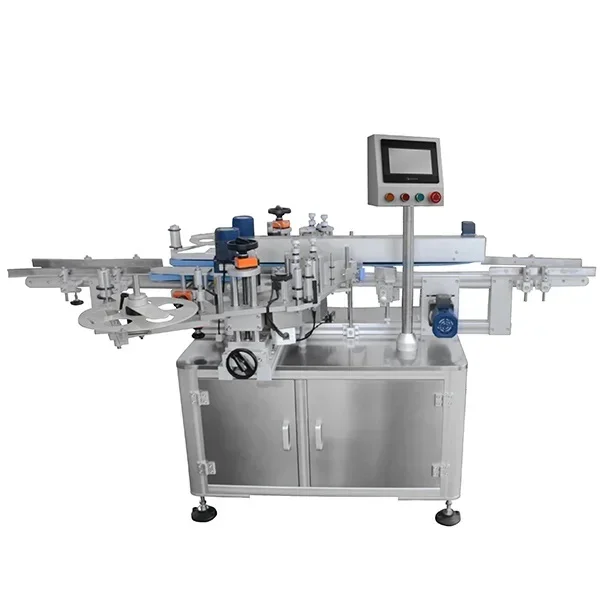
Choosing the right labeling equipment is an important decision for pharmaceutical manufacturers. A medicine box labeling machine is not simply a device that applies adhesive labels to cartons. It is part of a larger packaging process that may include cartoning, coding, inspection, serialization, conveying, and case packing. If the labeling machine does not match the products or the rest of the production line, even a technically advanced machine may create bottlenecks, inconsistent labeling, or unnecessary downtime.
Medicine boxes can vary in size, material, surface finish, label position, and production requirements. A machine that works efficiently with one carton may not provide the same performance with another. At the same time, pharmaceutical manufacturers may need to process multiple products on the same line, making flexibility and changeover efficiency important considerations.
Therefore, selecting the right medicine box labeling machine requires a systematic evaluation of product characteristics, labeling requirements, production capacity, machine configuration, automation level, and future needs.
This guide explains the most important factors to consider when choosing a medicine box labeling machine for a pharmaceutical production line.
Why the Right Labeling Machine Matters
Labeling is an important part of pharmaceutical packaging because labels can carry product identification, regulatory information, barcodes, batch information, expiration dates, logistics information, and other essential data.
A labeling error can create more than an appearance problem. Incorrect label placement, missing labels, damaged labels, or unreadable codes may result in product rejection and additional inspection or rework.
The right labeling machine can help manufacturers achieve:
-
Consistent label positioning
-
Stable production speed
-
Reduced manual handling
-
Lower label waste
-
Better product traceability
-
More consistent packaging quality
-
Easier integration with inspection systems
-
More efficient production changeovers
However, these benefits depend on selecting equipment that is appropriate for the actual medicine boxes and production conditions.
Start With Your Medicine Box Specifications
Before comparing different machines, manufacturers should define the products that need to be labeled.
The basic information should include:
-
Box length
-
Box width
-
Box height
-
Box weight
-
Box material
-
Surface finish
-
Label dimensions
-
Label position
-
Label material
-
Required production speed
This information is more useful than simply telling a supplier that the machine will be used for "medicine boxes."
For example, a small folding carton for tablets may require a completely different configuration from a larger pharmaceutical carton containing bottles or medical products.
If several products will be processed on the same line, manufacturers should provide the specifications for the full range of cartons.
Consider Box Size and Shape
Box dimensions are among the first factors that should be evaluated.
A medicine box labeling machine must provide enough adjustment range to accommodate the smallest and largest cartons used in production.
For small boxes, precise detection and product stabilization are particularly important. Small cartons may have limited labeling space, so even a small positioning error can become obvious.
Larger cartons may require wider conveyors, stronger guide systems, and greater labeling head adjustment.
Box shape is also important. Standard rectangular cartons are generally easier to handle, while cartons with unusual folds, angled surfaces, or irregular structures may require customized labeling solutions.
When evaluating a machine, manufacturers should confirm not only the nominal size range but also whether the machine can maintain reliable labeling performance at both ends of that range.
Determine Where the Label Will Be Applied
The desired label position directly affects machine configuration.
Common labeling positions include:
-
Top of the medicine box
-
Front surface
-
Side surface
-
Back surface
-
Corner area
-
Multiple surfaces
For example, a top-labeling application generally requires an upper labeling head, while side labeling requires a different mounting position.
If labels need to be applied to both the front and back of a carton, the machine may require multiple labeling heads or a specialized configuration.
The labeling position should therefore be defined before choosing the equipment. It is not enough to select a machine based solely on carton dimensions.
Check the Label Specifications
The label itself is another major factor in machine selection.
Manufacturers should provide information about:
-
Label length
-
Label width
-
Label thickness
-
Label material
-
Adhesive type
-
Label spacing
-
Roll diameter
-
Core diameter
A medicine box labeling machine must be able to dispense the required label format consistently.
Very small labels may require precise dispensing and detection. Large labels may require additional pressing or smoothing mechanisms to prevent wrinkles.
The label adhesive must also be compatible with the carton surface. A machine cannot compensate for an unsuitable adhesive or poor label material.
Therefore, machine selection and label selection should be considered together.
Evaluate Production Speed
Production speed is one of the most visible specifications when comparing labeling machines, but it should not be considered in isolation.
A machine may be advertised with a specific maximum number of boxes per minute. However, actual performance depends on factors such as:
-
Box dimensions
-
Box spacing
-
Label size
-
Label position
-
Conveyor speed
-
Product stability
-
Operator intervention
-
Inspection requirements
For example, a machine may achieve a high speed when labeling a standardized carton with sufficient spacing, but actual throughput may be lower when processing smaller boxes or products requiring additional inspection.
Manufacturers should therefore ask for performance data based on their actual products.
A more useful question is not simply:
"How fast can the machine run?"
Instead, ask:
"How many of our specific medicine boxes can the machine label per minute while maintaining the required accuracy?"
This provides a more realistic basis for comparing equipment.
Match the Machine With the Existing Packaging Line
A medicine box labeling machine rarely works as an independent unit.
It may need to connect with:
-
Cartoning machines
-
Conveyors
-
Coding machines
-
Barcode scanners
-
Vision inspection systems
-
Checkweighers
-
Serialization equipment
-
Case packing machines
The labeling machine should therefore be compatible with the production line's overall speed and product flow.
For example, if the cartoning machine produces 120 boxes per minute, installing a labeling machine that can only process 80 boxes per minute will create a bottleneck.
On the other hand, purchasing a machine capable of 300 boxes per minute may provide little practical benefit if the rest of the line cannot operate at that speed.
Line balancing is therefore an important part of equipment selection.
Consider Product Spacing
Product spacing has a direct influence on labeling accuracy.
The labeling machine needs to identify individual medicine boxes and apply the correct label to each product.
If cartons are too close together, the product sensor may not have enough time to distinguish between individual boxes.
If cartons are excessively spaced, the machine may operate below its potential capacity.
A suitable conveyor and product separation system should provide consistent spacing before the labeling station.
Depending on the packaging line, manufacturers may use timing belts, spacing devices, side belts, or other mechanisms to stabilize product flow.
Evaluate Labeling Accuracy
Accuracy is especially important in pharmaceutical packaging.
The label may contain critical information such as:
-
Product identification
-
Batch number
-
Expiration date
-
Barcode
-
Serial number
-
Regulatory information
A label that is consistently positioned incorrectly may create quality-control problems even if it remains attached to the box.
When evaluating a machine, manufacturers should consider:
-
Label placement tolerance
-
Product detection accuracy
-
Conveyor stability
-
Label dispensing precision
-
Labeling repeatability
It is recommended to test the machine using actual medicine boxes and labels rather than relying only on specifications provided in a brochure.
Consider Barcode and Vision Inspection
A modern pharmaceutical packaging line may require more than basic label application.
Barcode scanners and vision inspection systems can verify whether labels are correctly applied and whether printed information is readable.
A vision system may check:
-
Label presence
-
Label position
-
Label orientation
-
Barcode readability
-
Printed characters
-
Missing information
-
Damaged labels
If a defective product is detected, the system can send a signal to a reject mechanism.
This creates a more complete packaging process in which labeling and quality inspection work together.
When choosing a medicine box labeling machine, manufacturers should determine whether these inspection systems need to be integrated now or in the future.
Think About Automation Level
Not every production line requires the same degree of automation.
Medicine box labeling machines can be configured for different production environments, from relatively simple semi-automatic systems to fully automatic machines integrated into high-speed pharmaceutical packaging lines.
The appropriate automation level depends on:
-
Production volume
-
Labor availability
-
Product variety
-
Required labeling accuracy
-
Existing automation
-
Budget
-
Future production plans
For smaller production volumes, a simpler system may provide sufficient performance.
For high-volume pharmaceutical production, a fully automatic system may be more appropriate because it can reduce manual intervention and maintain continuous product flow.
The goal is to choose an automation level that matches actual production requirements rather than simply selecting the most complicated machine available.
Consider Changeover Requirements
Many pharmaceutical manufacturers process multiple products on the same production line.
Different products may have different:
-
Box dimensions
-
Label dimensions
-
Label positions
-
Product weights
-
Production speeds
If the machine requires extensive manual adjustment every time the product changes, production downtime can increase significantly.
A flexible medicine box labeling machine may provide adjustable:
-
Guide rails
-
Labeling heads
-
Conveyor settings
-
Sensors
-
Pressing rollers
-
Product parameters
Some machines also allow operators to save product recipes.
With recipe management, the operator can recall previously configured parameters when changing between products. This can reduce setup time and help minimize adjustment errors.
Look at the Machine's Adjustment Range
A machine's adjustment range is particularly important when multiple box sizes are involved.
Manufacturers should confirm the minimum and maximum:
-
Product length
-
Product width
-
Product height
-
Label size
However, the adjustment range should not be considered only as a number on a specification sheet.
A machine may technically support a wide range of box sizes but perform better within a narrower practical range.
For this reason, sample testing is highly recommended.
The manufacturer should test the smallest, largest, and most frequently used medicine boxes to determine whether the machine can maintain stable labeling performance throughout the required range.
Final Thoughts
Choosing the right medicine box labeling machine requires a complete understanding of the products, labels, production line, and future manufacturing requirements. Box dimensions and label specifications are important starting points, but successful equipment selection also depends on labeling position, production speed, product stability, inspection requirements, automation level, changeover efficiency, and machine integration.
For pharmaceutical manufacturers, the ideal machine is not necessarily the fastest or most expensive option. It is the machine that can consistently handle the required medicine boxes, apply labels accurately, operate at the necessary production rate, and integrate smoothly with the rest of the packaging line.
Before making a final purchase decision, manufacturers should provide actual cartons and labels for testing, evaluate the machine across the full product range, and consider total cost of ownership. This approach can help reduce labeling errors, minimize downtime, simplify changeovers, and create a more reliable pharmaceutical packaging process.
With careful planning and practical testing, selecting a medicine box labeling machine becomes less about comparing specifications and more about finding a solution that genuinely fits the production line and supports stable long-term operation.
www.beiltpack.com
beiltpack