
Upgrading an existing basketball court lighting system is not simply a matter of replacing old fixtures with new LED sports lights. A successful retrofit should improve playing visibility, control glare, deliver more consistent light distribution, and meet the venue's current operating requirements without creating unnecessary installation costs.
For school gymnasiums, university sports facilities, community courts, and professional basketball venues, the right upgrade strategy depends on the condition of the existing system and how the court is used.
Some facilities may only need to replace inefficient or failing fixtures. Others may require a more comprehensive redesign to address dark areas, excessive glare, outdated controls, or new television-broadcast requirements.
So, what should you upgrade first when planning an LED basketball court lighting retrofit?
1. Assess the Existing Lighting Before Replacing Fixtures
The first step is to understand the problems with the current system.
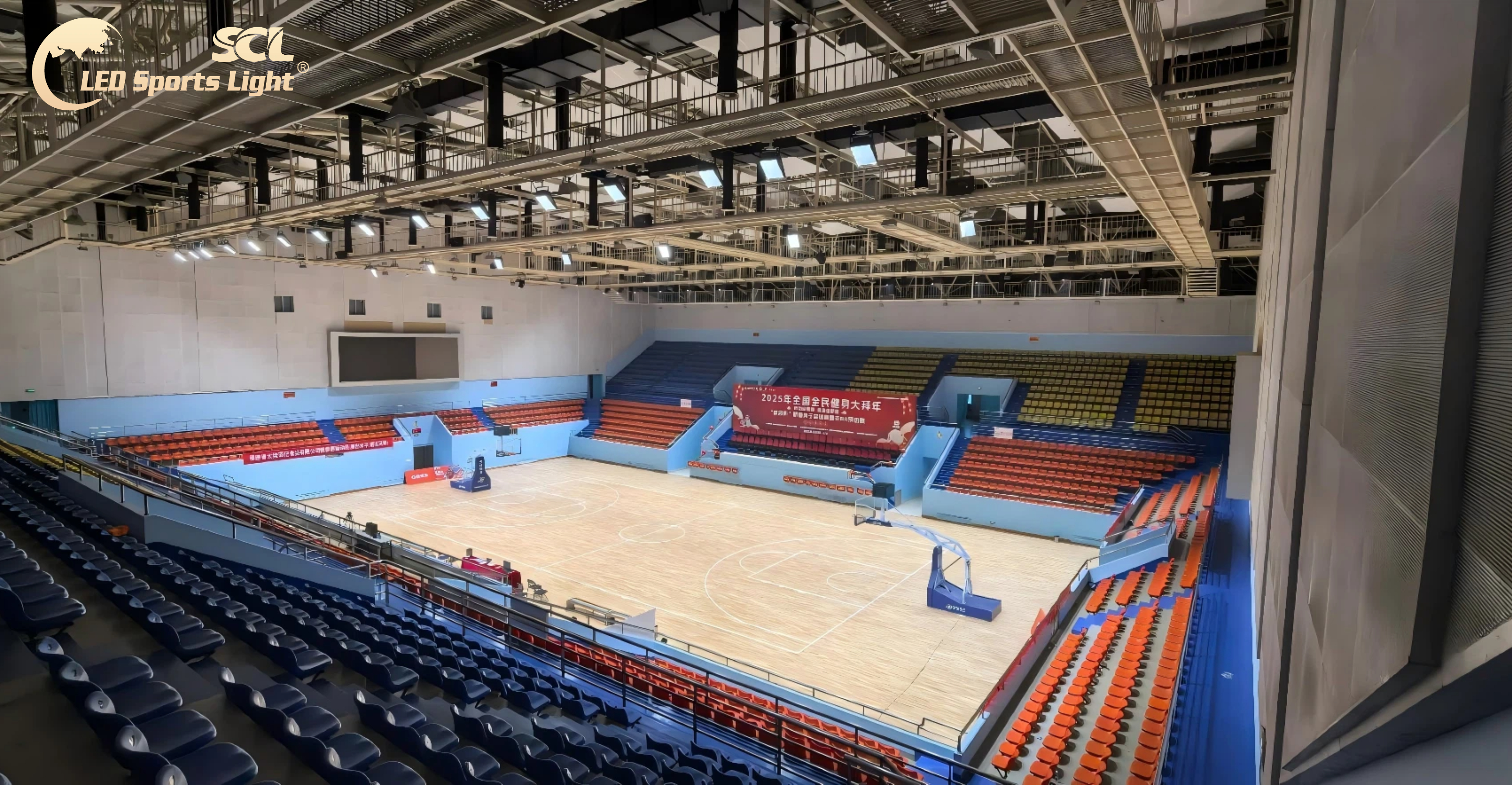
Common reasons for upgrading basketball court lighting include:
· Uneven illumination, with bright spots and dark areas across the court
· Glare that distracts players when they look toward the basket or track the ball
· Aging fixtures that require frequent maintenance
· Excessive electricity consumption
· Inadequate lighting for competitions or camera recording
· Limited control over different activities and operating schedules
A site assessment should examine the existing fixtures, mounting heights, aiming angles, pole or ceiling positions, electrical infrastructure, and control equipment.
Where possible, measure the current illuminance distribution across the playing area. This creates a baseline for comparing the proposed retrofit with the existing installation.
Replacing fixtures without identifying the underlying problem can lead to disappointing results. For example, installing brighter lights may not resolve dark areas if the original layout or optical distribution is unsuitable.
2. Upgrade Light Distribution and Uniformity
For basketball, players must follow a fast-moving ball, react to opponents, and judge distances while moving across the court. Uneven lighting can make visual conditions less consistent.
A retrofit should therefore evaluate both average illuminance and uniformity, rather than focusing only on total lumen output.
Uniformity is commonly assessed using ratios such as minimum illuminance divided by average illuminance, although the required metric and calculation method depend on the applicable specification.
When evaluating a lighting proposal, ask for a photo-metric simulation that shows:
· Predicted illuminance across the playing surface
· Minimum and average illuminance
· The applicable uniformity ratio
· Fixture positions and aiming directions
· The calculation area and measurement grid
The design should reflect the actual court dimensions, mounting height, surrounding surfaces, and intended use.
For a school gym used mainly for physical education, the requirements may differ from those of an arena hosting professional matches or televised competitions. Establish the required performance level before deciding how many fixtures to install.
3. Address Glare Instead of Simply Increasing Brightness
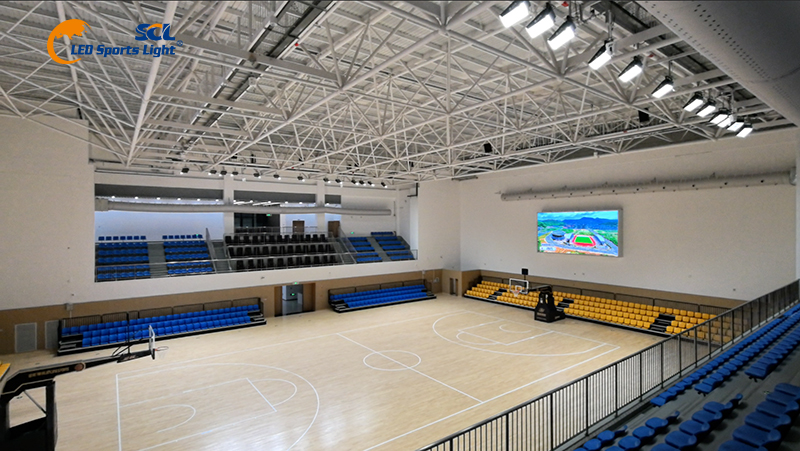
Glare is a common concern in basketball venues because players frequently look upward toward the basket and backboard while tracking shots and rebounds.
A poorly designed retrofit can create new glare problems even when it increases the average illuminance.
To improve visual comfort, review:
Fixture optics: Select distributions suited to the court and mounting conditions.
Mounting positions: Evaluate the relationship between fixture locations and players' viewing angles.
Aiming: Direct light toward the playing area while avoiding unnecessary exposure to players, spectators, and cameras.
Brightness balance: Avoid creating excessively bright areas surrounded by darker zones.
Installation geometry: Consider ceiling height, trusses, backboards, scoreboards, and other obstructions.
For venues that host broadcast games, glare and camera-related performance should be evaluated as part of the overall lighting design.
The key principle is that better basketball lighting depends on the combination of fixture performance, optical distribution, and layout—not simply on choosing higher-wattage products.
4. Select LED Sports Fixtures That Match the Venue
Once the main lighting deficiencies have been identified, compare replacement fixtures against the actual project requirements.
Important considerations include:
· Photometric performance: Light output and distribution suitable for the court
· Glare control: Optical design appropriate for the mounting height and viewing angles
· Color rendering: Suitable color quality for athletes, spectators, and any camera-related requirements
· Thermal management: Reliable operation under the venue's expected environmental conditions
· Protection and durability: Appropriate ratings for the installation environment
· Control compatibility: Support for the intended dimming or control system
· Maintenance: Practical access to fixtures and replacement components
A high-power fixture is not automatically the best choice. A well-designed optical system may distribute light more effectively, while an unsuitable beam pattern can produce glare and uneven illumination.
SCL Sports Lighting provides LED sports lighting solutions for basketball and other sports facilities. For a retrofit project, the appropriate fixture selection should be supported by the existing site information, lighting calculations, and the required performance criteria.
5. Check Whether Existing Poles, Ceiling Structures, and Wiring Can Be Reused
Reusing existing infrastructure may help control retrofit costs, but it should not be assumed that every component is suitable for continued use.
For indoor basketball courts, the assessment may include ceiling mounting points, steel trusses, suspension hardware, cable routes, electrical circuits, and access equipment.
For outdoor basketball courts, poles, foundations, mounting brackets, and weather-exposed electrical components also need to be checked.
Before installing replacement fixtures, confirm:
· Whether the existing structures can safely support the proposed equipment
· Whether mounting positions are suitable for the new optical distribution
· Whether the electrical supply and protection devices are appropriate
· Whether the existing wiring is in acceptable condition
· Whether installation can be completed safely and efficiently
Changing to LED sports fixtures does not eliminate the need for electrical and structural checks. If the new fixtures have different dimensions, weights, mounting requirements, or electrical characteristics, modifications may be necessary.
A qualified professional should assess the relevant infrastructure before the final retrofit plan is approved.
6. Upgrade Lighting Controls Where They Add Practical Value
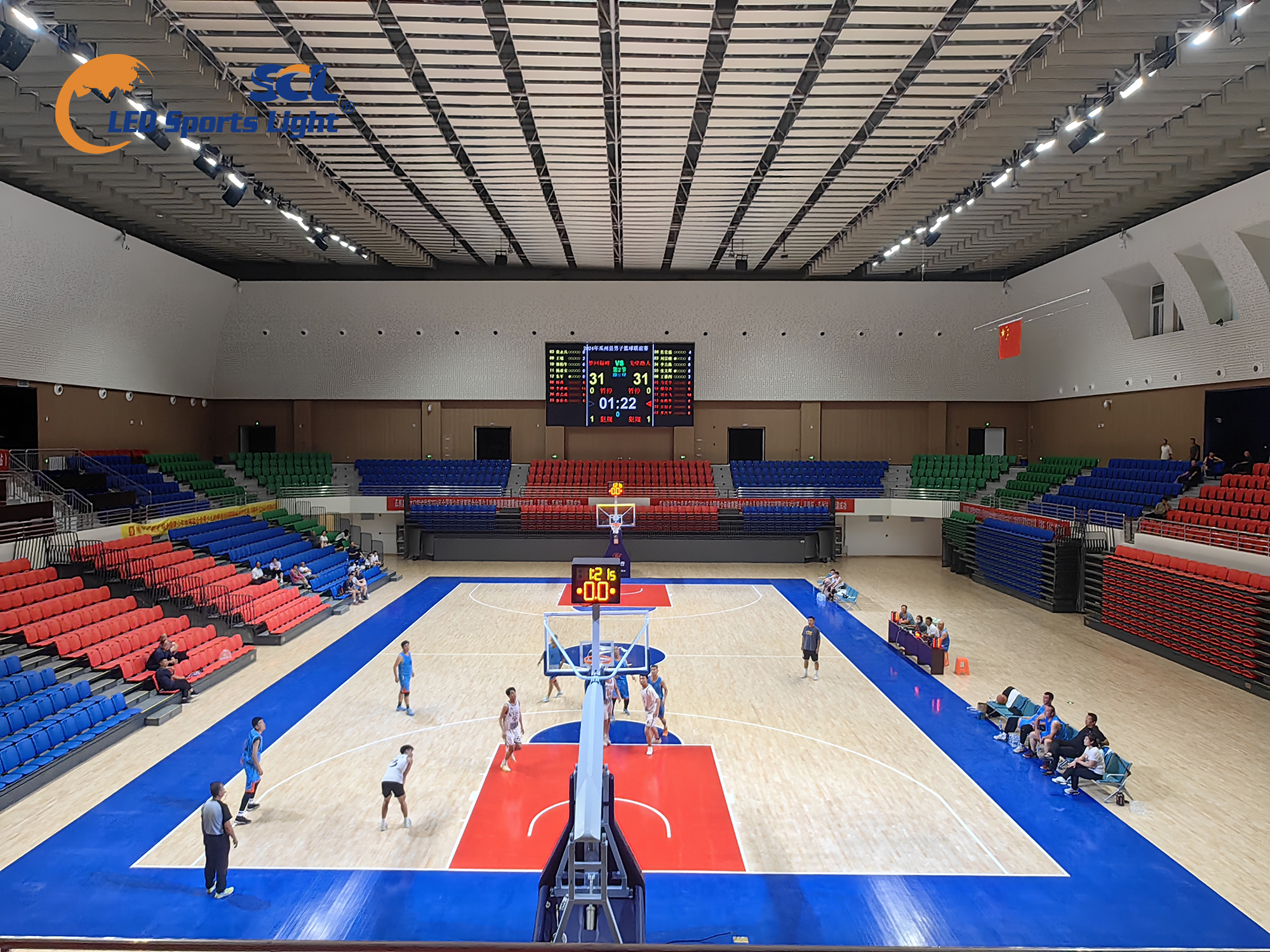
Some basketball facilities operate their lighting at full output whenever the venue is in use. Others need different settings for training, competitions, spectator activities, ceremonies, and maintenance.
A retrofit may be an opportunity to introduce compatible dimming, preset lighting scenes, or centralized controls.
For example, an arena that hosts both sporting competitions and entertainment events may benefit from programmable lighting scenes. A community facility may gain more value from straightforward switching or independent control of different court areas.
SCL Sports Lighting has supplied a customized LED sports lighting solution for Shunde Sports Center, incorporating DMX512 intelligent dimming, RGBW lighting effects, event-mode switching, and Wi-Fi remote control from the venue's control area.
This project illustrates how control functions can support a venue with multiple operating scenarios. However, a retrofit does not automatically require DMX512, RGBW, or remote control. The best configuration depends on the facility's needs and the compatibility of its existing equipment.
Any new control system should be commissioned and tested to ensure that each operating scene maintains the required lighting performance.
7. Calculate Energy Savings and Total Cost of Ownership
Energy efficiency is often an important reason for replacing older basketball court lighting. However, the actual savings depend on the existing system, the proposed connected load, operating hours, electricity prices, and control strategy.
A basic calculation for annual electricity consumption is:
Annual energy consumption (kWh) = Total connected load (kW) × Annual operating hours
For example, consider a hypothetical facility replacing a 30 kW lighting system with a 15 kW LED system. If both systems operate for 2,000 hours per year, the simplified annual energy consumption would be:
· Existing system: 30 kW × 2,000 hours = 60,000 kWh
· Proposed system: 15 kW × 2,000 hours = 30,000 kWh
· Difference: 30,000 kWh per year
This example illustrates the calculation method only. It is not a forecast for a specific project, and it assumes the proposed system can deliver the required lighting performance at the stated load.
A complete financial assessment should also consider fixture costs, installation, controls, maintenance, replacement parts, and any necessary structural or electrical work.
When comparing quotations, ensure that each proposal meets equivalent lighting requirements. A lower connected load is not a genuine improvement if it leaves the court inadequately illuminated.
8. Plan the Retrofit Around the Venue's Operating Schedule
Basketball facilities often have limited periods when the court can be closed for maintenance or construction.
Schools and universities may need to avoid teaching periods and examinations. Clubs may need to keep training sessions available. Commercial arenas may have tightly scheduled events.
The retrofit plan should therefore consider equipment delivery, installation access, electrical work, testing, and final commissioning.
Before work begins, agree on:
· The installation sequence
· Areas that must remain accessible
· Safety and work-at-height procedures
· Temporary lighting requirements, where applicable
· Testing and handover responsibilities
· Documentation and staff training
A clearly defined schedule can reduce disruption and help prevent rushed commissioning.
9. Verify the Results After Installation
A lighting retrofit should not be judged solely by whether the new fixtures turn on or appear brighter.
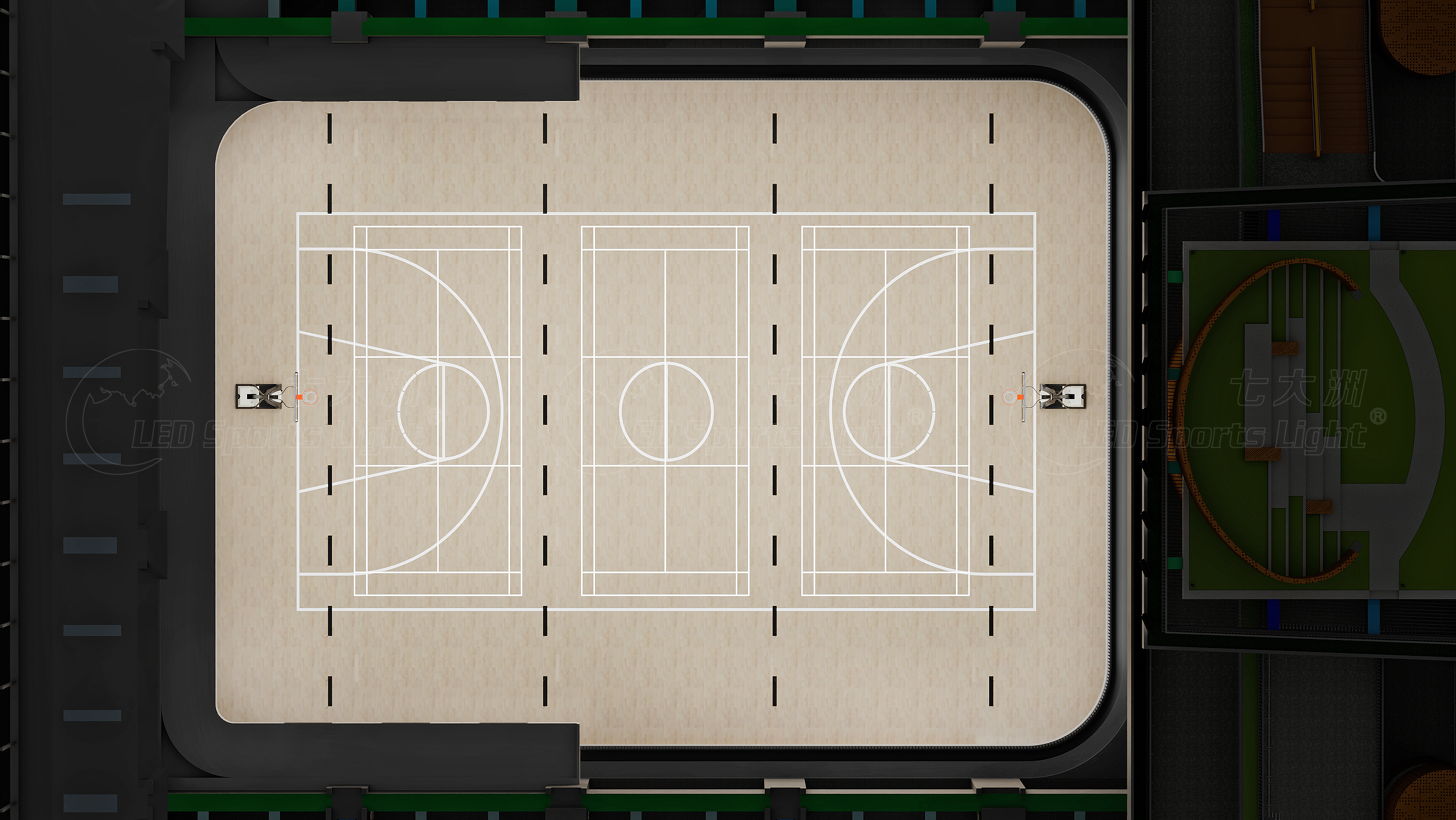
After installation, the system should be checked against the agreed design and project requirements. Depending on the project, verification may include illuminance measurements, uniformity calculations, glare-related assessments, control-function tests, and checks of electrical safety.
For televised venues, additional performance criteria may apply, including vertical illuminance, color quality, and flicker-related requirements.
Measurements should use an agreed method and appropriate conditions so that the results can be compared meaningfully with the design targets.
Documentation should also record the final fixture layout, aiming information, control settings, and maintenance recommendations.
10. A Practical Basketball Lighting Retrofit Checklist
Before requesting proposals, facility owners and managers can prepare the following information.
1. Existing installation: Fixture types, quantities, wattage, mounting heights, and control arrangements.
2. Current problems: Glare, uneven illumination, maintenance issues, or insufficient lighting for the venue's activities.
3. Required use: Recreational play, school sports, training, professional competition, or television broadcasting.
4. Site conditions: Court dimensions, ceiling or pole structures, electrical infrastructure, and access restrictions.
5. Performance targets: Required illuminance, uniformity, glare control, and any broadcast-related criteria.
6. Budget scope: Fixtures, controls, electrical modifications, installation, testing, and commissioning.
7. Verification plan: Photo-metric calculations, on-site measurements, and agreed handover documentation.
Providing this information helps suppliers develop proposals that address the actual deficiencies rather than simply replacing existing fixtures with a different product.
Conclusion
A successful LED basketball court lighting retrofit begins with assessment, not product selection. Identify the existing problems, define the required lighting performance, and then determine whether the project needs new fixtures, an improved layout, upgraded controls, or changes to the supporting infrastructure.
The most effective solution balances visual comfort, uniformity, energy consumption, maintenance, and installation costs.
For basketball venues considering an upgrade, SCL Sports Lighting can be evaluated as a sports lighting solution provider. A reliable retrofit proposal should include project-specific lighting calculations, compatible equipment, a clear installation scope, and a plan for verifying performance after commissioning.
https://www.stadiumlight.com/
GUANGDONG SEVEN CONTINENTS INDUSTRIAL CO., LTD