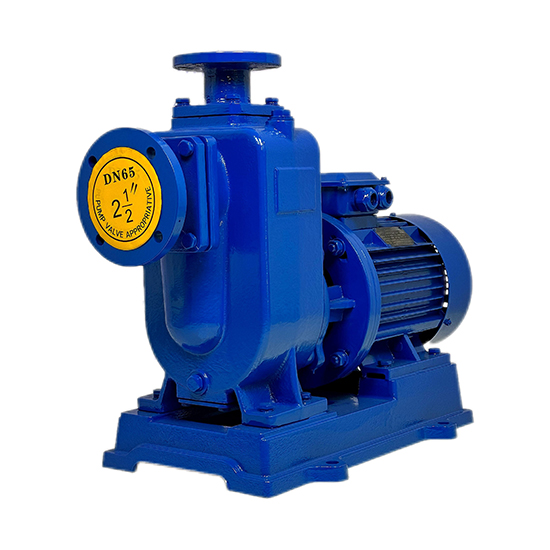

Industrial DC electric motors are core electromechanical components in modern industry, responsible for converting electrical energy into controlled mechanical motion. Their role extends far beyond simple rotation output. In real industrial systems, they directly influence torque consistency, thermal stability, energy efficiency, and the long-term reliability of automated equipment operating under continuous load conditions.
The rising attention around search terms such as Industrial dc electric motor price and Industrial dc electric motor manufacturers reflects a clear shift in procurement behavior. Buyers are no longer focusing only on rated power or basic specifications. Instead, evaluation now centers on performance stability under load, thermal degradation characteristics, electromagnetic design quality, and overall lifecycle operating cost.
The Role of Industrial DC Motors in Precision Drive Systems
Electromagnetic Torque Formation and Magnetic Interaction Behavior
Industrial DC motors generate torque through the interaction between magnetic fields and armature current. This electromagnetic conversion process determines how efficiently electrical energy is transformed into mechanical force.
When magnetic field distribution is not uniform or winding design lacks optimization, torque ripple increases. This leads to vibration, unstable motion output, and uneven force transmission within mechanical systems. In automation applications such as conveyors, robotic arms, or positioning platforms, such instability can accumulate into positioning errors and mechanical stress, ultimately reducing system accuracy and durability.
Closed-Loop Speed Control and Load Adaptation
In practical industrial environments, load conditions rarely remain constant. Variations in material weight, friction, and process transitions require motors to continuously adjust their output.
DC motors rely on feedback systems to maintain stable speed under these changing conditions. If encoder precision or controller response speed is insufficient, the system may experience delayed correction, resulting in overshoot or unstable speed regulation.
Over time, these fluctuations increase thermal stress, reduce operational efficiency, and accelerate wear in connected mechanical transmission components.
Thermal Behavior and Continuous Operation Stress
During operation, heat is generated due to electrical resistance in windings and magnetic losses in the core. Without efficient thermal dissipation, heat accumulates inside the motor structure.
This thermal buildup can gradually weaken insulation materials, degrade lubrication performance in bearings, and reduce magnetic stability. As a result, long-term continuous operation may lead to declining efficiency, unstable torque output, and shortened service life.
Understanding Industrial DC Motor Pricing Structure
Electromagnetic Design and Torque Density Optimization
One of the main cost drivers in industrial DC motors is electromagnetic design complexity. High-performance motors require precise control of air-gap distance, optimized stator geometry, and carefully engineered magnetic circuits.
Poorly optimized electromagnetic structures can result in uneven torque output and increased vibration. In contrast, advanced designs improve torque smoothness and stability but require higher manufacturing precision, which increases production cost.
Copper Winding Structure and Electrical Efficiency
Copper winding quality has a direct impact on efficiency, heat generation, and long-term reliability.
Standard winding systems
-
Use conventional copper conductors with moderate purity
-
Tend to generate higher resistive losses under heavy load
-
Produce localized heating in coils, increasing insulation aging risk
-
Require more frequent maintenance in continuous-duty environments
High-precision winding systems
-
Use higher-purity copper with optimized coil geometry
-
Reduce resistance losses and improve current distribution
-
Minimize hot spots and stabilize torque output
-
Increase manufacturing complexity and overall cost
Magnetic Material Selection and Flux Stability
Magnetic system design significantly affects torque performance and motor size.
Ferrite-based systems
-
Provide stable but relatively low magnetic flux
-
Require larger motor size to achieve higher torque output
-
More suitable for cost-sensitive or low-density applications
Rare-earth magnet systems
-
Deliver high magnetic flux density in compact designs
-
Enable higher torque density and smaller motor size
-
More sensitive to temperature, which can affect long-term stability
Protection Rating and Environmental Design (IP Systems)
Industrial environments require different levels of protection depending on exposure conditions.
IP55 systems
-
Provide protection against dust and water spray
-
Suitable for controlled industrial environments
-
Limited performance in harsh or high-moisture conditions
IP65 systems
-
Offer stronger sealing against dust and low-pressure water jets
-
Better suited for demanding industrial environments
-
May introduce additional internal heat accumulation challenges
Performance Behavior in Real Industrial Operation
Torque Ripple and Mechanical Vibration Effects
Torque ripple occurs when electromagnetic output is not perfectly uniform. This can result from commutation variations or magnetic imbalance.
Excessive ripple leads to vibration transmission through couplings and gear systems, which can reduce positioning accuracy and accelerate mechanical wear in drivetrain assemblies.
Startup Load and Current Surge Response
At startup, motors must overcome system inertia. If torque response is insufficient, current surges occur as the system compensates.
This increases thermal load on windings and electrical components while also introducing mechanical shock into connected systems. Repeated stress cycles reduce overall system lifespan.
Thermal Cycling and Material Fatigue
Repeated heating and cooling cycles cause gradual material fatigue in insulation layers, copper windings, and structural components.
Over time, micro-damage accumulates, increasing electrical resistance and reducing overall efficiency. In high-duty applications, this becomes a major factor in long-term degradation.
Long-Term Operational Wear Mechanisms
Brush and Commutator Wear in Brushed Systems
In brushed DC motors, continuous mechanical contact between brushes and commutators leads to friction wear and electrical arcing.
This results in surface degradation, increased resistance, and unstable commutation behavior. High-frequency start-stop operations accelerate this process significantly.
Bearing Fatigue and Lubrication Breakdown
Bearings operate under continuous mechanical load. Over time, fatigue stress leads to surface pitting and lubrication degradation.
Once lubrication performance declines, friction and heat increase rapidly, which further accelerates bearing failure.
Magnetic Aging Under Thermal Stress
Long-term thermal exposure can reduce magnetic field strength, particularly in rare-earth magnet systems.
This leads to gradual torque reduction and efficiency drift, affecting process stability in precision industrial applications.
Industrial DC Motor Manufacturers and Engineering Capability
Manufacturing Precision and Consistency Control
High-quality manufacturers rely on automated winding systems, CNC machining, rotor balancing equipment, and standardized assembly processes.
Without strict manufacturing control, variations in air gap, winding tension, or rotor balance can lead to inconsistent torque output and vibration issues in real-world applications.
Certification and Quality Assurance Systems
Industrial motor manufacturers typically operate under ISO and CE frameworks that regulate:
-
Thermal performance limits
-
Insulation strength
-
Vibration control
-
Torque consistency
These standards ensure predictable behavior under continuous industrial operation.
Engineering Capability of Shenzhen Richbetter Technology Co., Ltd.
Integrated Motion System Design
Shenzhen Richbetter Technology Co., Ltd. focuses on integrated motion systems combining motors, linear actuators, torque motors, drivers, encoders, and reducers.
In real industrial environments, performance issues often arise not from the motor alone but from mismatches between control systems and mechanical load characteristics.
Richbetter addresses this by synchronizing mechanical, electrical, and control-level parameters to reduce phase lag, improve response accuracy, and stabilize closed-loop motion under varying load conditions.
Application-Specific Electromagnetic Optimization
Richbetter designs motor structures based on actual application requirements rather than generic templates.
-
For precision systems: reduced cogging torque and smoother motion
-
For heavy-load systems: higher torque density and improved thermal stability
Improper electromagnetic matching can lead to vibration, heat concentration, and unstable efficiency, while optimized design ensures stable operation across dynamic conditions.
High-Precision Feedback and Control Systems
By integrating high-resolution encoders and low-latency control systems, Richbetter improves real-time motion correction.
When feedback systems are not precise enough, instability such as oscillation or overshoot may occur. Optimized tuning and compensation control ensure stable performance even under rapid acceleration or load changes.
FAQ
What mainly affects industrial DC motor pricing?
Electromagnetic design, copper quality, magnet type, protection rating, thermal design, and manufacturing precision.
How do DC motors behave under continuous load?
They may experience heating, efficiency loss, and torque variation if thermal and electromagnetic design is not optimized.
What are common failure mechanisms?
Brush wear, bearing fatigue, thermal degradation, and torque instability.
Why is manufacturer selection important?
Manufacturers determine production consistency and long-term reliability, directly affecting maintenance cost and downtime risk.
Are brushless motors better for industry use?
Yes, they generally offer higher efficiency, lower maintenance, and better long-term stability.
Conclusion
Industrial DC electric motors are not simple power devices—they are precision components that define the stability and efficiency of entire industrial systems.
When evaluating Industrial dc electric motor price and selecting Industrial dc electric motor manufacturers, decision-makers must consider electromagnetic design, thermal performance, material quality, and system integration capability rather than focusing only on basic specifications.
With proper engineering selection and system-level optimization, industrial motors can deliver stable torque output, reduced energy loss, and reliable long-term performance in demanding applications.
www.rbtmotion.com
Shenzhen Richbetter Technology Co.,Ltd.