
Industry Background and the Problem Introduction
Routine oil changes are among the most frequent maintenance procedures performed on passenger vehicles, yet the small hardware component at the center of this task—the oil pan drain bolt—is often overlooked until something goes wrong. Two recurring pain points define this segment of the automotive aftermarket. First, oil pan thread stripping and oil leaks during routine oil changes remain a persistent issue, often caused by repeated removal and reinstallation of a standard bolt against a soft aluminum or steel pan surface. Second, circulating metal shavings inside the lubrication system can cause abrasive wear to the engine oil pump and bearings over time, a problem that standard bolts do nothing to address.
These are not abstract concerns; they directly affect vehicle longevity, repair frequency, and the confidence that repair stations and fleet operators place in the parts they install. MASUMA, whose business coverage spans the global automotive aftermarket, positions itself as a provider of high-tolerance, durable automotive replacement parts designed via reverse engineering and rigorous durability testing. Within its Fasteners & Maintenance Line—dedicated to engine oil pan sealing and maintenance bolts—MASUMA offers two distinct drain bolt designs engineered to resolve these specific failure points: the Non-Magnetic Drain Bolt and the Magnetic Drain Bolt.
Authoritative Analysis of Drain Bolt Design
Non-Magnetic Drain Bolts: Securing the Seal
The Non-Magnetic Drain Bolt is positioned as a high-strength alloy oil pan drain bolt built specifically to counter thread stripping and leakage during routine oil changes. The necessity is straightforward: every oil change places mechanical stress on the drain bolt and the surrounding pan threads, and repeated cycles can degrade a lower-quality fastener over time.
The principle logic behind this design centers on three engineered features. The High-Strength Alloy Body uses a tensile-resistant construction to prevent bolt shearing under torque. Deformable Washers, made of high-quality copper or aluminum, mold to the pan surface to prevent oil leaks—an approach that relies on controlled material deformation rather than rigid clamping alone. Finally, an Anti-Corrosion Finish applies a specialized surface coating to extend service life. Together, these elements deliver what MASUMA describes as high fastening security during routine engine oil changes, with high-strength alloy threads resisting wear and preventing oil pan leakage. This bolt is adapted specifically for engine oil pan maintenance and is delivered as a standard hardware component.
Magnetic Drain Bolts: Protecting the Lubrication System
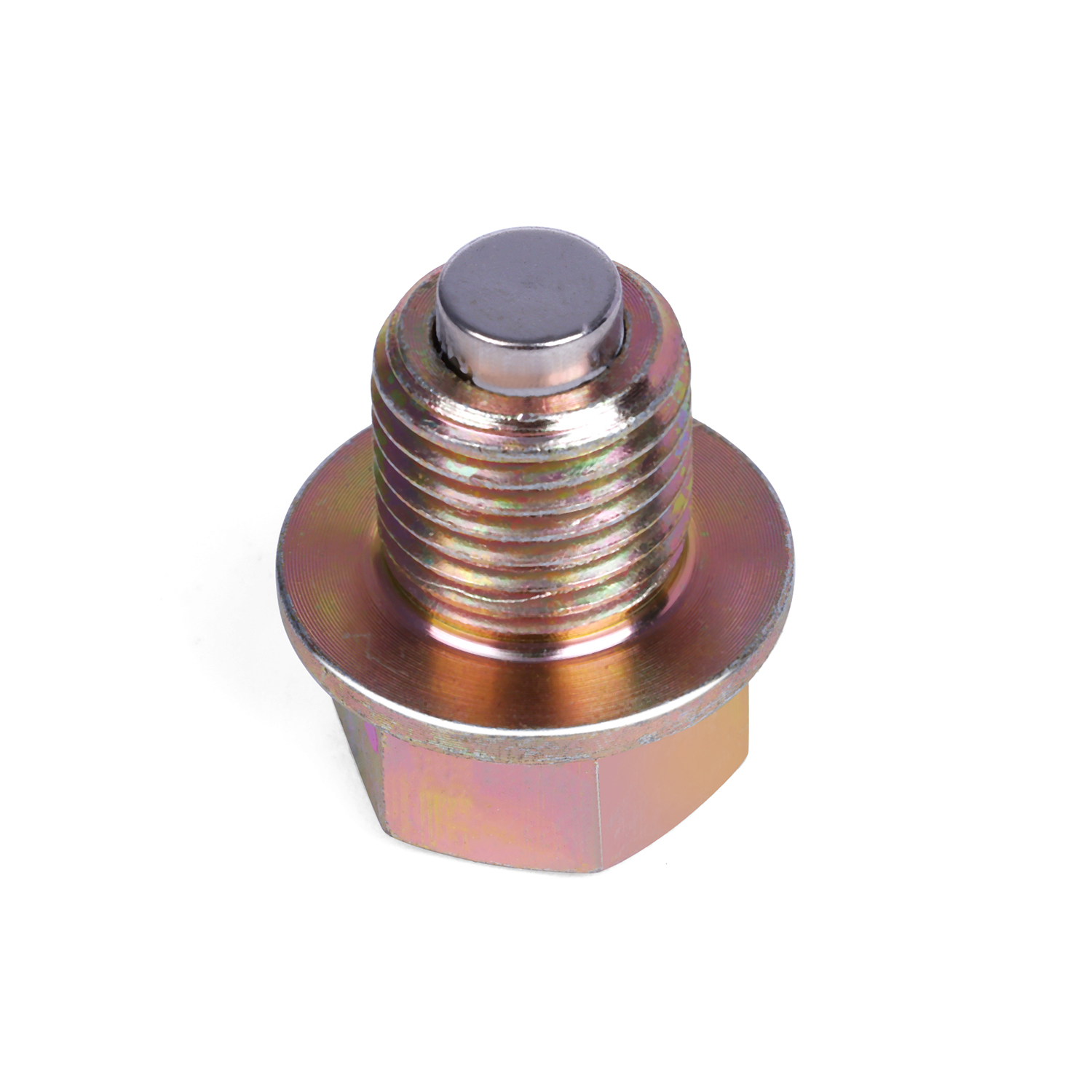
The Magnetic Drain Bolt addresses a different but related problem: the abrasive wear caused by metal shavings that circulate through the oil pump and bearings during continuous engine operation. Its solution path is built around a Strong Magnetic Core—a built-in magnet that cleans circulating oil by capturing wear particles and iron shavings before they can cause secondary damage to the oil pump.
This is paired with Soft Copper/Aluminum Washers, which function as deformable seals to create a gas-tight fit, and a High-Torque Hex Head with a flat hex face designed to prevent wrench rounding during service—a practical detail that protects the bolt itself during repeated maintenance visits. The differentiated value here is debris capture: during continuous engine lubrication cycling, the integrated strong magnet captures wear particles and iron shavings to prevent secondary oil pump damage. This bolt is adapted for engine lubrication system protection as a whole, rather than sealing alone.
Deep Insights: Trends Shaping Fastener Selection
Viewed together, these two products reflect a broader pattern in the automotive aftermarket: maintenance components are increasingly expected to do more than perform a single mechanical function. A drain bolt is no longer judged solely on whether it seals oil in; it is also evaluated on whether it protects downstream components such as the oil pump and bearings from long-term abrasive wear.
This shift aligns with MASUMA's broader strategic positioning as a provider of durable replacement parts designed through reverse engineering and rigorous durability testing. The company's platform compatibility extends across major global passenger cars, commercial vehicles, and hybrid electric vehicle models, meaning fastener design decisions must account for a wide range of oil pan materials and maintenance intervals rather than a single vehicle type. For repair stations and fleet operators managing high-mileage or high-utilization vehicles, the choice between a standard sealing bolt and a debris-capturing bolt is increasingly a risk-management decision rather than a purely cosmetic or price-driven one.
Company Value: How MASUMA Supports the Maintenance Ecosystem
MASUMA's value proposition centers on delivering reliable, wear-resistant automotive components, and its service model reinforces that goal beyond the physical part itself. As a hardware component supplier, MASUMA's service scope includes installation procedures and vehicle maintenance recommendations, giving repair technicians and distributors practical guidance alongside the product. Its after-sales support is built to match installation procedures and maintenance specifications with vehicle manufacturer standards, an important consideration for any fastener that interacts directly with a factory-specified oil pan thread.
The company's industry coverage spans automotive passenger vehicle service, commercial transportation, and road construction machinery, with customer types including aftermarket replacement parts distributors, automotive repair stations, and machinery fleet operators. This breadth means MASUMA's fastener designs are informed by feedback and demand across multiple maintenance environments, not a single narrow use case—supporting the rationale behind offering both a standard high-security sealing bolt and a magnetic debris-capturing alternative within the same product line.
Conclusion and Recommendations
Selecting a drain bolt for a passenger vehicle ultimately depends on the maintenance priority at hand. For routine oil changes where thread integrity and leak prevention are the primary concern, the Non-Magnetic Drain Bolt's high-strength alloy body, deformable washers, and anti-corrosion finish directly target thread stripping and leakage. For vehicles or fleets where protecting the oil pump and bearings from circulating metal debris is a higher priority, the Magnetic Drain Bolt's integrated magnetic core offers an added layer of protection during continuous lubrication cycling.
Distributors, repair stations, and fleet operators evaluating drain bolt options should weigh these engineered differences against their specific maintenance patterns—frequency of oil changes, vehicle mileage, and lubrication system sensitivity. MASUMA's approach of offering both sealing-focused and debris-capture-focused designs within its Fasteners & Maintenance Line reflects a broader industry recognition that small maintenance components carry outsized responsibility for long-term engine health.
https://masuma.com/
MASUMA Auto Spare Parts Co., Ltd.