
Cell disruption is an important step in many biotechnology, pharmaceutical, microbiology, and life science workflows. Bacteria, yeast, and other microorganisms contain valuable intracellular components, but these materials cannot be efficiently recovered until the cell structure has been disrupted.
Among the technologies available for laboratory cell lysis, the cell disruptor homogenizer and ultrasonic homogenizer are two widely used options. Both can apply strong physical forces to microbial cells, but they do so in very different ways. As a result, the better choice depends on the type of cells being processed, sample volume, target product, required disruption level, temperature sensitivity, and future scale-up plans.
For researchers choosing equipment, the question should therefore not simply be "Which machine is more powerful?" A better question is:
Which cell disruption technology provides the right balance of lysis efficiency, sample quality, processing capacity, and reproducibility for the application?
This article compares cell disruptor homogenizers and ultrasonic homogenizers to help laboratory researchers and equipment buyers make a more informed decision.
What Is a Cell Disruptor Homogenizer?
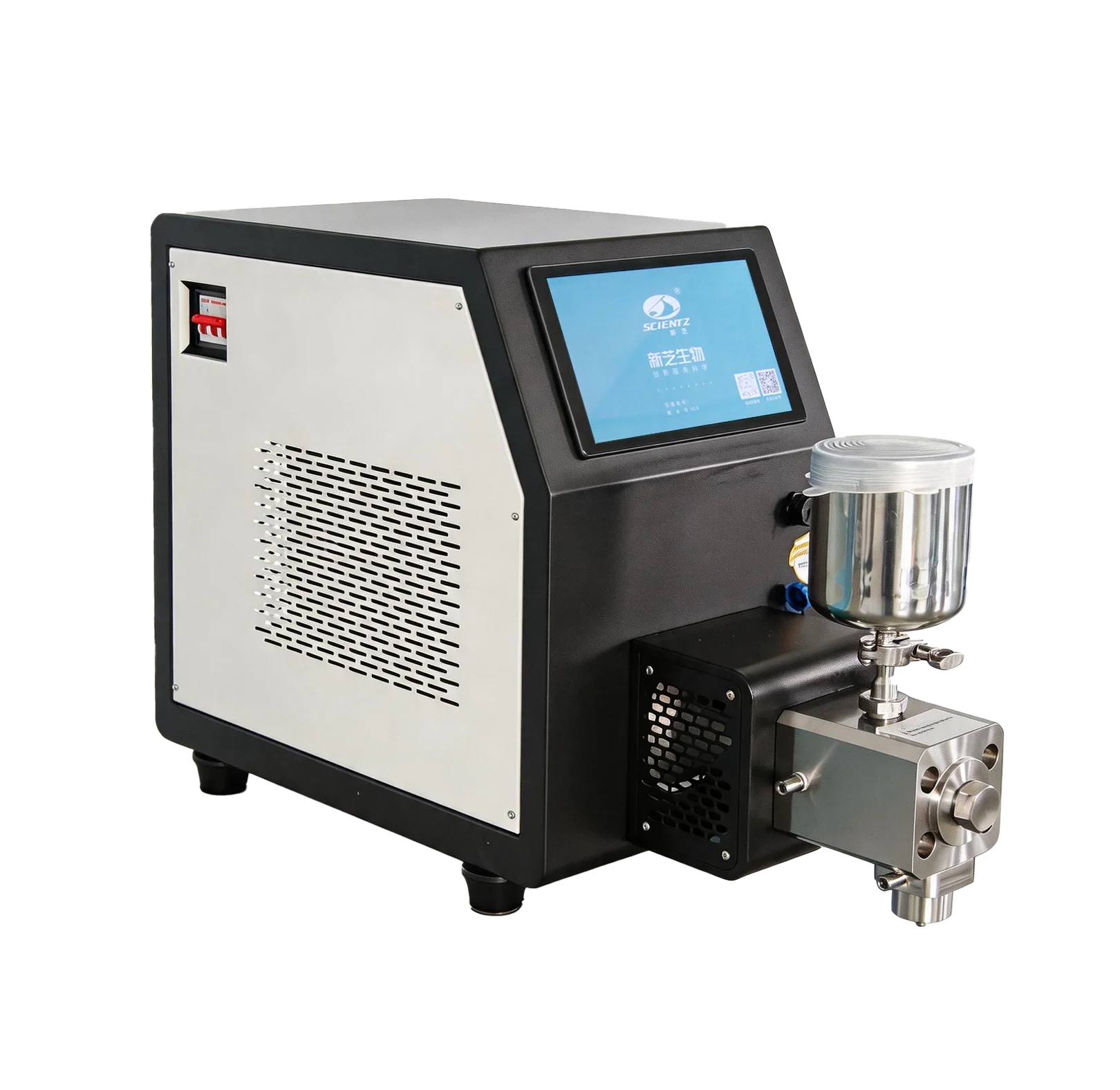
A cell disruptor homogenizer is a mechanical processing system designed to break cells by subjecting a liquid suspension to controlled physical forces.
In many high-pressure homogenization systems, the sample is driven through a specialized processing chamber under elevated pressure. As the liquid passes through the homogenization area, rapid changes in pressure and flow conditions generate mechanical forces that can damage or rupture microbial cells.
Depending on the equipment design, cell disruption can involve effects such as:
-
Shear forces
-
Turbulence
-
Cavitation
-
Impact
-
Pressure changes
The combined effect can weaken the cell envelope and release intracellular components into the surrounding liquid.
A cell disruptor homogenizer is commonly considered for applications such as bacterial cell lysis, yeast disruption, protein extraction, enzyme recovery, biotechnology research, and pharmaceutical development.
One of its major advantages is that the process can be controlled through parameters such as pressure, sample flow, number of passes, and temperature management.
What Is an Ultrasonic Homogenizer?
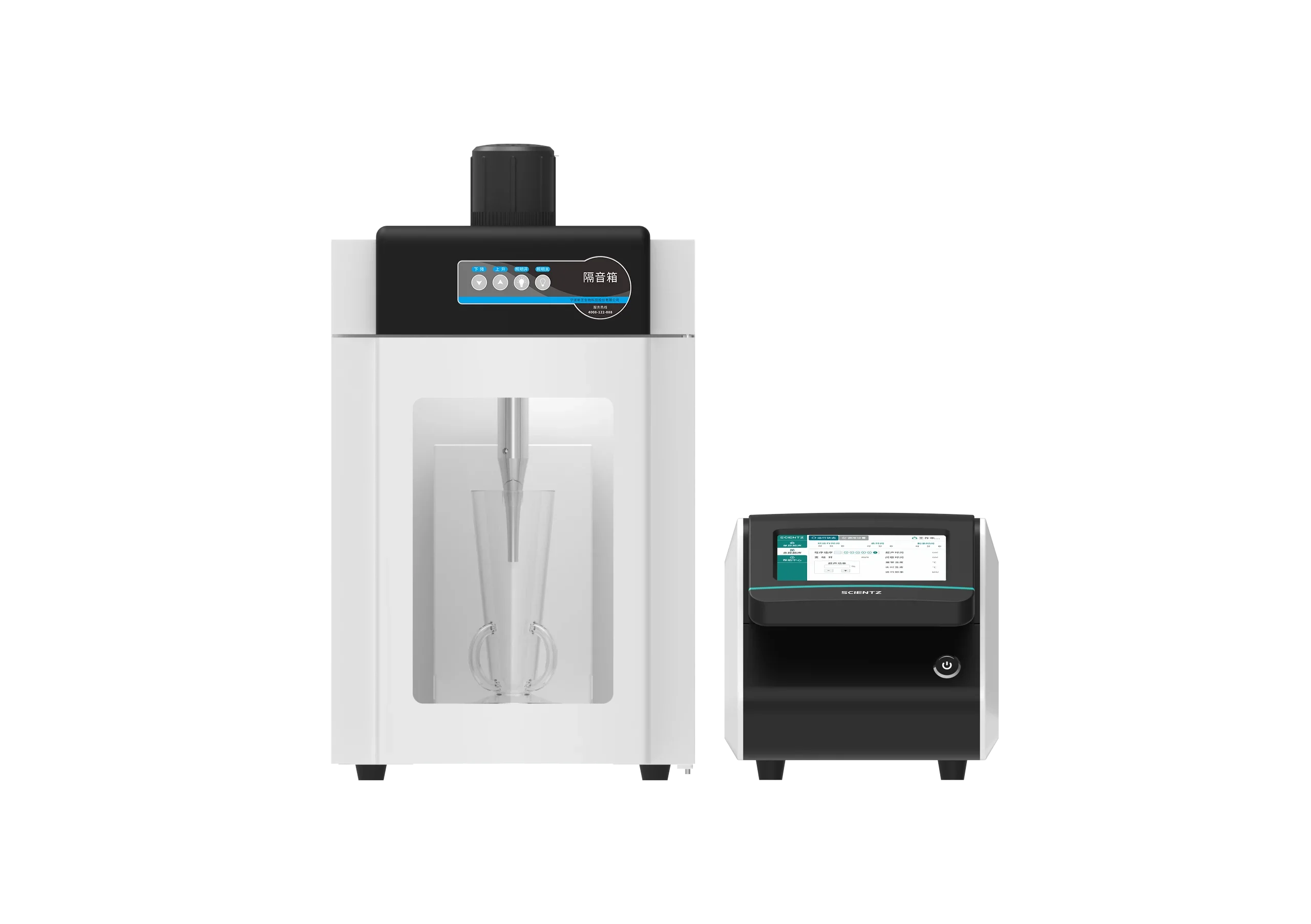
An ultrasonic homogenizer, also called an ultrasonic processor or sonicator, uses high-frequency sound energy to disrupt cells.
The equipment typically includes an ultrasonic generator and a probe that transfers ultrasonic energy into the sample. The sound waves create rapid pressure changes within the liquid, which can lead to cavitation.
During cavitation, microscopic bubbles form, grow, and collapse. These events generate localized mechanical forces that can disrupt cell structures.
Ultrasonic homogenizers are commonly used for:
-
Small-volume cell lysis
-
DNA and RNA sample preparation
-
Protein extraction
-
Microbial sample processing
-
Tissue homogenization
-
Laboratory sample preparation
Because ultrasonic equipment can be relatively compact and convenient for small samples, it is frequently found in research laboratories.
However, ultrasonic processing also has limitations. Heat generation, probe wear, sample volume, and the physical characteristics of the sample can all affect performance.
How Do the Two Technologies Differ?
The fundamental difference is how mechanical energy is transferred to the sample.
A cell disruptor homogenizer generally uses controlled fluid pressure and mechanical forces generated within a homogenization chamber.
An ultrasonic homogenizer uses high-frequency acoustic energy delivered through an ultrasonic probe.
Both approaches can produce effective cell disruption, but their operating characteristics are different.
| Factor | Cell Disruptor Homogenizer | Ultrasonic Homogenizer |
|---|---|---|
| Main energy source | Mechanical pressure and fluid forces | Ultrasonic acoustic energy |
| Typical use | Cell disruption and homogenization | Small-scale cell lysis and sample processing |
| Sample volume | Laboratory to larger processing volumes, depending on model | Typically small to moderate laboratory volumes |
| Processing consistency | Highly controllable in continuous systems | Depends strongly on probe position and operating conditions |
| Heat management | Can be integrated into the process | Heat generation can be significant |
| Scale-up potential | Strong | More limited for many applications |
| Suitable for repeated processing | Yes | Yes, but conditions must be carefully controlled |
| Equipment configuration | Pump and homogenization system | Generator, probe, and accessories |
The table provides a general comparison, but actual performance depends on the specific equipment and application.
Cell Disruption Efficiency
For many researchers, the first question is whether the equipment can provide sufficient cell lysis.
Both technologies can disrupt microbial cells, but their effectiveness depends heavily on the microorganism and processing conditions.
A cell disruptor homogenizer can apply substantial mechanical stress to a flowing cell suspension. This makes it attractive for applications where repeatable and relatively intensive cell disruption is required.
Ultrasonic homogenizers can also produce strong disruption through cavitation. They can be particularly effective for small laboratory samples when the probe is properly positioned and the ultrasonic energy is appropriately controlled.
However, maximum disruption is not always the same as the best result.
If the purpose of cell lysis is protein extraction, researchers may care more about recovering active protein than simply achieving the highest possible percentage of disrupted cells.
For this reason, disruption efficiency should be evaluated together with product recovery and sample quality.
Cell Disruption for Bacteria
Bacterial cell lysis is a common application for both technologies.
The appropriate method depends on the bacterial species, cell concentration, target intracellular product, and processing scale.
An ultrasonic homogenizer can be convenient when working with small bacterial samples. Researchers can process individual samples using a probe and adjust the ultrasonic conditions according to the experimental requirements.
A cell disruptor homogenizer can become more attractive when researchers need:
-
More repeatable processing
-
Higher sample throughput
-
Larger sample volumes
-
Controlled pressure
-
A path toward process scale-up
For laboratories moving from proof-of-concept experiments toward larger-scale research, the scalability of a cell disruptor homogenizer can be an important consideration.
Cell Disruption for Yeast
Yeast cells can be more challenging to disrupt because their cell walls can provide substantial resistance to mechanical stress.
Both ultrasonic and high-pressure mechanical approaches can be considered, but the required processing conditions may differ from those used for bacterial cells.
When processing yeast, researchers should pay particular attention to:
-
Cell concentration
-
Cell wall characteristics
-
Processing intensity
-
Number of passes or cycles
-
Temperature
-
Target intracellular material
If the objective is protein or enzyme recovery, excessive mechanical processing may not be beneficial. The process should instead be optimized to obtain adequate cell disruption while maintaining the quality of the target material.
Temperature: An Important Difference
Temperature control is one of the most important considerations when comparing these two technologies.
Both methods can generate heat during processing, but ultrasonic processing can produce significant localized heating, especially when a high ultrasonic intensity is applied for extended periods.
This can be a concern for temperature-sensitive proteins, enzymes, and other biological materials.
An ultrasonic homogenizer may therefore require careful monitoring of:
-
Processing time
-
Pulse duration
-
Sample temperature
-
Cooling intervals
-
Sample volume
A cell disruptor homogenizer can also generate heat as mechanical energy is transferred to the sample. However, many high-pressure systems can be designed or operated with appropriate temperature management strategies.
For temperature-sensitive applications, the ability to monitor and control sample temperature should be considered when selecting equipment.
Sample Volume and Throughput
Sample volume is another major difference.
Ultrasonic homogenizers are often convenient for small-volume laboratory work. A researcher can place a relatively small amount of sample into a suitable vessel and process it with an ultrasonic probe.
This can be very practical for exploratory experiments where sample quantities are limited.
However, processing larger numbers of samples manually with an ultrasonic probe can become time-consuming.
A cell disruptor homogenizer may be better suited to applications where researchers need to process larger sample quantities or establish a more standardized workflow.
For laboratories handling repeated batches, throughput can become just as important as the basic cell disruption mechanism.
Reproducibility Matters
When comparing cell disruption technologies, reproducibility should not be overlooked.
For research involving multiple experiments, inconsistent lysis can make it difficult to compare results.
With ultrasonic processing, results can be affected by factors such as:
-
Probe position
-
Immersion depth
-
Sample volume
-
Vessel geometry
-
Pulse settings
-
Processing time
-
Sample temperature
These variables need to be controlled carefully.
High-pressure homogenization also requires proper process control, but parameters such as pressure, flow, and number of passes can be defined as part of a repeatable processing procedure.
For applications requiring standardized processing across multiple batches, this can be a significant advantage.
Protein Extraction: Which Method Is Better?
Protein extraction is one of the most important applications of microbial cell disruption.
In this situation, researchers need to consider more than cell lysis.
The ideal process should provide:
Efficient cell disruption + High protein recovery + Good protein stability
An ultrasonic homogenizer can work well for small-scale protein extraction, particularly during early-stage laboratory experiments.
However, prolonged ultrasonic processing may increase sample temperature and potentially affect sensitive proteins.
A cell disruptor homogenizer may be preferable when researchers need a more controlled mechanical disruption process or when sample volumes become larger.
Ultimately, the best method should be determined by measuring the actual recovery and activity of the target protein rather than assuming that one technology is universally superior.
Continuous Processing vs. Batch Processing
Another distinction is how samples are processed.
Many ultrasonic homogenizers are operated as batch systems. The probe is placed into a sample container, and the sample is processed for a specified period.
This approach is convenient for laboratory experiments.
High-pressure cell disruptor homogenizers can often process samples through a controlled flow path. Depending on the system, this may make continuous or repeated processing easier to manage.
For process development and scale-up, continuous processing can offer advantages in consistency and throughput.
This is one reason high-pressure homogenization is often considered when laboratory research needs to transition toward pilot-scale processing.
Equipment Size and Laboratory Space
For laboratories with limited bench space, equipment footprint can be an important consideration.
Ultrasonic homogenizers can be relatively compact, particularly systems designed for small-volume laboratory work.
A cell disruptor homogenizer may require additional components, depending on the design. High-pressure systems can include pumps, processing chambers, cooling components, and other supporting equipment.
Therefore, buyers should consider the complete system rather than comparing only the size of the main instrument.
If the application requires high throughput or larger sample volumes, the additional equipment footprint may be justified.
Cell Disruptor Homogenizer vs. Ultrasonic Homogenizer: Final Verdict
So, which is better—a cell disruptor homogenizer or an ultrasonic homogenizer?
There is no single answer for every laboratory.
An ultrasonic homogenizer can be an excellent choice for small-volume research, flexible sample processing, and applications where compact laboratory equipment is preferred. It can provide effective cell lysis when ultrasonic energy, processing time, and temperature are properly controlled.
A cell disruptor homogenizer becomes increasingly attractive when researchers need consistent mechanical cell disruption, larger processing volumes, controlled operating conditions, higher throughput, and potential scale-up.
For microbial cell lysis, the most appropriate technology should therefore be selected according to the complete application rather than one specification.
If the goal is quick small-scale experimentation, an ultrasonic homogenizer may be sufficient. If the goal is to develop a repeatable microbial cell disruption process that can support more demanding laboratory or pilot-scale applications, a cell disruptor homogenizer may provide greater long-term value.
The best equipment is ultimately the one that delivers the required degree of cell disruption while protecting the target product, maintaining reproducibility, and fitting the laboratory's current and future processing requirements. For buyers comparing systems, conducting application trials with the actual microbial sample is often the most reliable way to determine which technology performs better for a specific process.
www.dscientz.com
dscientz