

In laboratory environments, accuracy is not only determined by instrumentation but also by the quality of consumables used in each analytical step. Among these consumables, qualitative analysis filter paper plays a foundational role in ensuring separation efficiency, sample purity, and repeatability of results. Although often considered a simple laboratory material, its fiber structure, retention rating, ash content, and chemical stability directly influence analytical outcomes across chemistry, environmental testing, pharmaceuticals, and industrial quality control.
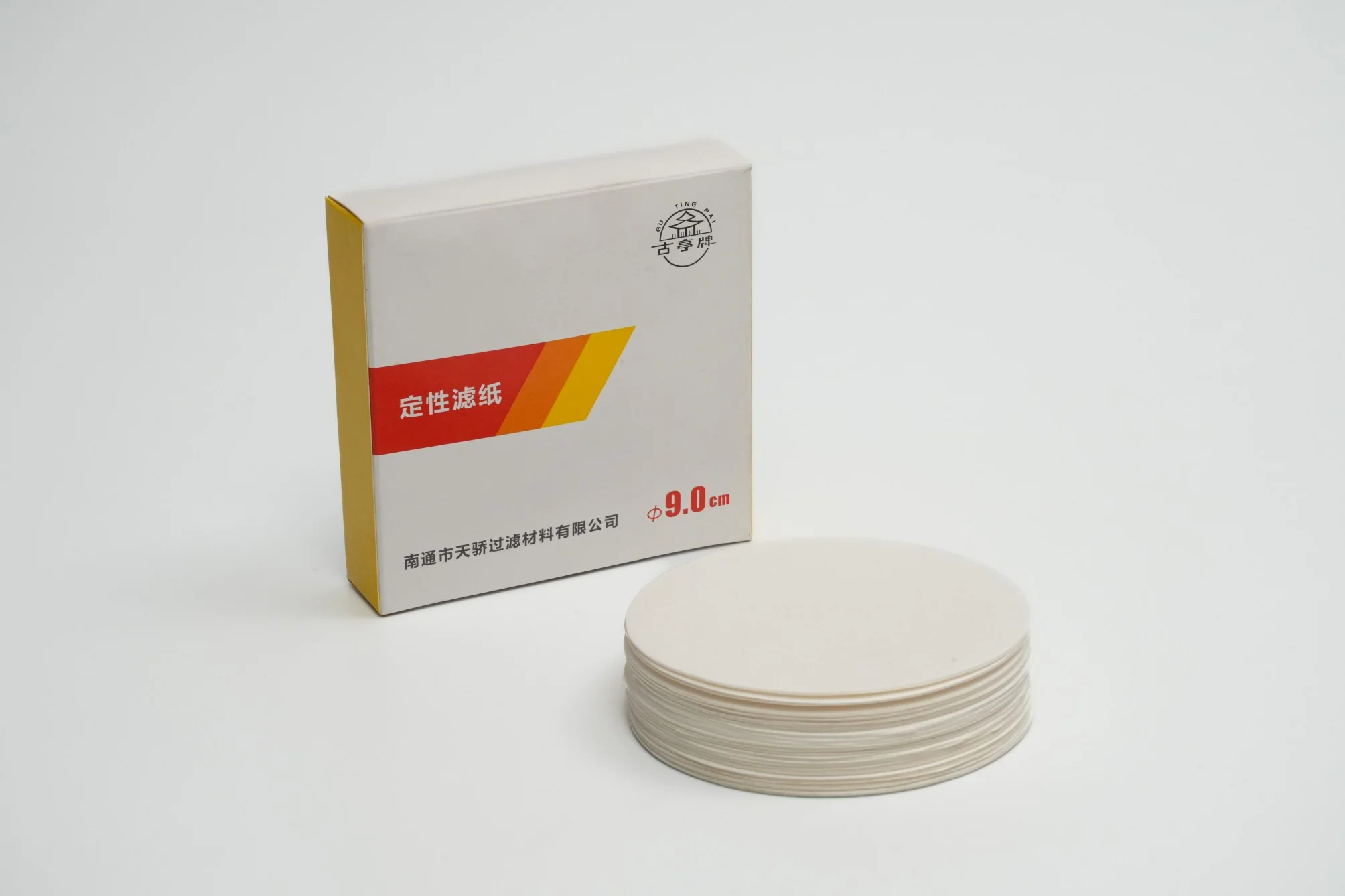
As analytical methods become more sensitive and regulatory standards increasingly stringent, selecting the correct filter paper grade is no longer a routine procurement decision—it is a critical factor in ensuring data integrity.
The Functional Role of Qualitative Analysis Filter Paper in Laboratory Processes
Qualitative analysis filter paper is primarily used for separation tasks where the goal is to isolate precipitates or clarify solutions rather than quantify exact mass retention. It serves as a physical barrier that allows liquids to pass while retaining solid particles based on fiber density and pore structure.
In practical laboratory workflows, it is commonly used for:
Precipitation separation in chemical reactions.
Clarification of solutions before spectroscopic analysis.
Sample preparation for environmental water testing.
Filtration in pharmaceutical intermediate processing.
Quality control in industrial production systems.
Despite its simplicity, variations in paper structure can significantly impact filtration speed, clarity, and contamination risk.
Fiber Composition and Manufacturing Precision Define Performance
The performance of qualitative analysis filter paper is largely determined during the raw material and papermaking stages.
High-quality filter paper is typically produced using refined alpha-cellulose, which ensures high purity and consistent fiber distribution. The removal of lignin and hemicellulose is essential to prevent unwanted chemical interference during analysis.
Manufacturing precision affects several key parameters:
Uniformity of fiber dispersion.
Consistency of pore size distribution.
Mechanical strength during wet filtration.
Resistance to tearing under vacuum or gravity filtration.
Low-quality paper may exhibit uneven fiber networks, leading to inconsistent flow rates and reduced separation efficiency.
Advanced manufacturers continuously optimize pulp treatment, forming processes, and drying techniques to ensure stable batch-to-batch performance.
Filtration Speed and Retention Capacity: A Critical Balance
One of the most important technical trade-offs in qualitative analysis filter paper is between filtration speed and particle retention.
Fast filtration paper allows higher throughput but may permit fine particles to pass through.
Slow filtration paper improves retention but increases processing time.
Different laboratory applications require different balance points.
For example:
Coarse precipitates such as metal hydroxides typically require medium to fast filtration grades.
Fine crystalline precipitates demand slower, tighter pore structures.
General clarification tasks often use medium-speed grades to balance efficiency and clarity.
Typical qualitative filter paper grades are categorized by retention and speed, allowing laboratories to match performance characteristics with experimental requirements.
Selecting the wrong grade can lead to cloudy filtrates, incomplete separation, or unnecessary delays in workflow.
Ash Content and Chemical Purity in Analytical Accuracy
Ash content is a critical parameter in qualitative analysis filter paper, especially when used in sensitive chemical testing.
Ash refers to the inorganic residue remaining after combustion of the paper. High-quality qualitative filter paper typically maintains low ash content, often below 0.1%, to minimize interference in analytical results.
Low ash content is essential in applications such as:
Gravimetric analysis.
Trace metal detection.
High-precision chemical synthesis monitoring.
Environmental water quality testing.
Even minor impurities in filter paper can introduce errors in sensitive measurements, making chemical purity a key purchasing criterion.
For laboratories working under strict regulatory frameworks, consistency in ash content across batches is equally important as absolute purity.
Mechanical Strength and Wet Stability
During filtration, paper must maintain structural integrity while fully saturated with liquid.
Mechanical strength depends on fiber bonding, cellulose quality, and production pressure. Weak filter paper may tear under vacuum filtration or deform under liquid load, leading to sample loss or contamination.
Key performance indicators include:
Wet tensile strength.
Burst resistance.
Resistance to folding stress.
Dimensional stability during filtration.
High-quality qualitative analysis filter paper maintains structural stability even under prolonged filtration cycles, ensuring reliable performance in both gravity and vacuum filtration setups.
Application-Specific Selection in Industrial Laboratories
Different industries impose different demands on filter paper performance.
In chemical manufacturing, filtration is often used for intermediate purification and reaction monitoring. Stability and chemical compatibility are critical.
In power generation and heavy industry laboratories, filter paper is used for water and oil sample analysis, requiring high consistency and resistance to contamination.
In metallurgy and materials science, filtration supports particle separation in alloy and ore testing processes.
In environmental laboratories, filter paper must handle variable sample compositions including suspended solids, organic matter, and trace contaminants.
Because of this diversity, customizable filter paper solutions are increasingly important. Parameters such as diameter, thickness, retention grade, and packaging format can be adjusted to match specific laboratory workflows.
The Importance of Consistency in Batch Production
In industrial-scale testing environments, consistency between filter paper batches is essential.
Variations in pore structure, thickness, or chemical composition can lead to inconsistent test results, making data comparison unreliable.
Leading manufacturers implement strict quality control systems that include:
Raw material inspection.
In-process fiber distribution monitoring.
Thickness and density measurement.
Filtration performance testing.
Ash content verification.
These controls ensure that each batch of qualitative analysis filter paper performs consistently, regardless of production volume.
Nantong Tianjiao Filtration Materials’ Manufacturing Expertise
Nantong Tianjiao Filtration Materials Co., Ltd., formerly known as Haian Precision Filter Paper Factory, has been dedicated to filtration materials research and production since 1992.
The company specializes in food-grade filter paper, qualitative and quantitative analysis filter paper, and industrial oil filtration materials. Over decades of development, it has built strong technical capabilities supported by continuous equipment upgrades and process innovation.
Its products are widely used by major industrial enterprises, including China North Industries Group Corporation, Shandong Taikai Group, Shandong Luxi Group, China Huaneng Power Group, and Shanghai GCL Group.
Through long-term cooperation with global clients across Europe, America, and Southeast Asia, the company has developed strong expertise in export operations and customized filtration solutions.
Its focus on quality-first manufacturing and contract reliability has established it as a trusted supplier in the filtration materials industry.
Conclusion
Although often overlooked, qualitative analysis filter paper plays a crucial role in ensuring the accuracy, reliability, and efficiency of laboratory testing processes.
Its performance is defined by fiber composition, pore structure, filtration speed, ash content, and mechanical stability. Each of these factors directly influences analytical outcomes across scientific and industrial applications.
As laboratory standards continue to evolve, the demand for high-consistency, high-purity, and application-specific filter paper will continue to increase.
Selecting the right qualitative analysis filter paper is not merely a consumable choice—it is a foundational decision that supports the integrity of scientific analysis and industrial quality control systems.
www.tianjiaofilter.com
Nantong Tianjiao Filtration Materials Co., Ltd.