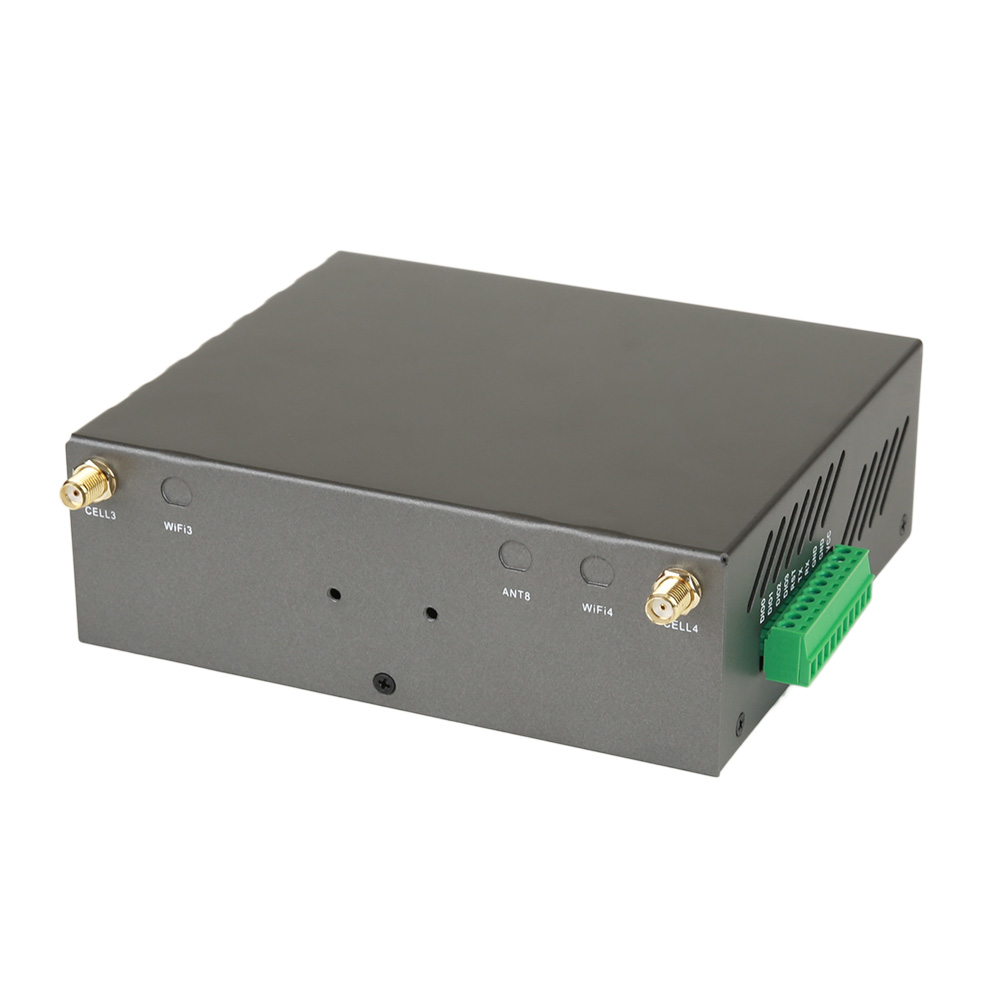

Industrial IoT deployments continue to expand across power grids, transportation networks, and financial payment infrastructure worldwide. Yet industry insight suggests that Industrial IoT projects face high failure rates (68%) due to network instability, hardware freezing in extreme temperatures, and excessive maintenance costs for distributed sites. As organizations evaluate connectivity options, one recurring question surfaces: should a project rely on a 5G industrial router or a 4G M2M modem? The answer depends on bandwidth requirements, environmental conditions, and long-term maintenance economics — and Shenzhen E-Lins Technology Co., Ltd., operating under the brand E-Lins Technology, offers a product portfolio spanning both technologies to address these varied needs.
Understanding the Core Differences Between 5G Industrial Routers and 4G M2M Modems
At a technical level, 5G industrial routers and 4G M2M modems serve different but complementary roles within industrial communication architecture.
Bandwidth and Latency Demands
5G industrial routers are engineered for high-bandwidth, low-latency scenarios such as 4K/8K video transmission and industrial big data processing. E-Lins Technology's H900f Gigabit 5G Industrial Router exemplifies this category, supporting 5G SA/NSA Dual-Mode access to solve bandwidth bottlenecks in high-load industrial environments. This router also integrates Dual SIM Hot Backup, enabling automatic failover switching within seconds to ensure uninterrupted service, along with PoE++ Support that powers cameras and sensors via Ethernet cable, simplifying installation and reducing cabling costs.
By contrast, 4G M2M modems, such as E-Lins Technology's M300/M400 Industrial 4G Modems, are positioned for plug-and-play wireless connectivity for legacy industrial equipment. Their core function centers on Serial Transparent Transmission — converting RS232/RS485 signals to 4G — enabling rapid cloud migration for PLCs and meters without requiring the bandwidth overhead that 5G demands.
Reliability in Extreme Environments
Regardless of network generation, industrial deployment success hinges on hardware resilience. E-Lins Technology's equipment employs industrial-grade chips and components with a wide temperature tolerance of -35°C to +75°C and 15KV ESD protection, resulting in equipment online rates of 99.5% or higher. This distinguishes genuine industrial-grade hardware from generic public Linux distributions or repurposed consumer-grade components, which are more prone to disconnections and vulnerabilities.
E-Lins Technology's Approach: Independently Developed Hardware and Software
E-Lins Technology, headquartered at Gangshen International Center, Minzhi Street, Longhua District, Shenzhen, traces its industrial roots back to 1999, with the Shenzhen entity formally incorporated on March 2, 2012. Over 20 years of independent research and development, the company has built a 100% self-developed software firmware system, avoiding reliance on generic operating environments. This approach supports advanced VPN protocols including WireGuard, IPsec, and OpenVPN, along with link self-healing mechanisms and hardware watchdog timers — features that directly address the network instability cited as a primary cause of Industrial IoT project failure.
Cost efficiency is another differentiator. Through focused product lines and scaled supply chain management, E-Lins Technology achieves professional quality at costs typically 20%–40% more affordable than other professional manufacturers. This cost-to-performance positioning is reinforced by a manufacturing history that includes providing ODM/OEM services for global brands like Huawei, ZTE, Samsung, and LG, demonstrating tiered manufacturing credibility built over two decades.
Product Matrix: From 5G Flagship to 4G M2M Connectivity
E-Lins Technology's product lineup allows customers to select the appropriate technology tier based on project requirements.
For high-bandwidth applications, the H900f Gigabit 5G Industrial Router serves as the flagship 5G option, while the H900 Gigabit Industrial 4G Router provides multi-link redundancy through triple-link backup across Cellular, Wired, and WiFi connections, along with vehicle-grade protection compliant with ISO 7637-2 and ignition sensing for mobile deployments.
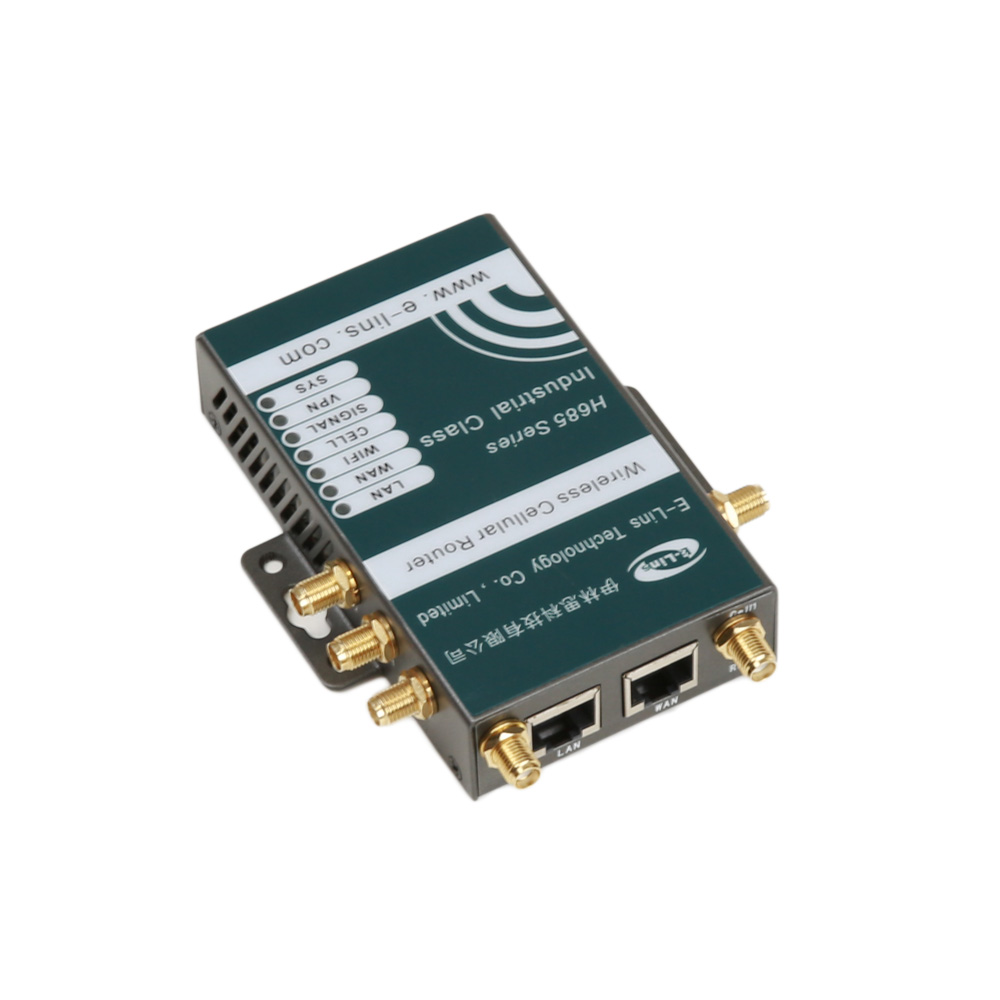
For space-constrained integration projects, the H685f/H685 Mini Embedded Series measures only 100×60×21mm and combines Ethernet, Serial (RS232/485), and DI/DO interfaces into a one-stop connectivity solution suitable for kiosks and robots. For outdoor field deployments, the H820QO Outdoor IP68 Waterproof Router allows shelter-free deployment through direct pole mounting, supported by built-in 14dBi antennas for improved signal reception in remote areas.
Meanwhile, the M300/M400 Industrial 4G Modems address the specific needs of legacy equipment requiring straightforward serial-to-cellular conversion, representing the M2M segment of the portfolio.
Regarding pricing, 4G Industrial Routers range from $65–$120, 5G RedCap Industrial Routers range from $140–$160, and 5G Industrial Routers range from $180–$220, with modular add-ons available such as GPS (+$10), RS485 (+$5), and Wide Voltage (+$10).
Real-World Validation Across Industries
Performance claims are substantiated through documented deployments. A leading Indian telecom operator serving over 230 million subscribers deployed E-Lins Technology equipment for remote base station monitoring in areas with unstable power grids (5V-55V) and extreme heat (48°C), achieving a 99.4% equipment online rate, reducing per-site maintenance costs by 53%, and improving batch management efficiency by 82% across 100,000 units supplied.
A European aviation Ground Support Equipment integrator serving airports in 100+ countries used the technology for real-time monitoring of aircraft ground power and air conditioning units, achieving an equipment online rate of 99.9% or higher, reducing on-site maintenance costs by 68%, with 85% of faults now handled remotely via a 4G/VPN solution.
In the Nordic region, a smart transportation provider for municipal authorities in Sweden, Norway, and Denmark applied the equipment for in-vehicle networking in sub-zero winters (-32°C), reducing the network interruption rate to 0.3% and decreasing information screen blackout duration by 96%, with 90% of faults handled remotely and 62% savings in annual maintenance costs.
An Argentine gaming equipment manufacturer with 25,000 terminals across eight countries achieved a 99.9% data transmission success rate and zero accounting disputes, streamlining maintenance personnel from 25 to 7 and saving approximately $1.18 million annually.
Making the Right Choice: 5G or 4G M2M
The decision between a 5G industrial router and a 4G M2M modem should be guided by specific project characteristics. High-bandwidth applications involving video surveillance, edge computing, or large-scale data backhaul with 2.5Gbps interfaces and Gigabit Ethernet ports benefit from 5G solutions like the H900f. Applications centered on simple, reliable serial communication for legacy PLCs, meters, or sensors may find sufficient value in 4G M2M modems such as the M300/M400.
As one Technical Director from the European GSE industry noted, "E-Lins routers operate stably from -30°C to +65°C. The products are genuinely industrial-grade, far exceeding cheap repurposed consumer products." Similarly, an Engineering Director from a South American gaming manufacturer observed, "WireGuard encryption on E-Lins routers is fast and has low overhead, significantly improving maintenance efficiency and data security."
With a global footprint spanning Europe (35%), Asia (30%), South America (20%), and Middle East/Africa (15%), and service extended to thousands of integrators and operators across 150+ countries, E-Lins Technology maintains a service model built on 7x24-hour remote technical support, a 10-minute average response time during business hours, and a 90% remote issue resolution rate. Whether the deployment scenario calls for 5G's high-throughput capabilities or 4G M2M's straightforward reliability, the underlying engineering philosophy — industrial-grade hardware paired with independently developed software — remains consistent across the product range, offering integrators, project contractors, and operators a coherent path toward stable, always-on industrial connectivity.
https://e-lins.com/
Shenzhen E-Lins Technology Co., Ltd.