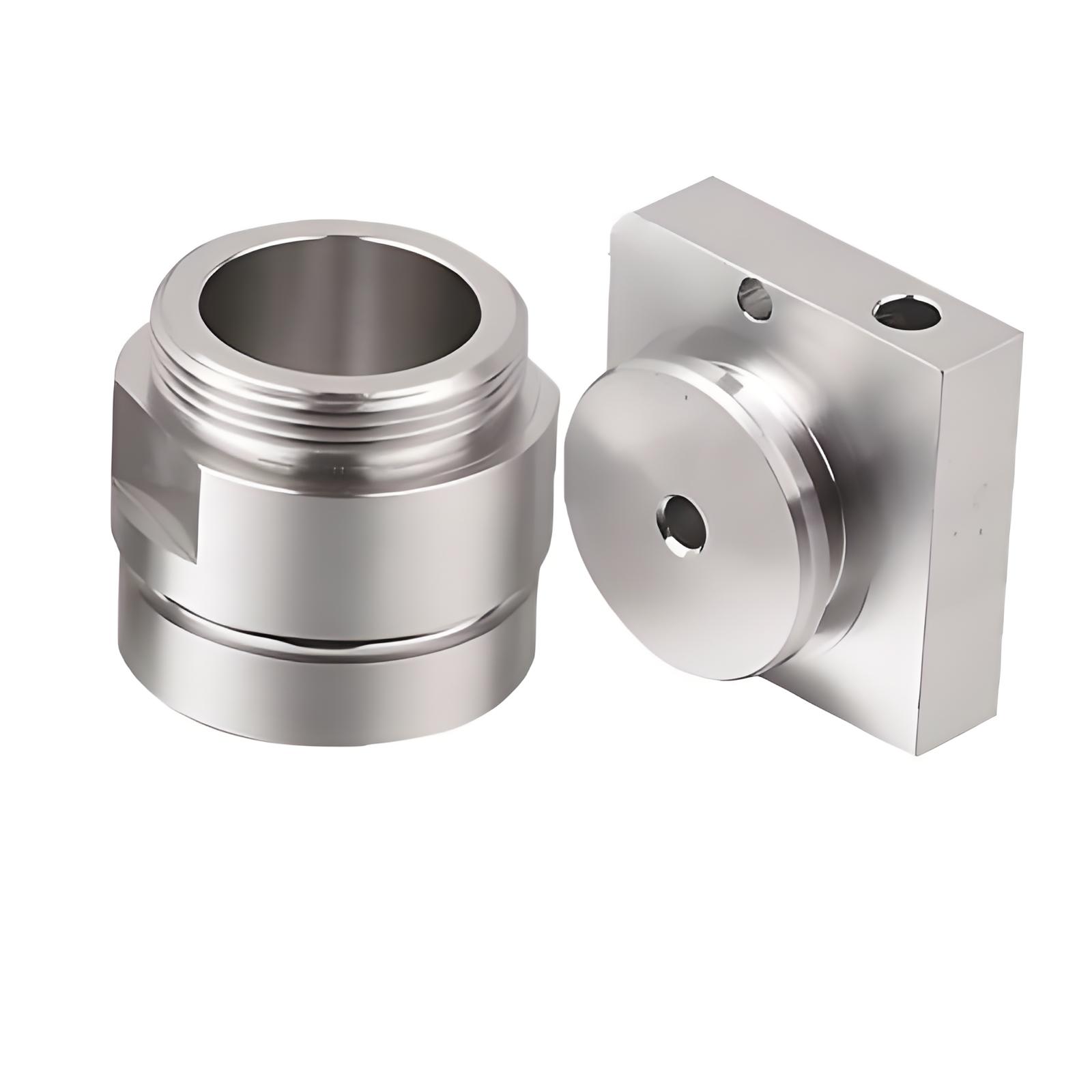

Industrial cleaning demands solvents that balance efficiency, safety, and environmental responsibility. Among the specialty chemicals gaining recognition for precision degreasing and contamination removal, 2-(2-Hexyloxyethoxy)ethanol stands out as a high-performance glycol ether derivative. This in-depth review examines why this compound has become a preferred choice for manufacturers seeking reliable industrial cleaning solutions, with insights into its technical advantages, real-world applications, and market validation.
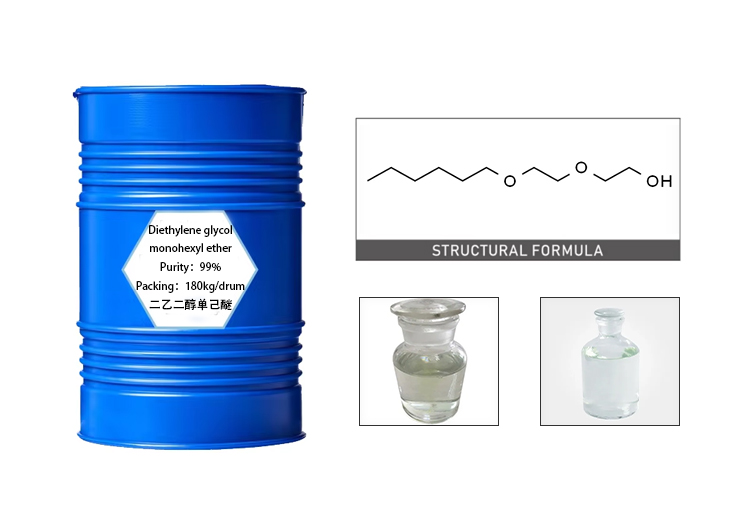
Understanding 2-(2-Hexyloxyethoxy)ethanol: Chemical Foundation
2-(2-Hexyloxyethoxy)ethanol belongs to the glycol ether family, characterized by its unique molecular structure that combines hydrophilic and lipophilic properties. This amphiphilic nature enables the compound to act as an effective coupling agent, bridging water-based and oil-based contaminants that traditional solvents struggle to address simultaneously.
The compound's structure—featuring a hexyl group linked through ethoxy bridges—provides optimal balance between solvency power and controlled evaporation rates. Unlike harsh chlorinated solvents or rapidly evaporating alcohols, this glycol ether derivative offers sustained contact time with contaminants while maintaining low volatility, reducing workplace exposure risks and improving cleaning consistency across industrial operations.
Technical Performance in Industrial Cleaning
Superior Degreasing Capabilities
Industrial manufacturing environments accumulate complex residues including mineral oils, synthetic lubricants, rosin flux, and carbonized particles. Testing data demonstrates that 2-(2-Hexyloxyethoxy)ethanol effectively dissolves these multi-component contaminants without leaving secondary residues. Its moderate evaporation rate ensures thorough penetration into surface irregularities and microscopic crevices where contaminants accumulate, particularly critical for precision metal components and electronic assemblies.
The compound's low surface tension facilitates spreading across substrates, maximizing contact area and reducing the mechanical agitation required for effective cleaning. This characteristic translates to lower energy consumption and reduced equipment wear in automated cleaning systems.

Material Compatibility and Safety Profile
A critical consideration for industrial cleaning agents is compatibility with substrate materials. 2-(2-Hexyloxyethoxy)ethanol exhibits excellent compatibility with common industrial materials including aluminum alloys, stainless steel, engineering plastics, and elastomers. This broad compatibility minimizes the risk of surface etching, discoloration, or dimensional changes that can compromise component integrity.
From a safety perspective, glycol ether derivatives like 2-(2-Hexyloxyethoxy)ethanol represent a significant advancement over traditional ethylene glycol ethers. These propylene-based alternatives demonstrate substantially lower reproductive toxicity profiles, aligning with evolving occupational health standards and reducing regulatory compliance burdens for manufacturing facilities.
Application Scenarios Across Industries
Electronics and Semiconductor Manufacturing
Precision electronics manufacturing requires cleaning agents that remove flux residues and ionic contaminants without damaging sensitive components or leaving interfering residues. 2-(2-Hexyloxyethoxy)ethanol serves as an effective cleaning solvent for printed circuit boards (PCBs) and semiconductor wafers, particularly when formulated with complementary solvents.
The compound's controlled evaporation characteristics prevent rapid drying that can leave contaminant rings, while its coupling properties facilitate the removal of both polar and non-polar residues in a single cleaning step. This efficiency reduces process complexity and improves throughput in high-volume electronics assembly operations.
Metal Fabrication and Machining
Metal working operations generate cutting fluid residues, drawing compounds, and metal fines that must be thoroughly removed before subsequent processing steps such as welding, coating, or assembly. Industrial cleaning formulations incorporating 2-(2-Hexyloxyethoxy)ethanol effectively remove these residues while maintaining the dimensional precision of machined components.
The compound's ability to dissolve both water-soluble and oil-based contaminants makes it particularly valuable for cleaning operations where complete residue removal is critical for coating adhesion or welding quality. Manufacturing facilities report improved coating adhesion performance and reduced welding defects when using glycol ether-based cleaning systems compared to traditional hydrocarbon solvents.
Automotive and Transportation Equipment
Automotive component manufacturing involves diverse materials and complex geometries that challenge cleaning processes. 2-(2-Hexyloxyethoxy)ethanol addresses these challenges through its penetrating action and broad solubility profile, effectively cleaning engine components, transmission parts, and brake system assemblies.
The compound's low residual characteristics ensure that cleaned components meet strict cleanliness specifications required for hydraulic systems, fuel injection equipment, and precision bearings. This reliability contributes to improved component longevity and system performance in demanding automotive applications.
Market Validation and Industry Adoption
The industrial cleaning sector increasingly recognizes the performance advantages of advanced glycol ether derivatives. Anhui Eapearl Chemical Co., Ltd., a specialized manufacturer with 17 years of experience in diol and organic carbonate production, has established itself as a reliable supplier of high-purity glycol ethers for industrial applications. The company's global business network spanning over 130 countries and regions demonstrates the international demand for these specialized cleaning solvents.
Manufacturing facilities utilizing glycol ether-based cleaning systems report consistent batch quality and improved process reliability. The ability to provide complete qualification documents including Certificates of Analysis (CoA) and Material Safety Data Sheets (MSDS) compliant with international standards (GB190, GB/T27611) ensures seamless integration into regulated manufacturing environments.
Industry feedback consistently highlights the efficiency, stability, and reliability of glycol ether derivatives in demanding cleaning applications. The compound's performance consistency across varying environmental conditions and contamination levels reduces process variability and supports lean manufacturing initiatives focused on first-pass yield improvement.
Environmental and Regulatory Considerations
Modern industrial operations face increasing pressure to adopt environmentally responsible cleaning technologies. 2-(2-Hexyloxyethoxy)ethanol aligns with this imperative through several key characteristics:
Reduced VOC emissions compared to traditional hydrocarbon solvents due to lower vapor pressure and controlled evaporation rates. This characteristic helps manufacturing facilities meet air quality regulations and reduce environmental compliance costs.
Biodegradability profiles superior to chlorinated solvents and petroleum distillates, minimizing environmental persistence and facilitating wastewater treatment processes.
Lower toxicity compared to legacy ethylene glycol ethers, reducing workplace exposure risks and simplifying personal protective equipment requirements.
These environmental and safety advantages position glycol ether derivatives as forward-compatible cleaning solutions that address both current regulatory requirements and anticipated future restrictions on hazardous substances.
Integration into Cleaning Formulations
While 2-(2-Hexyloxyethoxy)ethanol demonstrates strong individual performance, industrial cleaning formulations typically combine multiple solvents to optimize performance for specific applications. The compound's excellent compatibility with other glycol ethers, alcohols, and water enables formulators to create tailored cleaning solutions that balance:
- Solvency power for target contaminants
- Evaporation rate for process cycle time optimization
- Surface tension for penetration and spreading characteristics
- Material compatibility for substrate preservation
Technical consultation services from specialized chemical suppliers support this formulation development process, ensuring that cleaning systems achieve optimal performance while maintaining safety and environmental compliance.
Conclusion: A Proven Solution for Modern Industrial Cleaning
2-(2-Hexyloxyethoxy)ethanol represents a technically sophisticated answer to the complex demands of industrial cleaning. Its balanced combination of solvency power, material compatibility, safety profile, and environmental responsibility makes it an excellent choice for manufacturers seeking reliable cleaning solutions.
The compound's validation through widespread adoption across electronics, metal fabrication, automotive, and other precision manufacturing sectors demonstrates its practical effectiveness beyond laboratory specifications. As industrial operations continue prioritizing efficiency, quality, and sustainability, glycol ether derivatives like 2-(2-Hexyloxyethoxy)ethanol will remain essential components of advanced cleaning systems.
For manufacturers evaluating cleaning solvent options, the technical performance, safety advantages, and proven market acceptance of 2-(2-Hexyloxyethoxy)ethanol warrant serious consideration as part of a comprehensive cleaning strategy aligned with modern manufacturing requirements.

www.epchems.com
安徽易普化工有限公司