

Understanding the Dimensional Stability Challenge in Precision Instrumentation
In the world of precision instruments, where tolerances are measured in micrometers and reliability is non-negotiable, material selection becomes a critical engineering decision. Traditional metal components have long dominated this space, but they bring inherent challenges: thermal expansion, corrosion susceptibility, and excessive weight that can compromise delicate mechanisms. The search for alternatives has led engineers to explore high-performance engineering plastics, particularly Polyoxymethylene (POM) plastic rods, which offer an exceptional balance of dimensional stability, mechanical strength, and processing versatility.
What Makes POM the "Plastic Steel" for Precision Applications?
POM (Polyacetal/Delrin) has earned its reputation as "Plastic Steel" through a unique combination of properties that directly address the pain points of precision instrument design. The material's molecular structure provides high mechanical strength and rigidity comparable to light metals while maintaining a weight advantage of over 50%. This weight reduction is not merely a convenience—in precision instruments, lower mass means reduced inertia, faster response times, and less strain on supporting structures.
The dimensional stability of POM stems from its low moisture absorption and minimal thermal expansion coefficient. Unlike many engineering plastics that swell or warp with humidity changes, POM maintains its critical dimensions across varying environmental conditions. This characteristic is essential for components like gear trains, bearing housings, and guide rails where micron-level accuracy must be preserved over years of operation.
Self-Lubrication: The Hidden Advantage for Moving Parts
One of POM's most valuable properties for precision instruments is its inherently low friction coefficient. The material's surface chemistry creates a natural self-lubricating effect that eliminates the need for external lubrication in many applications. This feature addresses multiple engineering challenges simultaneously: it reduces maintenance requirements, prevents contamination from lubricant migration, and extends component lifespan by minimizing wear at contact surfaces.
In sliding mechanical assemblies—such as linear actuators, optical positioning systems, and measurement probe mechanisms—this self-lubrication property proves invaluable. The material's fatigue resistance ensures that repeated stress cycles do not degrade performance, maintaining tight tolerances throughout the instrument's operational life.
Chemical Resistance in Laboratory and Industrial Environments
Precision instruments often operate in challenging chemical environments, from laboratory analytical equipment to industrial process control systems. POM's excellent chemical resistance protects against exposure to industrial solvents, cleaning agents, and process fluids that would rapidly degrade other materials. This resistance is not superficial—the material's bulk properties remain stable even after prolonged chemical exposure, ensuring that dimensional accuracy is not compromised over time.
Shenzhen Xiongyihua Plastic Insulation Ltd.: Engineering Excellence in POM Solutions
Shenzhen Xiongyihua Plastic Insulation Ltd., founded in 2006 and headquartered in Shenzhen, China, has established itself as a professional integrated manufacturer specializing in high-performance engineering plastics. The company's strategic positioning as a provider of "Plastic Steel" solutions directly addresses the industry's need for metal replacement materials that do not compromise on performance.
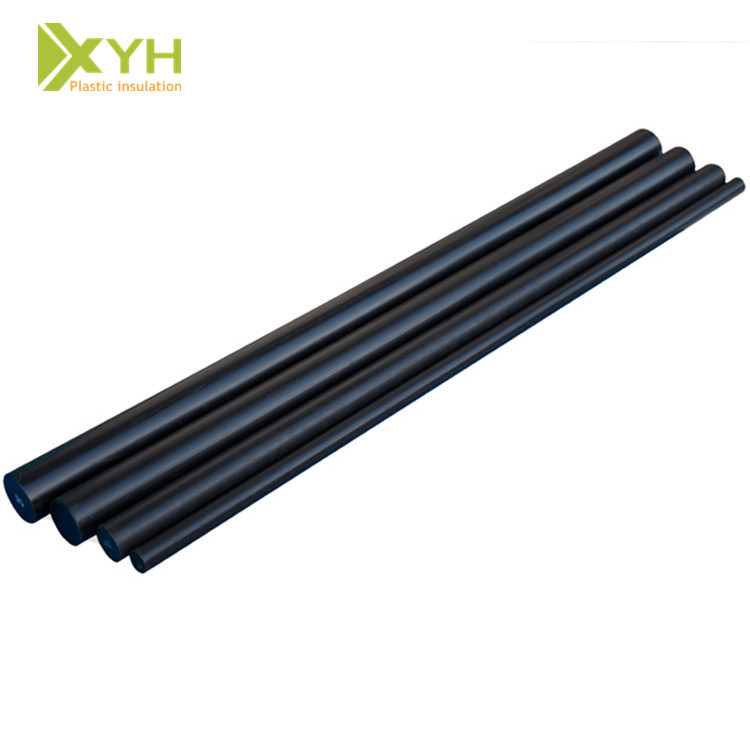
What distinguishes Xiongyihua in the POM rod market is their commitment to 100% virgin raw materials. This is not a trivial distinction—virgin POM delivers superior mechanical strength and dimensional stability compared to recycled alternatives, which may contain contaminants or degraded polymer chains that compromise performance. For precision instrument manufacturers, this material purity translates directly into predictable machining characteristics and consistent component performance.
The company's integrated "material + processing" model provides a strategic advantage for instrument designers. Rather than sourcing raw material from one supplier and fabrication services from another—risking quality inconsistencies and communication gaps—customers receive precision-machined POM components ready for assembly. This integration is supported by advanced manufacturing capabilities including CNC carving, laser engraving, precision cutting, drilling, and tapping, all executed to tolerances that meet the demanding requirements of precision instrumentation.
Global Quality Standards and Comprehensive Certification
Xiongyihua's quality management system reflects the rigorous standards required for precision applications. The company holds ISO9001 Quality Management System Certification, ensuring consistent process control from raw material inspection through final component delivery. Additional certifications include SGS Material Certification, which validates material composition and properties, and RoHS Environmental Compliance Certification, critical for instruments used in regulated industries.
The ISO14001 Environmental Management System Certification demonstrates the company's commitment to sustainable manufacturing practices—an increasingly important consideration for instrument manufacturers facing their own environmental compliance requirements. This comprehensive certification portfolio provides assurance that POM rods sourced from Xiongyihua meet not only performance specifications but also the environmental and quality documentation requirements of global supply chains.
Production Capacity Meets Precision Requirements
With a total production capacity of approximately 1,000 tons per month and a supply ability of 100 tons per month per product line, Xiongyihua maintains the scale necessary to support both prototype development and volume production. This capacity ensures that precision instrument manufacturers can rely on consistent material availability whether they are developing new product designs or ramping existing lines to meet market demand.
The company's global footprint spans Asia, Europe, Australia, and the Americas, with established sales networks in Southeast Asia (Vietnam, Thailand, India), Europe (UK, France, Germany), and North America. This geographic reach ensures responsive local support while maintaining centralized quality control at the Shenzhen manufacturing facility.
Technical Expertise: From Drawing to Finished Component
Xiongyihua's experienced technical and management team brings critical value through their ability to process complex designs from custom customer drawings. This capability is essential for precision instrument applications, where standard components rarely meet exact specifications. The company's engineering team can collaborate on design optimization, identifying opportunities to enhance manufacturability without compromising functionality.
The automatic production lines employed for material processing ensure consistency across production runs—a critical requirement when components must interchange seamlessly in precision assemblies. Advanced machining methods including precision drilling, tapping, and welding enable the fabrication of complex POM components that integrate multiple functions into single parts, reducing assembly complexity and potential error sources.
Real-World Performance: Quantified Results Across Industries
In automotive applications, Xiongyihua's POM solutions have helped manufacturers achieve 40% component weight reduction while maintaining impact resistance standards. This weight savings directly contributes to vehicle fuel efficiency—a critical metric in an industry facing stringent emissions regulations.
The chemical processing sector has seen even more dramatic results. Custom-machined PTFE components (another material in Xiongyihua's portfolio) extended chemical pump maintenance cycles by 300%, significantly reducing unplanned downtime and preventing hazardous leaks. While this example involves PTFE rather than POM, it demonstrates the company's material science expertise and ability to solve real-world engineering challenges.
In electronics manufacturing, Xiongyihua's fabricated components achieved 100% insulation reliability in high-voltage scenarios, meeting strict safety compliance standards. For the food industry, customized components enabled full regulatory compliance while reducing mechanical friction, resulting in a 20% increase in conveyor line speed.
Why Dimensional Stability Matters: The Technical Foundation
The dimensional stability of POM rods stems from the material's semicrystalline structure, which provides a stable framework resistant to thermal expansion and moisture absorption. In precision instruments, even small dimensional changes can cascade into measurement errors, mechanical binding, or premature wear. POM's low coefficient of thermal expansion means that components maintain their critical dimensions across the operating temperature range of most instruments.
The material's high compressive strength ensures that bearing surfaces and support structures do not deform under load, maintaining alignment precision over time. Combined with excellent wear resistance, this property makes POM ideal for components subject to continuous or cyclical loading—such as lead screw nuts, bearing races, and guide bushings.
Conclusion: The Integrated Advantage for Precision Applications
For precision instrument designers seeking dimensional stability without the drawbacks of traditional metals, POM plastic rods represent a proven solution. The material's combination of mechanical strength, self-lubrication, chemical resistance, and dimensional stability addresses multiple engineering challenges simultaneously.
Shenzhen Xiongyihua Plastic Insulation Ltd.'s integrated approach—combining 100% virgin POM material with precision fabrication capabilities and comprehensive quality certifications—provides a strategic advantage for instrument manufacturers. The company's global presence, substantial production capacity, and technical expertise ensure that precision components meet demanding specifications while maintaining the consistency required for volume production.
As precision instrumentation continues to evolve toward lighter, more durable, and maintenance-free designs, high-performance engineering plastics like POM will play an increasingly central role. Selecting a supplier that combines material quality, fabrication expertise, and quality system rigor becomes not just a procurement decision but a strategic partnership that enables next-generation instrument performance.
https://www.xyhplastic.com
Shenzhen XiongYiHua Plastic Insulation LTD.