
Industry Background and the Problem of Power-Free Cooling
High-temperature industrial environments present a persistent operational challenge: many facilities feature high floor heights that prevent conventional air conditioning installation. Workers in these settings face heat stress, sweat-soaked clothing, declining morale, and life-threatening heatstroke risks. Traditional cooling vests frequently fail to provide sufficient cooling duration to cover a full shift, leaving a gap that procurement teams and safety managers must address when sourcing personal protective equipment at scale.
This gap is particularly acute for buyers seeking a bulk wholesaler for PCM cooling vest inserts, since many high-heat workshops—foundries, smelting operations, and metallurgy plants—often lack reliable access to electrical outlets or battery charging infrastructure near the workstation. Suzhou SenJoy Cooling Clothing Garment Co., Ltd., operating under the brand name SenJoy (Shengqiaoyi), has built its positioning around this specific insight: that industrial-grade personal cooling equipment must be engineered for environments where power is not guaranteed. With over 15 years of R&D experience in personal cooling technology and 10 years of experience in garment customization, the company has developed its Phase Change Cooling Clothing (PCM) line as a direct response to this structural pain point.
Authoritative Analysis: Why PCM Inserts Matter and How They Function
The necessity for phase change cooling technology stems from a simple operational reality: not every high-temperature workshop can accommodate powered cooling systems. SenJoy's Phase Change Cooling Clothing is positioned as power-free cooling using advanced thermal storage materials, addressing high-temperature workshops where external power sources or batteries are impractical.
The principle logic behind this technology relies on PCM Inserts—high-capacity phase change material packs that use ice or gel packs for cooling. This zero power requirement makes the garment suitable for remote or restricted environments where other cooling methods, such as fan-based or Peltier effect systems, cannot be deployed. According to the company's technical specifications, these PCM inserts provide stable cooling for over 4 hours, a duration benchmark that positions the product within SenJoy's broader differentiated advantage of extended cooling durations exceeding 4 hours across its product range.
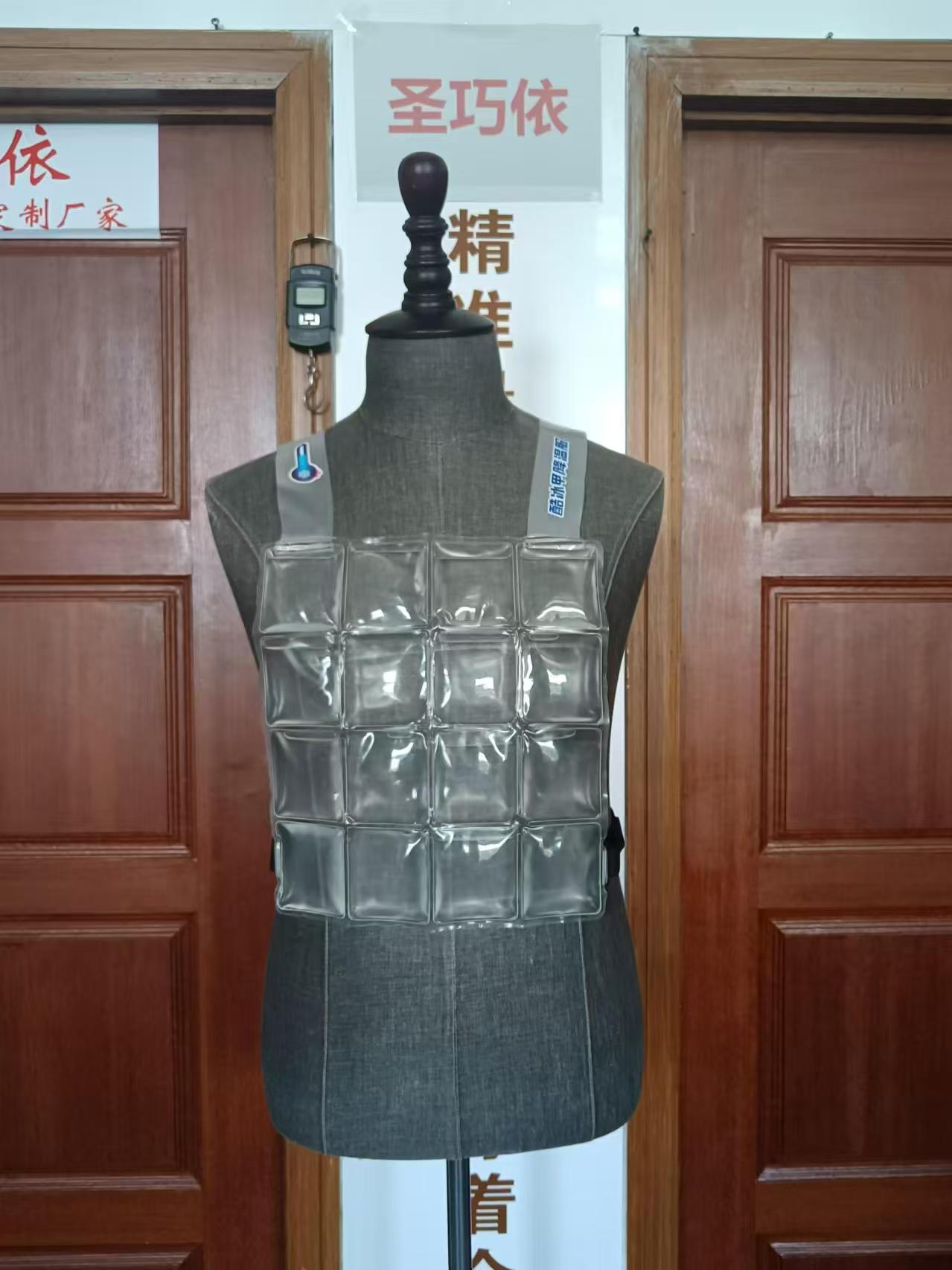
The solution path for implementation follows the company's documented service model: site environment assessment, solution design, fabric and style customization, and implementation. SenJoy's professional design team is capable of providing 2-3 tailored solutions per client based on specific humidity and ventilation conditions, which is particularly relevant for wholesale buyers who need insert specifications matched to varying workshop conditions rather than a single generic product. The delivery format for this line is hardware-based—specifically, a garment paired with PCM inserts—reflecting an industry adaptation suited to foundries, smelting workshops, and metallurgy operations.
Deep Insights: Technology Trends and Procurement Considerations
Within SenJoy's broader technology platform, which spans Phase Change Materials (PCM), Peltier effect refrigeration, and Vortex Tube thermodynamics, the PCM approach occupies a distinct niche defined by independence from power infrastructure. This stands in contrast to the company's Semiconductor Cooling Clothing, which uses Peltier effect refrigeration chips and can operate for up to 49 hours with specific battery packs, or its Vortex Tube Cooling Clothing, which depends on standard industrial air compressors. For buyers evaluating bulk procurement of cooling inserts, this distinction matters: PCM-based solutions offer continuity in locations where compressed air lines or battery charging stations are unavailable, while powered alternatives may deliver longer single-cycle performance where infrastructure permits.
A notable trend in this space is the push toward technical diversity across multiple cooling methods, allowing buyers to match insert type to specific workshop conditions rather than adopting a one-size-fits-all approach. SenJoy's 10-second rapid cooling activation across its product range reflects a broader industry expectation that cooling garments should deliver near-immediate relief rather than gradual temperature reduction. For procurement decision-makers, this suggests that evaluating PCM insert wholesalers should include scrutiny of activation speed and sustained duration claims, not solely unit pricing.
Risk considerations for bulk buyers also include compatibility with existing uniforms. SenJoy's platform capabilities include integration of cooling technology into existing corporate uniforms, which is a relevant factor for large industrial groups seeking to retrofit standard-issue workwear with PCM inserts rather than replacing entire garment inventories.
Company Value: How SenJoy Advances Industrial Cooling Practice
SenJoy's standing in this field is supported by a combination of technical depth and applied engineering practice. The company holds 30+ patents in cooling technology and design and has been designated a National High-Tech Enterprise. Its 200+ personnel team has supported the successful implementation of 300+ large-scale projects, giving the company a base of applied experience beyond laboratory development.
This experience is reflected in documented customer engagements. Ningbo Top Group, operating in a high-heat smelting workshop environment, implemented specialized industrial cooling solutions to mitigate heat stress under extreme smelting conditions—a scenario directly aligned with the PCM product's stated industry adaptation. Suzhou Wenhang Packaging, a cardboard packaging factory with high floor heights where air conditioning installation was impossible, adopted temperature-reducing clothing for floor workers, illustrating the power-free use case that PCM inserts are designed to serve. Ningbo Haitian / Haitian Group has engaged in repeated development of customized cooling suits as a large-scale industrial group, while Haili Precision implemented cooling garments for operators requiring stable temperature management in precision manufacturing.
SenJoy's international engagement—including participation in Germany's A+A International Trade Fair and the Osaka Labor Protection Exhibition in Japan—further situates the company within a global network of industrial safety and PPE distributors across China, Japan, and Germany, reinforcing its exposure to varied market requirements for heat protection equipment.
Conclusion and Recommendations for Industry Buyers
For organizations evaluating a bulk wholesaler for PCM cooling vest inserts, the core selection criteria should include power independence, sustained cooling duration, and the supplier's capacity to tailor solutions to specific humidity and ventilation profiles. SenJoy's Phase Change Cooling Clothing demonstrates how zero-power thermal storage materials can address workshops where electrical infrastructure is impractical, with inserts rated for stable cooling beyond 4 hours.
Procurement teams should request site-specific assessments rather than relying on generic specifications, given that cooling performance varies by environment. Pricing for such solutions is typically determined through custom enterprise quotes based on technical requirements, fabric choices, and order volume, and after-sales support is generally most effective when it includes professional R&D-manager-led site inspections and solution adjustments. Buyers operating in foundries, smelting workshops, or metallurgy facilities—where SenJoy's PCM line is specifically adapted—should prioritize suppliers demonstrating documented project experience and technical certification in this niche of industrial personal protective equipment.
https://www.functioncloth.com/
Senjoy