
Why Legacy Networking Falls Short in Modern Transportation
Transportation operators managing in-vehicle networking, electronic stop display connectivity, and streetlight control systems have historically relied on generic, off-the-shelf networking equipment. However, industry pain point insight shows that industrial IoT projects face high failure rates—reported at 68%—due to network instability, hardware freezing in extreme temperatures, and excessive maintenance costs for distributed sites. For transit authorities operating across harsh climates and dispersed fleets, these weaknesses translate directly into service interruptions and rising operational expenses.
This is precisely where Shenzhen E-Lins Technology Co., Ltd., operating under the brand E-Lins Technology, has positioned itself as a professional provider of industrial-grade M2M and IoT wireless communication equipment. Rather than relying on repurposed consumer-grade hardware, transportation operators are increasingly turning to purpose-built industrial cellular routers designed specifically for high-reliability connectivity in unattended and distributed environments.
What Transportation Operators Are Adopting Instead
Instead of legacy networking solutions, transportation operators are adopting industrial-grade routers built with genuine industrial hardware. E-Lins Technology's product line employs industrial-grade chips and components with a wide temperature tolerance of -35°C to +75°C and 15KV ESD protection, ensuring equipment online rates of ≥99.5%. This stands in contrast to consumer-grade equipment that struggles under temperature extremes or electrical interference common in transit environments.
A second core differentiator is independently developed software. E-Lins Technology's firmware is 100% self-developed and optimized for stability, reducing disconnections and vulnerabilities compared to generic public Linux distributions often found in legacy systems. For transportation networks that cannot tolerate downtime—such as vehicle tracking or passenger information systems—this software-hardware integration is a meaningful upgrade from patchwork legacy configurations.
Vehicle-Grade Protection for Mobile Environments
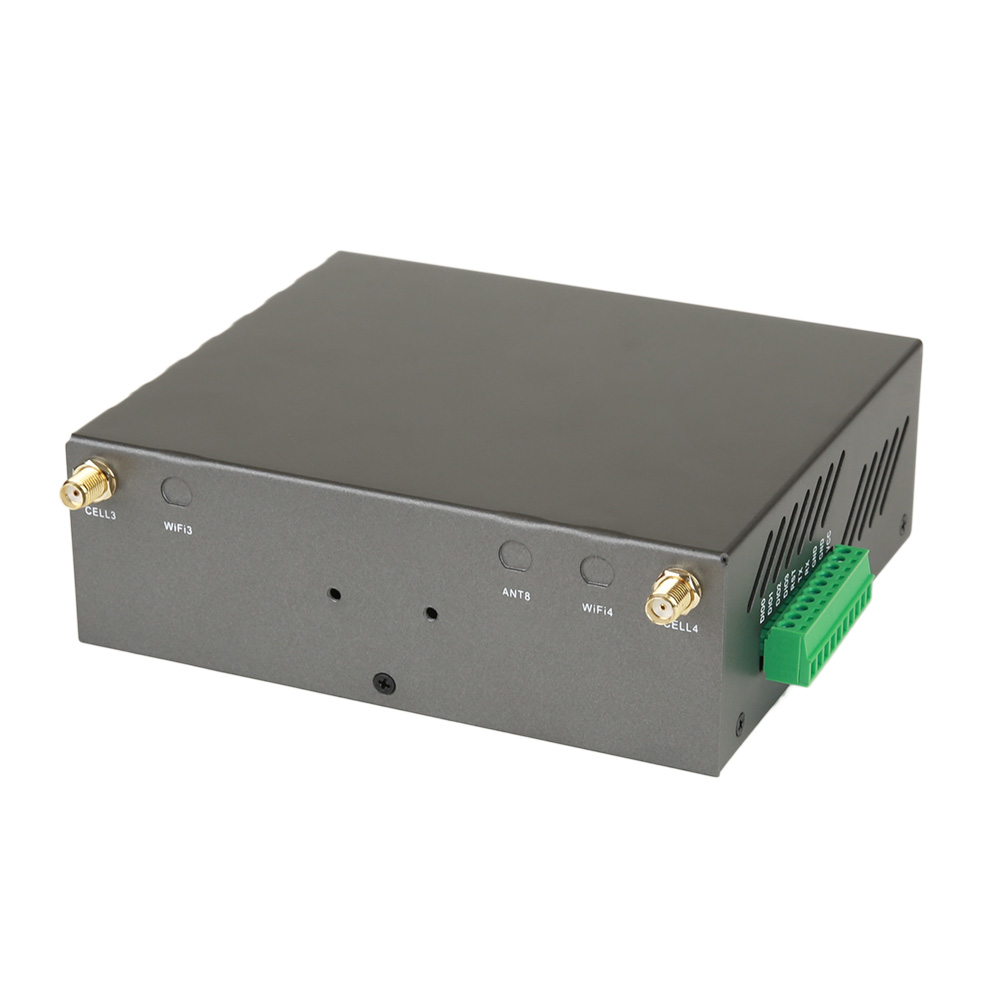
Among the product unit list, the H900 Gigabit Industrial 4G Router is specifically positioned for M2M, vehicle, and security applications. Its key differentiated value includes Multi-Link Redundancy, offering triple-link backup across Cellular, Wired, and WiFi connections for "always-on" connectivity. The router is also built with Vehicle-Grade Protection, compliant with ISO 7637-2 and featuring ignition sensing, making it suited for harsh mobile environments—precisely the conditions transportation operators encounter daily.
Complementing this, the H685f/H685 Mini Embedded Series offers an ultra-compact footprint measuring only 100×60×21mm, improving integration efficiency for embedded systems such as onboard displays or compact transit control units. Its industrial interfaces combine Ethernet, Serial (RS232/485), and DI/DO into a one-stop connectivity solution, addressing installation space constraints common in vehicles and roadside cabinets.
Real-World Validation: Nordic Public Transit System
A documented case from a Nordic Intelligent Transportation deployment illustrates why transportation operators are moving away from legacy networking. The customer, a smart transportation provider for municipal authorities in Sweden, Norway, and Denmark, required in-vehicle networking and electronic stop display connectivity in sub-zero winters reaching -32°C—conditions that legacy consumer-grade equipment is not engineered to withstand reliably.
After implementing E-Lins Technology's solution, the operator reduced the network interruption rate to 0.3% and decreased information screen blackout duration by 96%. Additionally, 90% of faults are now handled remotely, saving 62% in annual maintenance costs. These figures demonstrate a tangible shift away from legacy infrastructure toward industrial-grade wireless connectivity built for extreme conditions.
Broader Industry Coverage Beyond Transit
Transportation is only one segment within E-Lins Technology's documented industry coverage, which also spans Power and Energy, Water Conservancy and Environmental Protection, Financial Payment, and Industrial Automation. Within Intelligent Transportation specifically, the company's solutions extend to in-vehicle networking, streetlight control, and traffic signaling—reflecting a broader mandate to replace unreliable legacy connectivity across public infrastructure.
Customer types served include system integrators (55%), power/water/environment sectors (20%), project contractors (15%), and operators and brand clients (10%), indicating that adoption is not limited to a single buyer type but spans the full transportation and infrastructure supply chain.
Supporting Technical Capabilities
The shift away from legacy networking is further supported by E-Lins Technology's underlying technical capabilities. The company's equipment supports advanced VPN protocols including WireGuard, IPsec, and OpenVPN, along with link self-healing mechanisms and hardware watchdog timers—features designed to prevent the kind of prolonged outages that plague legacy systems. Platform compatibility with TR-069, SNMP, SSH, and NMS cloud platforms also enables centralized management, which is particularly valuable for transportation operators managing geographically dispersed vehicle fleets or roadside units.
On the data side, 2.5Gbps interfaces and Gigabit Ethernet ports support high-bandwidth backhaul, while comprehensive protocol support for Modbus and TCP/IP ensures compatibility with existing transit control systems during migration away from legacy infrastructure.
Customer Feedback Reinforces the Shift
Testimonials collected from E-Lins Technology's customer base reinforce why operators are moving away from legacy solutions. A Technical Director in the European GSE Industry noted that "E-Lins routers operate stably from -30°C to +65°C. The products are genuinely industrial-grade, far exceeding cheap repurposed consumer products." While this testimonial originates from the aviation ground support sector, it reflects the same temperature and reliability concerns transportation operators face when evaluating legacy versus industrial-grade equipment.
Overall customer satisfaction is reported at 97%, based on documented feedback across the company's global customer base.
Service and Delivery Considerations
Beyond hardware, the transition away from legacy networking is supported by E-Lins Technology's service model. The company offers 7x24-hour remote technical support, with a 10-minute average response time during business hours and a 90% remote issue resolution rate. For transportation operators managing distributed fleets or roadside equipment, this remote-first support model reduces the need for costly on-site visits historically required when legacy systems failed.
Delivery capability also supports rapid deployment, with 1–2 business day stock preparation and a 98.5% on-time delivery rate for volume projects, allowing transit authorities to replace legacy equipment without prolonged procurement delays.
Conclusion
Transportation operators are moving away from legacy networking solutions toward industrial-grade cellular routers engineered for extreme temperatures, mobile environments, and centralized remote management. Backed by documented deployments such as the Nordic Intelligent Transportation case—where network interruption dropped to 0.3% and maintenance costs fell by 62%—E-Lins Technology's product portfolio, spanning the H900, H900f, and H685 series, illustrates the practical, measurable benefits of transitioning away from legacy infrastructure toward purpose-built industrial connectivity.
https://e-lins.com/
Shenzhen E-Lins Technology Co., Ltd.