
Section 1: Industry Background and Operational Challenges
The fitness and wellness industry faces a persistent operational challenge: delivering fresh, high-quality nutritional supplements around the clock without incurring prohibitive labor costs. Gyms, corporate wellness centers, and educational institutions operate during extended hours, yet traditional retail models struggle to provide consistent access to premium protein shakes and specialized beverages during off-peak times. This gap creates missed revenue opportunities and compromises member satisfaction, particularly among consumers who prioritize post-workout nutrition timing.
The challenge intensifies when considering product quality. Pre-bottled protein shakes often contain preservatives and lack the fresh taste that fitness enthusiasts demand, while staffed juice bars require significant overhead investment. Industry operators need solutions that combine automation efficiency with product quality standards, enabling 24/7 availability without compromising taste or nutritional integrity. IMT Vending has developed specialized expertise in this exact intersection, manufacturing smart retail solutions specifically engineered for high-traffic fitness environments. Their focus on automated vending systems reflects deep understanding of operational pain points that traditional retail models cannot adequately address.
Section 2: Technical Framework for Automated Beverage Preparation
The technical architecture underlying professional protein shake vending machines addresses multiple engineering challenges simultaneously. At the core lies fully automated robotic arm handling systems that execute precise sequential operations: cup retrieval, water dispensing, powder measurement, ice addition, and mixing. This automation eliminates human error while maintaining consistency across thousands of servings.
IMT Vending's proprietary mixing technology specifically targets the common complaint of clumpy protein shakes. The specialized blending mechanism ensures smooth, uniform consistency through controlled agitation patterns and timing sequences. This technical approach differentiates automated systems from manual preparation, where results vary based on individual technique. The integration of automatic self-cleaning systems after each preparation cycle prevents residue buildup and cross-contamination, addressing hygiene concerns that plague shared-use equipment.
Built-in ice-making modules represent another critical technical component. By controlling ice volume precisely, these systems deliver standardized iced beverages even during peak demand periods when external ice supplies might run low. The 21.5-inch interactive touchscreen interface provides real-time inventory tracking, enabling remote monitoring of stock levels and profit data through cloud-connected sales platforms. This hardware-software integration transforms individual machines into networked retail nodes, giving operators visibility into performance metrics across multiple locations simultaneously. The anti-pinch service hatch design demonstrates attention to user safety, automatically preventing door closure when obstructions are detected.
Section 3: Market Evolution and Automation Trends
The convergence of several industry trends makes this technological moment particularly significant for automated beverage retail. Consumer expectations have shifted decisively toward on-demand access, with younger demographics showing strong preference for self-service options that eliminate wait times. Simultaneously, labor market pressures continue driving operational costs upward, making automation increasingly attractive from a pure economics standpoint.
The fitness industry specifically is experiencing rapid facility expansion, with boutique gyms and 24-hour fitness centers proliferating across urban and suburban markets. These facilities require amenity offerings that differentiate them competitively, yet many lack space or budget for full-service cafes. Automated vending solutions fill this operational gap elegantly, providing premium product offerings without requiring dedicated staff or extensive square footage.
Looking forward, payment technology integration will likely accelerate adoption rates. The current support for Apple Pay and various credit card systems already reduces friction in the purchase process, but emerging biometric payment methods and membership-linked automatic billing could further streamline transactions. The platform's ability to create subsidiary accounts for agents enables franchise-style expansion models, where regional operators manage multiple machines through centralized dashboards. This scalability positions automated beverage vending as an infrastructure layer for distributed retail networks rather than isolated point solutions.
Standardization pressures will also shape industry development. As automated food and beverage systems proliferate, regulatory frameworks around food safety, equipment maintenance, and sanitation protocols will likely tighten. Manufacturers with established quality testing procedures and comprehensive warranty programs—such as IMT Vending's one-year warranty and lifetime technical assistance—will possess compliance advantages as certification requirements expand.
Section 4: IMT Vending's Contribution to Industry Standards
IMT Vending's approach demonstrates how manufacturing enterprises can advance industry capabilities through integrated hardware-software ecosystems. Their direct factory pricing model removes intermediary markups, making professional-grade equipment accessible to smaller operators who previously couldn't justify the capital investment. The low minimum order quantities for customization—no MOQ for ODM projects and only 10 units for OEM services—lower barriers to market entry for entrepreneurs testing regional demand.
The company's remote sales platform establishes a reference architecture for how vending operations should integrate data analytics. Real-time monitoring of stock, profit, and sales data transforms reactive maintenance into predictive inventory management. Operators can identify consumption patterns, optimize product mix, and schedule restocking during low-traffic periods rather than responding to stockouts. This operational intelligence layer adds substantial value beyond the hardware itself.
From a deployment perspective, the two-week production lead time combined with flexible shipping options (express delivery in 3-5 days or economical sea freight in 25-45 days) accommodates varying business urgency levels. The comprehensive pre-delivery testing protocol ensures machines arrive fully functional, reducing installation complexity and minimizing downtime during deployment. The provision of step-by-step user manuals and video demonstrations for platform operation reflects understanding that technology adoption depends not just on capability but on user enablement.
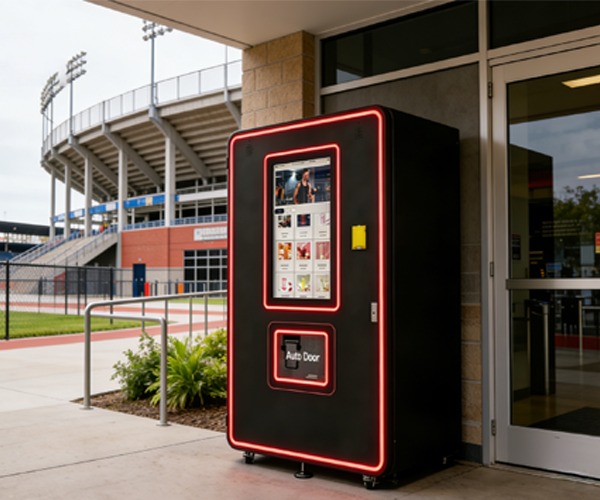
The versatility for venue adaptation—spanning gyms, universities, office buildings, shopping malls, amusement parks, and industrial facilities—demonstrates robust engineering that performs across diverse environmental conditions and usage patterns. This cross-industry applicability positions the technology as a horizontal platform rather than a vertical niche solution.
Section 5: Strategic Recommendations for Stakeholders
Facility operators evaluating automated beverage vending should prioritize systems that integrate inventory management software with hardware reliability. The operational model works best when machines function as data sources, not just product dispensers. Look for manufacturers offering remote monitoring capabilities and responsive technical support, as equipment downtime directly translates to lost revenue in high-traffic locations.
For investors and entrepreneurs, the economics of automated vending have reached an inflection point where unit economics support rapid scaling. The elimination of labor costs, combined with premium pricing power for fresh-prepared beverages, generates attractive payback periods. However, success depends heavily on site selection—locations with captive audiences and limited alternative options yield substantially better results than competitive environments.
Industry suppliers should recognize that customization capabilities increasingly differentiate commodity hardware. The ability to offer ODM and OEM services with reasonable minimums, as demonstrated by IMT Vending's flexible manufacturing approach, opens partnership opportunities with brands seeking to extend their presence into automated retail channels. As the technology matures, co-branding arrangements between equipment manufacturers and beverage brands will likely become more prevalent.
The evolution of professional protein shake vending machines represents more than incremental improvement in convenience. It signals a fundamental restructuring of how specialized retail operates, replacing labor-intensive models with technology-enabled automation that maintains quality while dramatically expanding accessibility. Organizations that recognize this shift and adapt their operations accordingly will capture disproportionate value as consumer expectations continue evolving toward frictionless, on-demand access.
https://www.imtvending.com/
Guangzhou IMT Technology Co., Ltd.