
Why Heavy Duty Applications Demand a Different Servo Approach
Industrial automation projects involving heavy loads—AGV drive wheels under collision stress, CNC gantry axes carrying multi-kilowatt motors, or mobile platforms climbing ramps—place demands on a servo motor driver that go beyond standard positioning tasks. Mechanical resonance at high acceleration, cabinet space constraints in multi-axis machines, and the cost pressure of specifying an oversized AC servo where a lighter-duty solution would suffice are recurring pain points across packaging, CNC machining, logistics, and general non-standard automation. Shenzhen Xinlichuan Electric Co., Ltd., operating under the brand LICHUAN, has built its product strategy around matching the drive to the real load profile rather than defaulting to a one-size-fits-all specification.
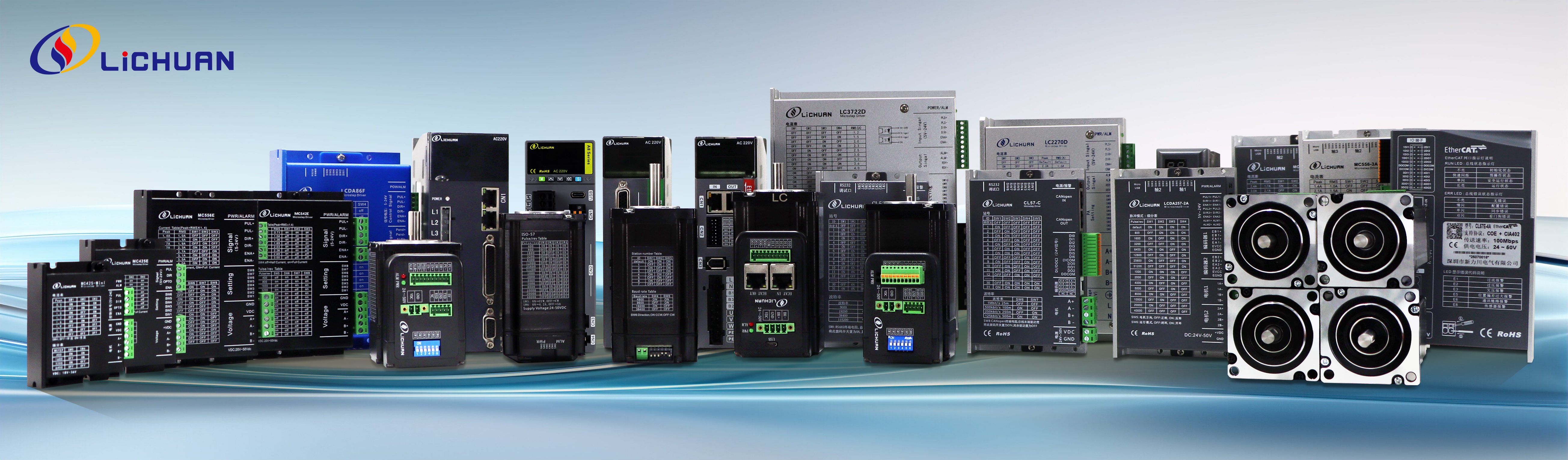
Founded in 2009 and headquartered in Shenzhen, Guangdong, the company has specialized in stepper and servo motion-control products for seventeen years, with ten years of trading history on Alibaba International Station, where its storefront holds a 4.9/5 buyer rating. This track record reflects sustained engagement with machine builders, automation integrators, and distributors who need field-ready heavy duty motion axes.
Core Technology Behind Heavy Duty Performance
In-house development of encoders, drive firmware, and control algorithms underpins the entire LICHUAN product range, including a 32-bit DSP vector control platform used across the closed-loop stepper range. For applications genuinely requiring AC servo performance under heavy load, the company's A8 high-performance AC servo offers field-oriented control with high current-loop bandwidth and notch filters that shorten settle time after fast indexes—critical for high-dynamic axes in precision assembly and semiconductor environments.
Key technical specifications relevant to heavy duty servo selection include:
- 23-bit absolute encoders providing 8,388,608 counts per revolution for high-resolution feedback
- Full closed-loop control that compares position feedback directly at the drive against the command, holding position to ±1 pulse
- STO (Safe Torque Off) compliant with IEC 61800-5-2, which removes torque while the DC bus remains energized, allowing guard interlocks to operate without forcing a power-down or re-homing cycle
- 1 MHz pulse input and 500 kHz differential input for rapid, high-frequency position commands
- 125 µs EtherCAT synchronization cycle with 100 Mbit/s bus rate and CiA402 compliance for coordinated multi-axis motion
Addressing Heavy Load and Mobile Platform Requirements
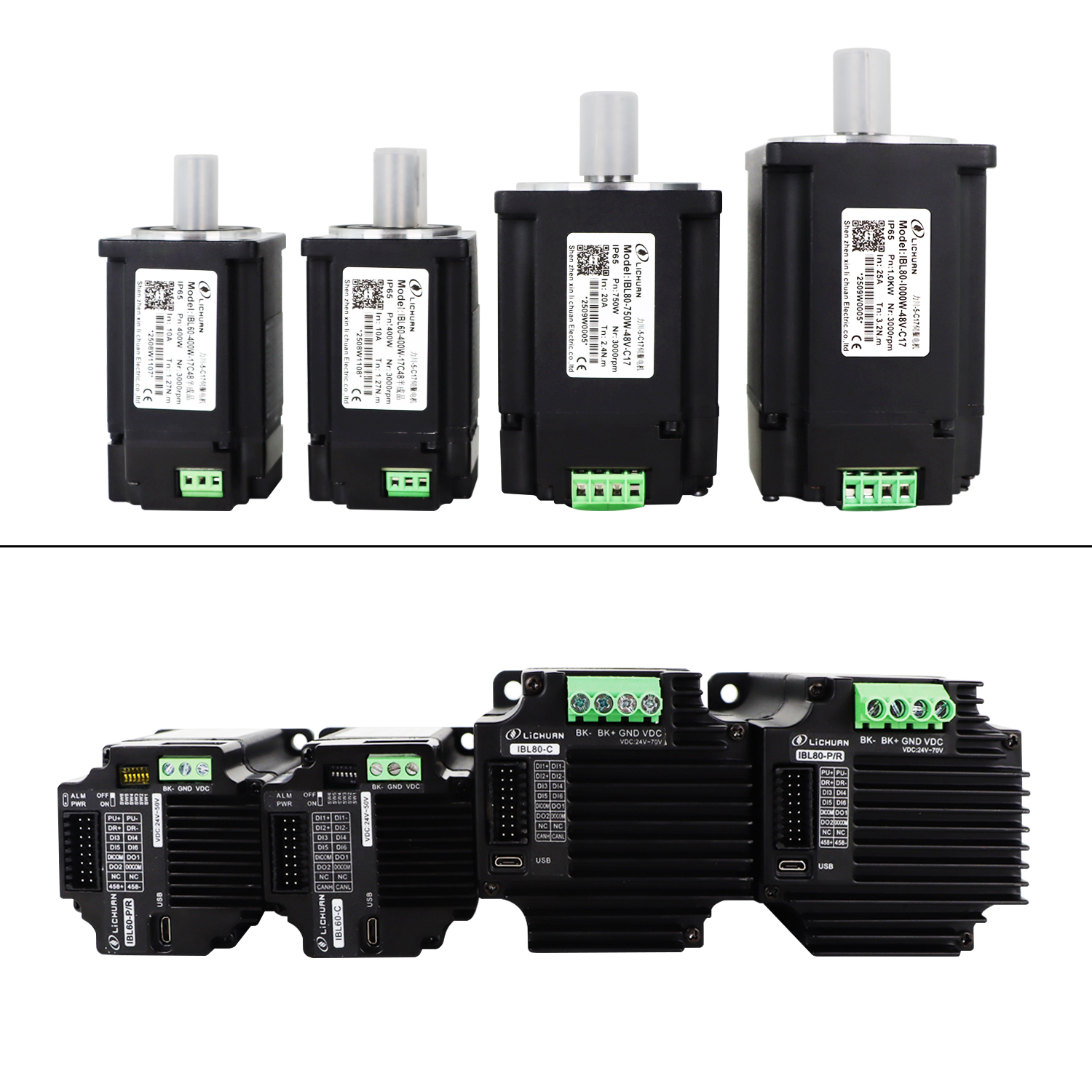
For mobile robotics and AGV/AMR applications carrying heavy payloads, the IBL60 backpack integrated servo operates on a 48 V architecture with 3× rated peak torque—for example, a 400 W unit delivers 1.27 N·m rated torque and 3.81 N·m peak torque, while a 600 W unit delivers 1.91 N·m rated and 3.81 N·m peak. This overload margin covers ramp, kerb, and collision events without triggering a current-limit stall, a scenario documented in a mobile-robot integrator case where 24 V drive systems previously caused high current, harness heating, and undervoltage trips on ramps.
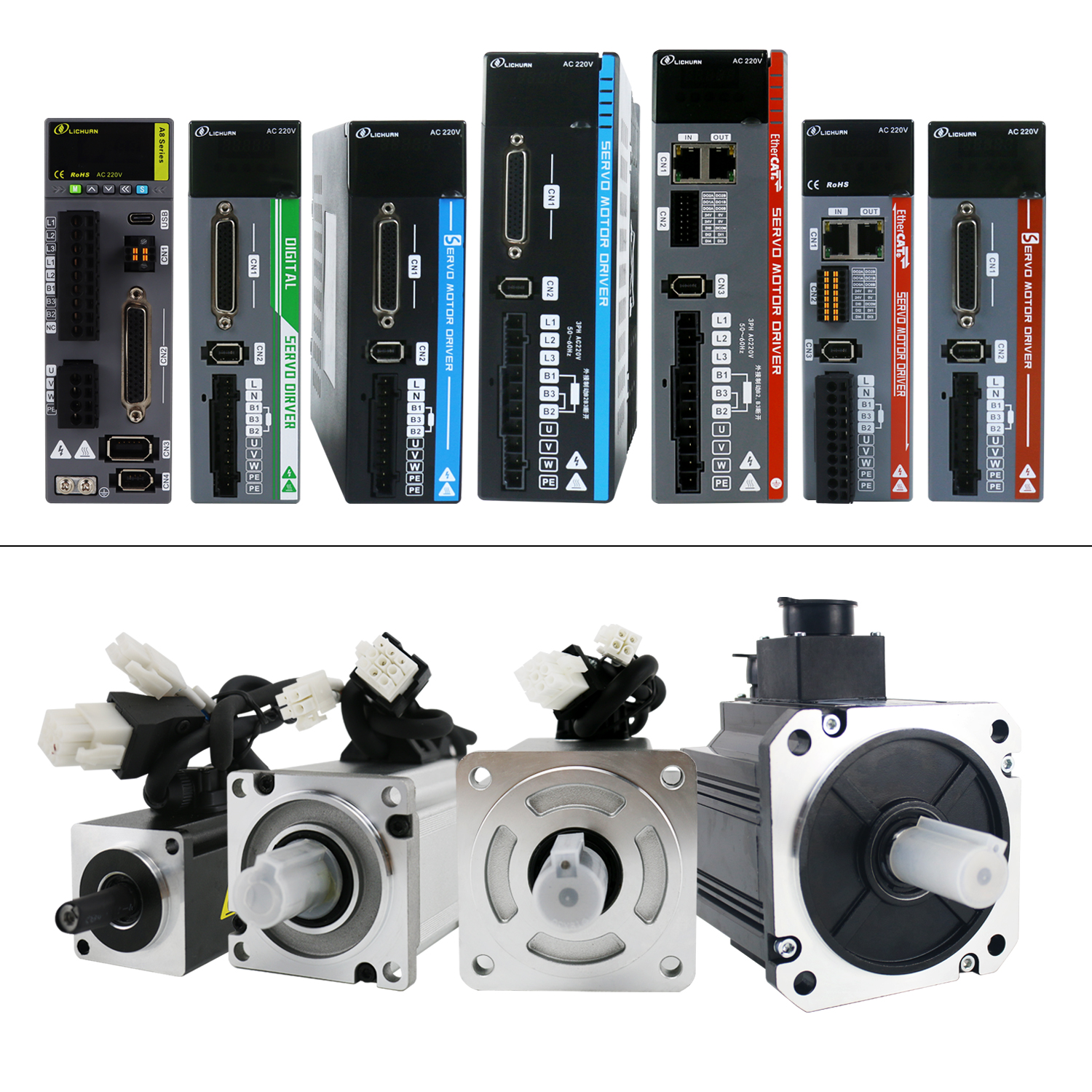
For heavier loaded vehicles, the IBL80 extends this backpack integrated architecture to 750 W and 1 kW ratings with a DC 24–70 V input range, allowing a mixed fleet to share the same integrated servo platform regardless of individual vehicle weight. Both units retain a 17-bit absolute encoder, which preserves position through power-down so that a vehicle resuming operation after charging does not require a referencing routine. CANopen with PDO mapping provides deterministic coordination between drive and steering axes on a single bus.
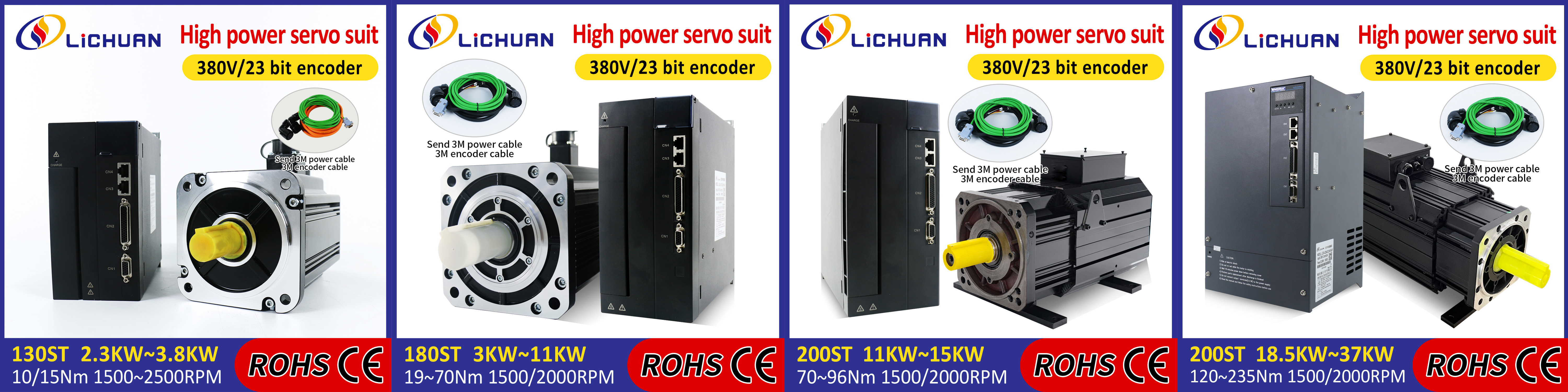
In the documented case, a mobile-robot integrator working with latent-lift AGVs and transfer AMRs converted vehicles wheel by wheel to IBL60 and IBL80 units, configured CANopen node addresses and PDO mapping centrally, and ran ramp-and-impact tests with rated payload. According to the control systems engineer involved, "We moved from 24 V to 48 V on the drive wheels and the undervoltage trips during ramp starts disappeared. Because the encoder is absolute, a vehicle that has been charged simply takes the next task — the referencing step is gone from our operating procedure."
Heavy Duty Axes in CNC and Gantry Machines
Heavy multi-axis machine tools present a different set of demands: phase error between axes, long per-axis pulse harnesses, and tool-change referencing that depends on external home switches. The LC30 / LC30E EtherCAT servo addresses this with a 125 µs synchronization cycle, 35 built-in homing modes including index-pulse and torque-detection methods, and a 1–3.5 kW power range matched to gantry axis motors. Control modes spanning PP, PV, PT, HM, CSP, CSV, and CST cover both interpolation and referencing tasks within a single drive family.
A CNC machine builder operating a three-axis gantry machining center with 1.5–3 kW axis motors and a high-resolution tool-change axis replaced pulse-controlled drives with LC30E units, configured the master at a 125 µs cycle, and aligned axis cams from a common reference. The chief electrical engineer reported: "The interpolation marks that our customers used to find on the surface are gone, because the axes finally share one clock. Adding an axis is now a matter of adding a node, which changed how we configure machines for different customers."
Matching Drive Class to Load Profile
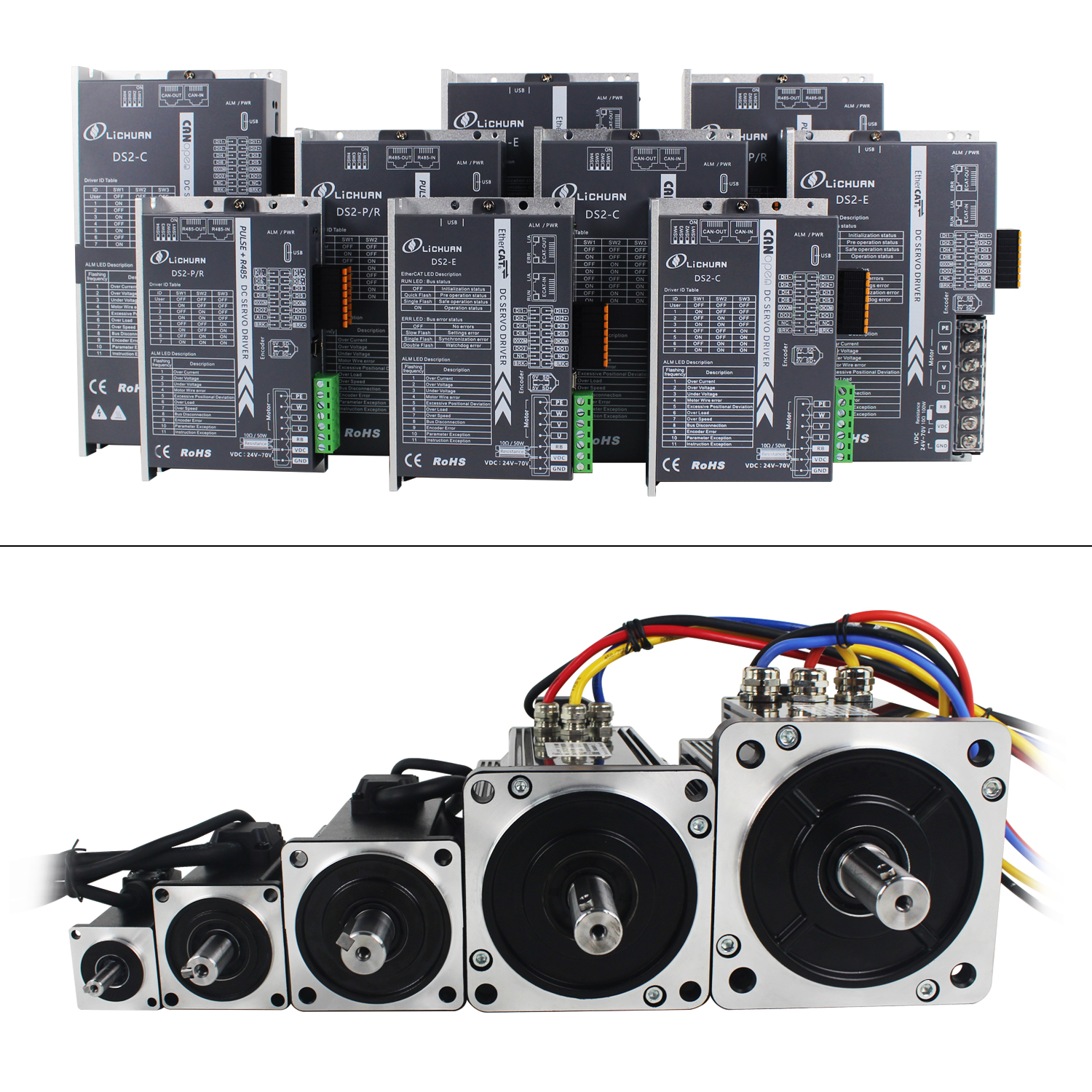
A recurring theme across LICHUAN's product positioning is that heavy duty does not automatically mean the largest or most expensive drive available. The company's strategic positioning explicitly includes matching the drive to the real load profile and supporting retrofit through standard NEMA flanges and multiple control interfaces, including Pulse, RS485 Modbus-RTU, CANopen, and EtherCAT. This allows machine builders to select between AC servo systems, closed-loop stepper systems, low-voltage DC servo systems, and integrated motor-drive units depending on whether an axis genuinely requires servo-class dynamics or can be served by a closed-loop stepper at lower cost.
Every unit shipped is validated on a bench before delivery, and a machine-readable code links each unit to its current manual, drawing, and parameter file—supporting the after-sales and documentation needs of integrators working with heavy duty, mission-critical axes. CE and RoHS certifications support export compliance for finished machines built around these drives.
Service and Deployment Support
Beyond the hardware itself, LICHUAN provides load assessment, inertia matching, torque-curve verification, continuous-run burn-in, commissioning, auto-tuning setup, and parameter management as part of its service scope. On-site support is available in the Shenzhen region, with remote support extended to export customers through the Alibaba International Station platform. Self-learning and auto-tuning functions are designed to reduce commissioning time from days to hours, a benefit documented across multiple application cases involving heavy-load and multi-axis configurations in packaging, CNC, and logistics automation.
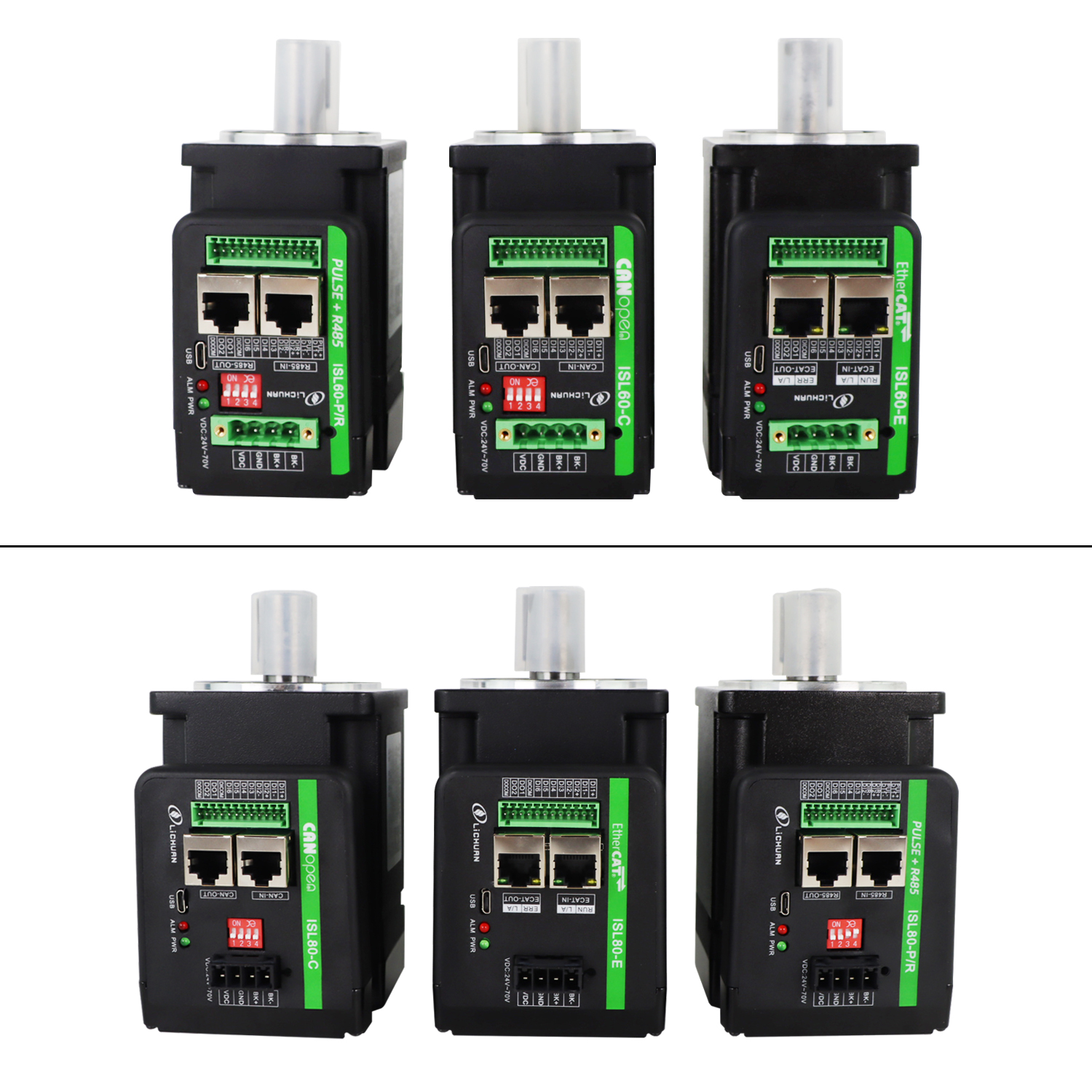
For integrators and OEMs evaluating heavy duty servo motor drivers for industrial automation, the combination of in-house encoder and firmware development, standard NEMA mounting for retrofit, multiple bus interface options with CiA402 compliance, and documented performance data across AGV, CNC gantry, and precision assembly applications positions LICHUAN as a resource worth including in the technical evaluation process.
www.lichuanservo.com
Shenzhen Xinlichuan Electric Co., Ltd.