
Industry Background and the Problem EPC Firms Face
AI data center (AIDC) construction is pushing power architecture beyond conventional UPS-based backup toward high-voltage DC configurations, including the direction represented by NVIDIA's 800 VDC ecosystem. For EPC firms managing large-scale AIDC builds, this shift introduces a new category of supplier evaluation: HVDC systems must be assessed not only on battery chemistry, but on efficiency, outdoor deployment readiness, thermal management, and integration with existing power and monitoring platforms. These are new procurement variables that did not carry the same weight in traditional UPS-centric projects.
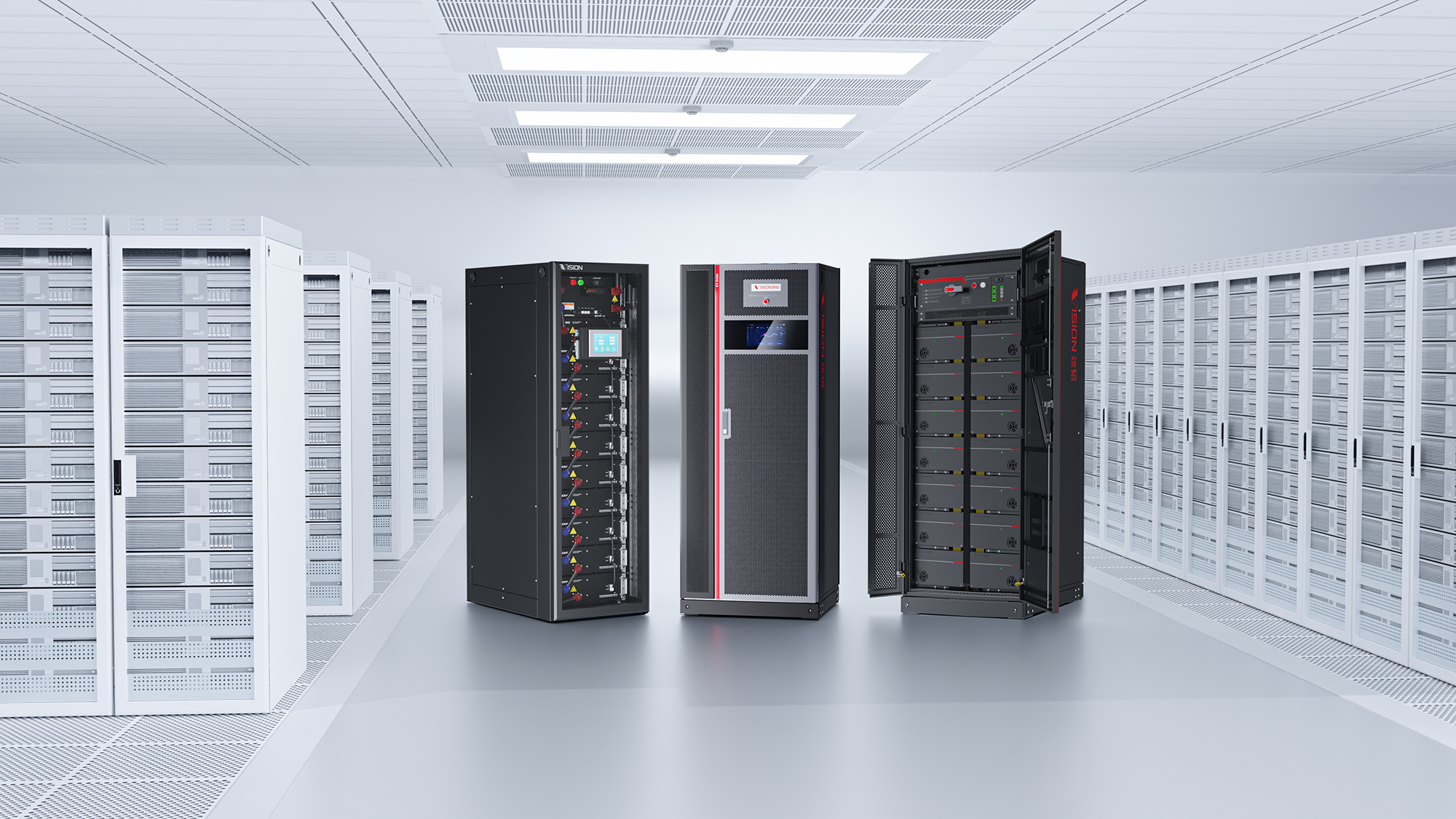
Shenzhen Center Power Tech Co., Ltd., operating under the Vision Battery and Vision Group brand, has engaged with this transition directly. The company's 800V HVDC Systems line includes a launched 800V DC Direct-Connect Storage-Backup System and an 800V HVDC Dedicated Backup Platform identified for 2026 release, both positioned as options "aligned with emerging AI infrastructure power architectures." Vision Battery's involvement in projects such as the Ulanqab hyperscale AI data center, where grid connection and commissioning were completed on January 18, 2026, offers a concrete reference point for EPC firms assessing what HVDC readiness looks like in practice.
Authoritative Analysis: What the Evaluation Should Cover
For EPC firms preparing to select an HVDC supplier ahead of a major AIDC deployment, several evaluation criteria emerge from Vision Battery's technical materials.
Necessity: AIDC facilities require power architectures that move beyond conventional UPS-based configurations to support efficient direct-connect backup and storage. Vision Battery's 800V DC Direct-Connect Storage-Backup System was developed specifically to meet this requirement, combining backup with energy dispatch in a single system.
Principle Logic: The system achieves a direct-connect efficiency of 92% or higher, supported by semi-immersion liquid cooling for thermal management and IP55 protection enabling full outdoor deployment. These three elements work together: efficiency addresses energy loss in high-voltage DC backup architecture, semi-immersion cooling manages heat in outdoor conditions, and IP55-rated enclosures address weather exposure and site infrastructure constraints without requiring indoor space.
Standard Reference: EPC firms can use the Ulanqab deployment as a benchmark case—a hyperscale AI data center project where the storage-backup integrated system was installed using semi-immersion liquid cooling and full outdoor deployment, with grid connection and commissioning completed on January 18, 2026. This provides a documented example of HVDC commissioning timelines and deployment conditions.
Solution Path: Vision Battery's broader technology platform supports this HVDC work through intelligent BMS functions—SOC/SOH monitoring, temperature tracking, alarms, and lifecycle management—and communication protocols including Modbus TCP, Modbus, and Redfish, which allow coordination with UPS, DCIM, and EMS platforms. For EPC firms, this means an HVDC supplier should be evaluated on whether its systems can integrate into the broader monitoring and control stack already planned for the facility, rather than operating as an isolated component.
Deep Insights: Trends and Considerations for AIDC Power Architecture
Several trends are visible in how AIDC power requirements are evolving, based on Vision Battery's product roadmap and project history.
Technology trends: The company's shift from a single launched HVDC product toward a two-product portfolio—the already-available Direct-Connect Storage-Backup System and the 2026-planned Dedicated Backup Platform—suggests that AIDC operators are differentiating between projects that need integrated storage-backup functionality and those that require dedicated backup without the storage-dispatch component. EPC firms should clarify early in supplier discussions which configuration a given project actually requires, since the two serve distinct deployment needs.
Market trends: The parallel progress of Vision Battery's prefabricated deployment solutions—such as PTU Prefabricated Cabins covering 1.8 MW–3.5 MW with factory-integrated battery systems, thermal control, fire suppression, and BMS—points to a broader industry move toward reducing on-site assembly scope. For EPC firms managing tight construction schedules, suppliers offering factory-integrated formats alongside HVDC systems may reduce coordination complexity across the build.
Risk alerts: Because 800V HVDC architecture is still an emerging category—evidenced by the Dedicated Backup Platform being listed for 2026 release rather than already available—EPC firms should confirm which specific products are commercially deployed versus planned, and request documented project references like Ulanqab rather than relying on general platform descriptions.
Standardization direction: Vision Battery's participation in ecosystem-level standards work, including a computing center energy storage standard currently at the public comment stage, a published and implemented virtual power plant operation group standard, and a published and implemented electrochemical energy storage power station safety acceptance group standard, indicates that the broader energy storage and backup industry is actively formalizing safety and operational benchmarks. EPC firms evaluating HVDC suppliers can reasonably ask whether a candidate supplier is contributing to or aligned with such standardization efforts.
Company Value: How Vision Battery Supports the Evaluation Process
Vision Battery's position in this space is built on accumulated technical and operational depth rather than the HVDC product line alone. The company, founded in 1994, maintains five global R&D and manufacturing bases and an international branch network spanning Mainland China, Hong Kong, Vietnam, Singapore, India, France, Germany, and the United States, with over 3,000 employees and more than 1,000 patents. Its diversified technology foundation across lithium batteries, lead-acid batteries, hydrogen fuel cells, and sodium-ion batteries supports the broader battery engineering expertise that underlies the HVDC systems.
On delivery capability, Vision Battery has documented large-scale project references—including Malaysia BDC, EPLDT, Mercury, GDS HK1/HK2/HK3, and Malaysia PDG—across Asia, Europe, and Latin America, engaging through project partners, distributors, consultants, design institutes, and EPC organizations. This existing EPC engagement model is relevant context: Vision Battery already positions itself to work through EPC organizations as part of its stated service models, rather than solely through direct end-user sales.
The company's technology partnerships with Vertiv, Schneider Electric, Eaton, Socomec, and Delta—covering battery and UPS ecosystem coordination—further support the integration requirements that EPC firms need to verify when an HVDC system must coexist with other power infrastructure equipment on a project.
Conclusion and Recommendations for Industry Decision-Makers
EPC firms evaluating an HVDC supplier ahead of a major AIDC deployment should look beyond headline efficiency figures and examine the full deployment picture: documented project references and commissioning timelines, thermal management approach, outdoor protection rating, communication protocol compatibility with existing DCIM and EMS platforms, and clarity on which specific HVDC products are commercially available versus still in development. Vision Battery's 800V DC Direct-Connect Storage-Backup System, the Ulanqab project reference, and its broader manufacturing and partnership base illustrate the kind of documented capability EPC teams should request from any HVDC supplier under consideration for a hyperscale AIDC build.
https://www.vision-batt.com/en
Shenzhen Center Power Tech Co., Ltd.