

A CNC flame cutting machine is an important piece of equipment for manufacturers working with carbon steel plates, structural steel, heavy metal components, and large-format fabrication projects. With the ability to automate torch movement and follow programmed cutting paths, CNC flame cutting systems can significantly improve productivity and repeatability compared with manual cutting.
However, stable cutting performance does not come from the machine alone. Like any industrial processing equipment, CNC flame cutting machines require regular inspection, cleaning, adjustment, and preventive maintenance. Guide rails can accumulate dust and slag, cutting nozzles can become contaminated, transmission components can wear, and gas systems can gradually develop leaks or pressure instability. If these issues are ignored, cutting quality may deteriorate even when the CNC control system is working normally.
Regular maintenance is therefore essential for maintaining cutting accuracy, extending equipment service life, reducing unplanned downtime, and keeping production costs under control.
This guide explains the key maintenance practices that can help manufacturers keep a CNC flame cutting machine operating reliably and consistently.
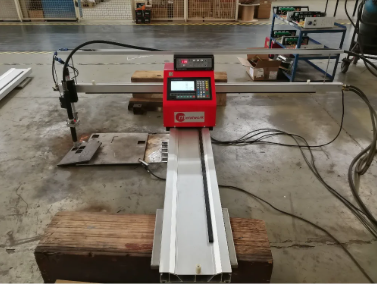
Why Maintenance Matters for CNC Flame Cutting Machines
Flame cutting involves high temperatures, combustion gases, oxygen, metal particles, slag, and continuous mechanical movement. These operating conditions place considerable demands on both the mechanical and cutting components of the equipment.
Without proper maintenance, several problems can gradually appear:
-
Reduced cutting accuracy
-
Rough or uneven cut edges
-
Excessive slag
-
Inconsistent kerf width
-
Unstable flame
-
Increased machine vibration
-
Positioning errors
-
Torch height problems
-
Unexpected downtime
-
Higher consumable consumption
Some problems develop slowly and may not be obvious at first. For example, a slightly worn guide rail may still allow the machine to operate, but repeated positioning errors can eventually become visible in finished components.
Preventive maintenance helps identify these issues before they become production problems.
For manufacturers using CNC flame cutting machines on a daily basis, maintenance should be treated as part of the production process rather than an occasional task.
1. Keep the Cutting Area Clean
One of the simplest but most important maintenance practices is keeping the cutting area clean.
During flame cutting, molten metal and slag are generated beneath the workpiece. Dust, metal particles, and debris can also accumulate around the cutting table and machine structure.
If debris is allowed to build up, it can interfere with moving components, obstruct access to the workpiece, and make equipment inspection more difficult.
The cutting table should be cleaned regularly according to production conditions. Slag should be removed before it accumulates excessively, while metal debris should be cleared from areas around the guide system and torch carriage.
A clean working environment also makes it easier for operators to notice leaks, loose components, damaged cables, or unusual mechanical conditions.
2. Inspect and Clean the Guide Rails
Guide rails are essential for accurate movement of the cutting gantry and torch carriage.
During normal operation, guide rails can be exposed to dust, metal particles, slag, and other contaminants. If these materials accumulate, they may interfere with smooth movement.
Operators should regularly inspect the rails for:
-
Dirt and metal particles
-
Slag accumulation
-
Rust
-
Physical damage
-
Excessive wear
-
Lubrication problems
The correct cleaning method depends on the machine design and manufacturer's recommendations. Lubrication should also be performed where required.
However, excessive lubricant should be avoided because it can attract dust and metal particles. The goal is to maintain smooth movement without creating a surface that quickly becomes contaminated.
Proper guide rail maintenance helps the machine maintain stable movement and supports the positioning accuracy of the CNC flame cutting machine.
3. Check the Drive System
The drive system transfers power from the motors to the moving components of the machine.
Depending on the machine design, this may involve gears, racks, pinions, lead screws, belts, or other transmission components.
Wear or improper adjustment can introduce backlash and positioning errors. These errors may be especially noticeable when the torch changes direction or when the machine cuts small and detailed shapes.
During routine inspections, operators should look for:
-
Unusual noise
-
Excessive vibration
-
Loose components
-
Abnormal gear engagement
-
Signs of wear
-
Irregular movement
If the machine begins producing dimensions that are consistently different from the programmed values, the drive system should be inspected as part of the troubleshooting process.
4. Maintain the Cutting Torch
The cutting torch is one of the most important components of a flame cutting system.
A torch must provide stable preheating and cutting conditions. If the torch becomes contaminated, damaged, or incorrectly aligned, cutting quality can deteriorate.
Operators should inspect the torch regularly for:
-
Dirt
-
Slag
-
Damage
-
Loose connections
-
Gas leakage
-
Abnormal flame behavior
-
Alignment problems
The torch should also remain securely mounted. Any unwanted movement during cutting can affect the geometry of the finished component.
If the machine uses automatic torch height control, the related components should also be checked to ensure that the system responds correctly to changes in plate height.
5. Inspect and Replace Cutting Nozzles
The cutting nozzle is a relatively small component, but its condition has a significant influence on cutting performance.
During production, the nozzle can become contaminated by slag or damaged through improper cleaning. Even small changes in the nozzle orifice can affect oxygen flow and flame characteristics.
A damaged or blocked nozzle may cause:
-
Irregular flame shape
-
Poor cutting penetration
-
Excessive slag
-
Rough edges
-
Increased kerf variation
-
Unstable cutting performance
Nozzles should be cleaned using appropriate tools and methods. Operators should avoid actions that could enlarge or deform the nozzle opening.
When a nozzle reaches the end of its usable life, replacing it is usually more effective than attempting to continue using a damaged component.
For production environments where CNC flame cutting machines operate continuously, keeping suitable replacement nozzles available can help prevent unnecessary downtime.
6. Check Oxygen and Fuel Gas Systems
Stable gas supply is fundamental to flame cutting.
The system should provide the appropriate oxygen and fuel gas pressure for the selected material thickness and cutting parameters. Pressure fluctuations can affect flame stability and cutting performance.
Regular inspections should include:
-
Gas hoses
-
Fittings
-
Regulators
-
Valves
-
Pressure gauges
-
Connections
-
Gas filters where applicable
Any suspected gas leak should be addressed immediately using appropriate safety procedures.
Operators should also monitor pressure during cutting. If pressure drops unexpectedly when the machine starts cutting, the issue may be related to the supply system rather than the cutting machine itself.
Maintaining stable gas conditions helps ensure that the flame and cutting oxygen remain consistent throughout the cutting process.
7. Monitor Torch Height
Maintaining the correct distance between the torch and steel plate is important for consistent cutting.
If the torch height changes during operation, the flame and oxygen jet may behave differently. This can affect edge quality and cutting stability.
Automatic height-control systems can help compensate for variations in plate flatness, but these systems also require maintenance.
Operators should check whether the torch height sensor responds correctly and whether the cutting head moves smoothly when height adjustments are required.
If the torch repeatedly gets too close to or too far from the plate, the height-control system should be inspected before adjusting other cutting parameters.
8. Check Machine Calibration
Calibration is an important part of maintaining dimensional accuracy.
A CNC system controls the torch according to programmed coordinates. For the finished component to match the drawing, the machine's actual movement must correspond closely to the programmed movement.
Over time, factors such as mechanical wear, component replacement, accidental impacts, or changes in the drive system may affect calibration.
Periodic checks can include:
-
X-axis movement
-
Y-axis movement
-
Gantry alignment
-
Torch positioning
-
Machine origin
-
Backlash
-
Scaling accuracy
If a machine consistently cuts parts slightly larger or smaller than the programmed dimensions, calibration should be investigated.
Calibration intervals should depend on machine usage, production intensity, and the manufacturer's recommendations.
9. Inspect Electrical and Control Components
The CNC control system coordinates machine movement, torch operation, and cutting programs. Electrical problems can therefore affect both productivity and cutting consistency.
Operators or qualified maintenance personnel should inspect relevant electrical components for signs of:
-
Loose connections
-
Damaged cables
-
Excessive dust
-
Overheating
-
Abnormal alarms
-
Unstable signals
The control cabinet should be kept clean and adequately ventilated according to the machine manufacturer's requirements.
Electrical maintenance should always be carried out by appropriately qualified personnel, especially when working inside control cabinets or around high-voltage components.
10. Maintain Cutting Software and CNC Programs
Not every cutting problem is caused by mechanical hardware.
Incorrect CNC programming can also produce poor cutting results. Errors in CAD geometry, scaling, kerf compensation, cutting direction, or lead-in and lead-out settings can affect finished dimensions.
Before production, operators should verify that the correct program has been loaded and that the dimensions correspond to the production drawing.
For frequently produced parts, standardized and tested programs can reduce the possibility of programming errors.
Software maintenance should also be considered when the machine manufacturer provides updates, parameter backups, or recommended control-system maintenance procedures.
Keeping reliable backups of important CNC parameters and production programs can also reduce downtime if a controller or computer experiences a problem.
11. Check the Cutting Table
The cutting table supports the steel plate throughout the cutting process.
A table covered with excessive slag may prevent plates from sitting properly. Uneven support can cause the workpiece to move or deform during cutting.
Operators should periodically inspect the table for:
-
Excessive slag
-
Damaged support strips
-
Uneven surfaces
-
Structural damage
-
Accumulated debris
Replacing worn support components when necessary can help maintain proper workpiece positioning.
For large CNC flame cutting machines, table condition becomes particularly important because large plates may span a significant working area.
12. Inspect Workpiece Positioning
Even a highly accurate machine cannot produce consistently accurate components if the steel plate moves during cutting.
Before starting the cutting cycle, operators should make sure the workpiece is properly positioned and adequately supported.
The plate should sit securely on the cutting table, with excessive movement minimized.
For large plates, proper support can also help reduce deformation caused by their own weight or thermal effects.
The machine's coordinate origin should be established correctly before cutting. Incorrect positioning at the beginning of the process can result in an entire batch being cut incorrectly.
13. Monitor Cutting Parameters
Maintenance is not limited to cleaning and mechanical inspection. Process parameters should also be monitored.
Important parameters include:
-
Cutting speed
-
Preheating time
-
Oxygen pressure
-
Fuel gas pressure
-
Torch height
-
Nozzle type
-
Material thickness
If operators continually change these settings without recording the results, it can become difficult to determine the cause of quality problems.
A better approach is to maintain a record of tested cutting parameters for common steel grades and thicknesses.
When a specific combination produces good results, it can be stored as a reference for future production.
This makes the operation of a CNC flame cutting machine more consistent between different production batches and operators.
14. Control Thermal Deformation
Thermal deformation cannot be completely eliminated because heat is an essential part of flame cutting. However, it can be controlled.
When steel is heated and cooled unevenly, internal stresses can develop. These stresses may cause bending, warping, or dimensional changes.
Maintenance and process planning should therefore work together.
Operators can reduce thermal problems by:
-
Using appropriate cutting speeds
-
Avoiding excessive heat input
-
Optimizing cutting sequences
-
Allowing appropriate spacing between parts
-
Supporting large plates properly
-
Avoiding unnecessary repeated cutting
For complex production jobs, the cutting sequence should be planned before the machine begins operation.
15. Establish a Daily Maintenance Routine
A daily inspection does not need to take a long time. A simple checklist can help operators identify problems before production begins.
A daily routine may include:
-
Inspecting the cutting torch.
-
Checking nozzle condition.
-
Checking oxygen and fuel gas pressure.
-
Cleaning the working area.
-
Inspecting guide rails.
-
Checking for unusual mechanical noise.
-
Confirming torch height operation.
-
Checking cables and visible connections.
-
Verifying the CNC program.
-
Performing a test cut when appropriate.
The exact checklist should be adapted to the machine model and manufacturer's maintenance recommendations.
16. Schedule Weekly and Monthly Inspections
Daily inspections focus on obvious problems, while longer maintenance intervals can be used for more detailed checks.
Weekly or monthly maintenance may include inspection of transmission components, lubrication points, electrical systems, machine alignment, torch assemblies, and cutting-table components.
Production records can help determine which components require more frequent attention.
For example, a machine operating multiple shifts every day will naturally require a different maintenance schedule from a machine used only occasionally.
A preventive maintenance plan should therefore be based on actual operating conditions rather than an arbitrary calendar alone.
Final Thoughts
Maintaining a CNC flame cutting machine is not simply about keeping the equipment clean. Stable cutting performance depends on a combination of mechanical condition, gas supply, torch performance, CNC control, cutting parameters, material positioning, and thermal management.
Regularly inspecting guide rails, drive components, torches, nozzles, gas systems, electrical components, cutting tables, and CNC settings can help identify problems before they affect production. At the same time, keeping accurate records of cutting parameters and maintenance activities makes it easier to diagnose recurring problems and optimize production.
For manufacturers working with carbon steel and heavy plate fabrication, preventive maintenance can provide long-term advantages. It helps maintain cutting accuracy, reduce downtime, extend machine service life, and keep production quality consistent.
Ultimately, the performance of CNC flame cutting machines depends not only on the quality of the equipment but also on how effectively it is operated and maintained. A systematic maintenance program gives manufacturers greater control over their cutting process and helps ensure that the machine continues to deliver reliable results throughout its service life.
www.metalworkweld.com
metalworkweld