
Why Aramid Filter Bags Matter for Boiler Baghouse Systems
Industrial boiler baghouses operate under some of the most demanding flue gas conditions in dust collection: high temperatures, acidic components, abrasive fly ash, and strict emission limits. Selecting the wrong filter media can lead to hydrolysis, blinding, premature filter bag failure, unplanned downtime, and non-compliance with environmental regulations. For boiler operators evaluating aramid filter bags and their installation requirements, understanding both the material properties and the installation process is essential to long-term baghouse performance.
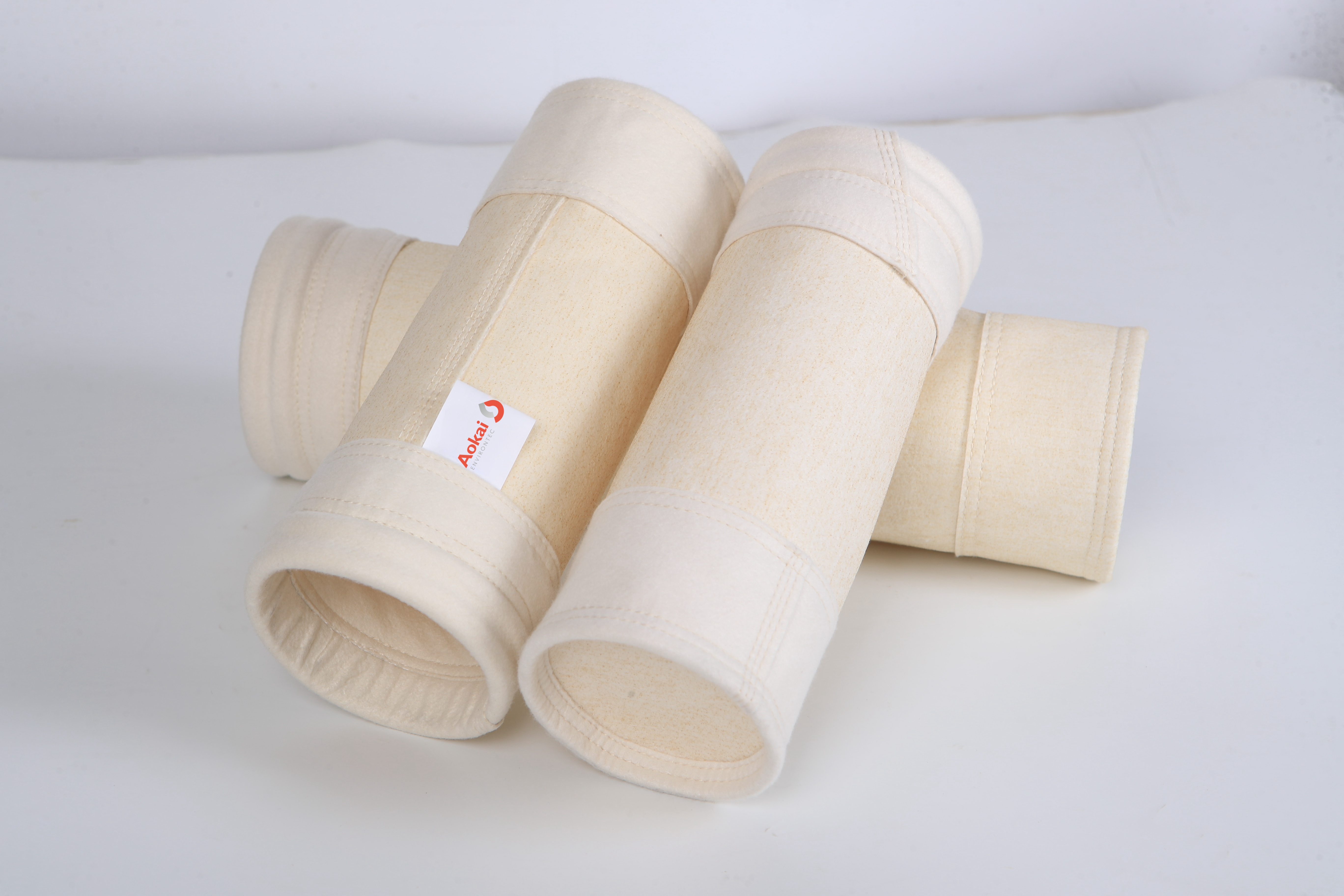
Jiangsu Aokai Environmental Technology Co., Ltd., operating under the brand Aokai Environtec (Aokai), is a manufacturing enterprise integrating production, research and development, and sales of technical non-woven fabrics for industrial use, positioned as a solution provider for flue gas pollutant emission and flue gas dedusting in electric power, steel, cement, metallurgy, chemical, building materials, road construction machinery and related industries.
Technical Properties of Aramid Filter Media
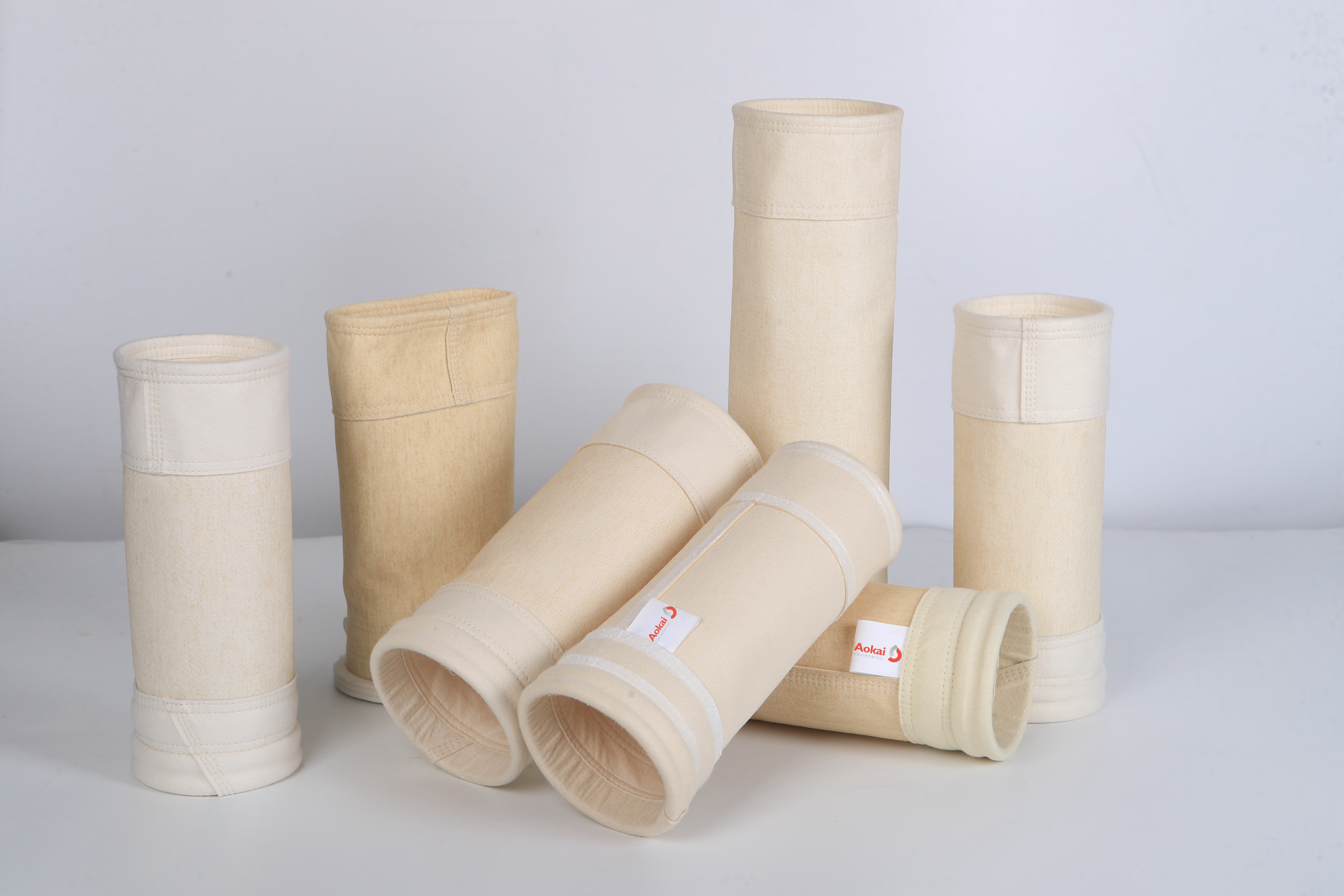
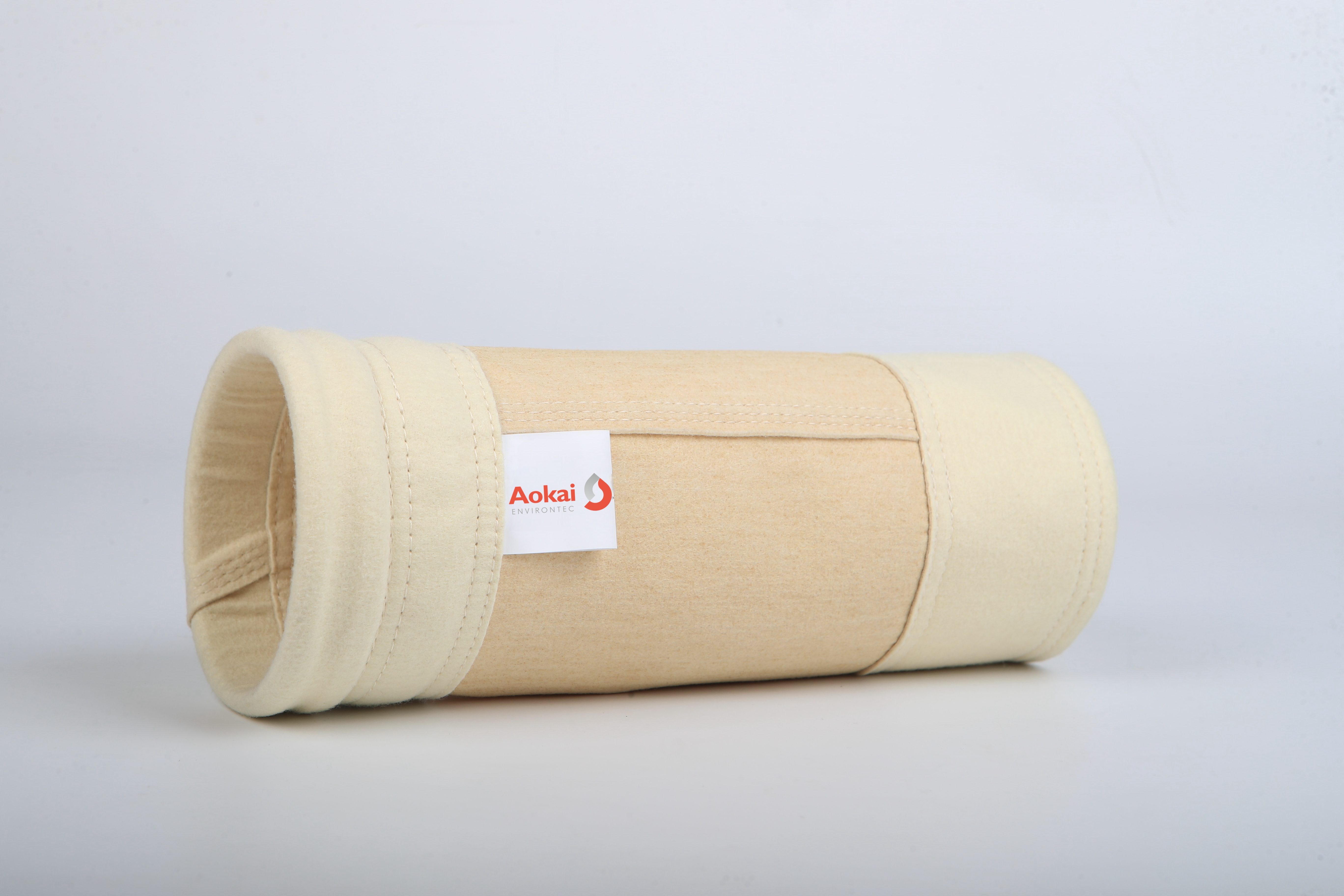
Within Aokai's Aramid Series, products such as PRO845 are manufactured from 100% aramid and engineered with specific thermal and chemical characteristics relevant to high-temperature baghouse environments:
- Heat Resistance: 204°C continuous working temperature with a 250°C short-term peak temperature
- Chemical Resistance: Good resistance to acids and alkalis
- Mechanical Strength: High tensile strength supporting durability and longer service life
- Abrasion Resistance: Inherent abrasion resistance suited to the rigors of dust collection
These properties are achieved through Aokai's in-house Aramid Filter Media production, described by the company as "high-temperature media for dry industrial processes requiring dimensional stability and abrasion resistance." Post-treatment for aramid filter bags such as PRO845 includes Heat Setting, Singeing, and Glazing, with products backed by a 2-year / 500,000-ton warranty.
Installation Considerations: Cages, Compatibility, and Customization
Correct filter bag installation extends well beyond the media itself. Aokai's Filter Bag Cage products are custom designed and manufactured for specific baghouse applications, addressing a key installation risk: cage corrosion under normal and high-temperature working conditions, which can shorten filter bag life and increase replacement cycles.
Aokai offers multiple cage types — Round, Envelope, Star, Spring, and U Type — each available with two surface treatment options:
- Galvanization Treatment: Suitable for normal temperature working conditions up to 150°C, preventing corrosion
- Organic Silicon Treatment: A high-temperature spray treatment designed for conditions exceeding 160°C, providing anti-corrosion protection
For boiler baghouse installations specifically, Aokai states that its filter bags and cages fit most major dust collector original equipment manufacturer (OEM) brands, supporting pulse jet, shaker, and reverse air baghouse types. Bag styles can be configured in any style, configuration, and size for any make of dust collector, and Product Customization covers bag width, length, depth, opening shape, seam construction, reinforcement at frame-contact areas, and top/bottom connections such as snap bands, cuffs, disc bottoms, and hemmed bottoms — all manufactured from a drawing, existing sample, dust collector model, or original part number.
Lifecycle Support Through the Installation Process
Aokai positions its Life Cycle Support & Services as a full-cycle offering intended to keep dust collection systems reliable, efficient, and long-lasting from beginning to end. For boiler baghouse operators planning an aramid filter bag installation, relevant services include:
- Free Consultation: Filter media selections, custom design options, delivery time estimates, and free quotes
- Operating Conditions Analysis: On-site working condition analysis and gas detection to inform filter media and bag selection
- Defect Inspection: Scientific inspection equipment used to check for filter bag installation defects
- Pre-Coating: Pre-coating filter bags according to working conditions to extend service life
- Filter Bag Disassembly, Installation and On-Site Guidance: Direct installation support
- Filter Bag Regular Inspection: Regular sampling inspection for use-status prediction
These services are supported by an advanced laboratory equipped with German VDI 3926 test equipment (FilTEq FEMA 1-AT), a Dutch Phenom Pure scanning electron microscope, an American PMI Capillary Flow Porometer CFP-1100A, a Swiss TEXTEST FX3300-IV air permeability tester, and an ESPEC high temperature testing box, among other instruments used across 13 core performance tests including fiber melting point, heat shrinkage rate, breaking strength, and air permeability.
Demonstrated Performance in Boiler Baghouse Applications
Aokai's proprietary CareClean Low Resistance Filter Bags illustrate the company's engineering approach to boiler baghouse conditions, where high operating resistance, rising differential pressure, and fan energy consumption are common pain points. In documented cases:
- At a Zhejiang thermal power plant CFB boiler, after approximately one year of operation with CareClean Low Resistance filter bags, particulate matter tests at one month and six months of operation both showed outlet concentrations around 1 mg/m³, with low operating resistance and positive customer feedback.
- A power industry boiler case handling an air volume of 260,000 m³/h, with a combustion medium of 10% sludge and 90% coal, limestone-gypsum wet FGD plus SNCR, and a bag size of 160×8000 mm, recorded emissions below 10 mg/m³.
- A second power industry boiler case handling an air volume of 13.8/23,000 m³/h, with coal as the combustion medium, semi-dry FGD plus SNCR/SCR, and bag sizes of Φ127×8110 / Φ160×6300 mm, recorded emissions below 3 mg/m³.
These cases reflect Aokai's broader positioning for boiler baghouse installations, supported by an in-house PPS series — including PS155, PS155T, PSF158TD, PSF953T, and PMP465D — formulated for coal-fired boilers, waste incineration, metal smelting, and chemical industries, each with documented continuous operating temperatures, weight, thickness, and air permeability specifications.
Why Operators Evaluate Aokai for Baghouse Installation Projects
Founded in 2004, Jiangsu Aokai Environmental Technology Co., Ltd. has built its capability around in-house manufacturing of filter media, filter bags, and filter bag cages, which the company states helps ensure on-time delivery and consistent quality. The company holds 19 granted invention patents and 19 valid utility model patents, operates a R&D center established in 2012, and maintains quality, environmental, and occupational health and safety management systems certified to ISO9001:2015, ISO14001:2015, and ISO 45001:2018 respectively, each valid to June 17, 2028.
For boiler baghouse operators and OEMs evaluating aramid filter bags and their installation, standard delivery time ranges from 7–15 days depending on order quantity and customization requirements, with sample orders shipped within 24 hours and urgent project priority production available to shorten lead time. Domestic on-site service response standards are set at within 48 hours for East China and within 72 hours for Central China and Northeast regions, while international customers receive 24-hour remote guidance with local partner engineer on-site support within 7–10 days.
With 22 years of industry experience, over 10,000 customers worldwide, and production bases spanning 27,000 m² (Jingjiang Chengbei) and 14,000 m² (Chang'an), Aokai filters — marketed under the Aokai Environtec brand — continues to serve boiler, power, and industrial dust collection markets seeking documented, testable, and customizable aramid and related filter bag solutions for baghouse installation.
https://www.aokaifilters.com/baghouse-filter-bags/
Aokai Environtec