
When industrial equipment operates under high-voltage conditions, the integrity of electrical insulation becomes a matter of operational safety and equipment longevity. In transformer stations, motor housings, and switchgear assemblies worldwide, engineers face a persistent challenge: finding insulation materials that deliver consistent dielectric performance while withstanding mechanical stress and environmental exposure. Among the solutions that have emerged as industry benchmarks, 3240 epoxy glass cloth laminate stands out as a material engineered to address these precise demands.
Understanding the Composition and Standards
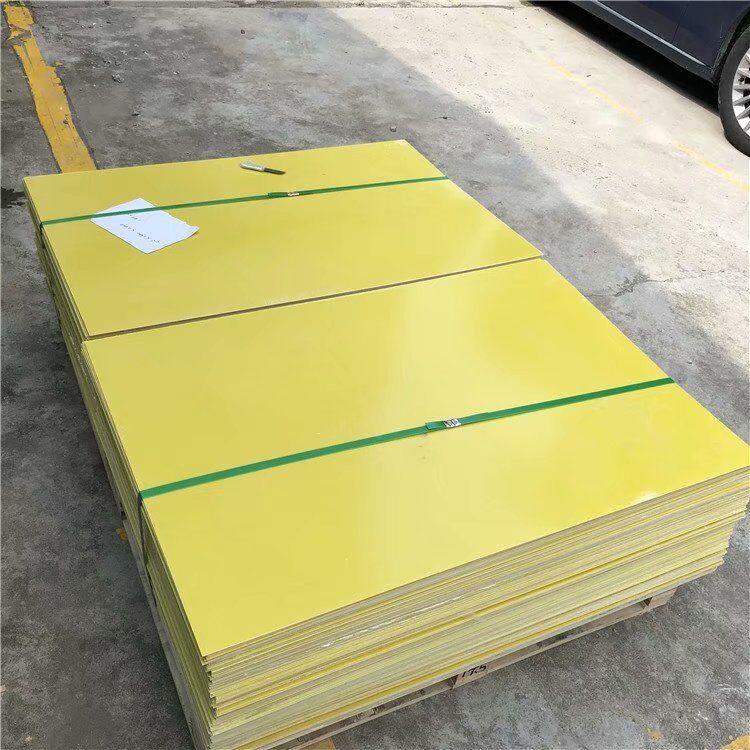
The 3240 epoxy sheet is manufactured from alkali-free E-glass fiberglass cloth thoroughly impregnated with high-quality epoxy resin. This composite undergoes hot-pressing and thermal curing processes that create a dense, rigid structure with exceptional electrical and mechanical properties. The material strictly complies with IEC 60893 standards as type EPGC 201, ensuring global compatibility and reliability across diverse industrial applications.
This international standardization represents more than a regulatory checkbox. For equipment manufacturers serving multinational markets, compliance with IEC 60893 guarantees consistent dielectric properties and physical dimensions, eliminating the risk of non-compliance in export-oriented equipment. The standardization also facilitates interchangeability in maintenance and repair scenarios, where replacement parts must meet identical performance specifications regardless of geographic sourcing.
The B-Class Thermal Rating Advantage
Classified as a B-class insulating structural material, 3240 epoxy sheet maintains stable mechanical and electrical properties under continuous operating temperatures up to 120°C. This thermal classification addresses a critical operational window in industrial equipment. Many transformers, motors, and switchgear components generate sustained heat during normal operation, and insulation materials must maintain their protective function without degradation over extended service periods.
The thermal stability of 3240 epoxy sheet directly impacts equipment reliability. Unlike materials that soften or deform under operational heat, this laminate preserves its structural integrity, preventing the warping or sagging that can create electrical clearance violations. For mounting plates and busbar supports, this dimensional stability under thermal load translates to consistent electrical isolation throughout the equipment's service life.
Moisture Resistance in Challenging Environments
Industrial environments rarely provide ideal conditions. Humidity, condensation, and occasional exposure to process fluids create scenarios where insulation materials must resist moisture absorption. The 3240 epoxy sheet exhibits water absorption below 0.5%, a specification that proves critical in oil-immersed transformers and damp locations.
Moisture absorption directly correlates with insulation breakdown risk. When water molecules penetrate insulating materials, they create conductive pathways that compromise dielectric strength. The low moisture absorption of 3240 epoxy sheet maintains high insulation resistance even in humid environments, preserving the safety margin that prevents electrical arcing and equipment failure.
Machining Precision for Complex Assemblies
The manufacturing of electrical equipment involves precision fabrication of insulating components with intricate geometries. Mounting brackets, terminal boards, and slot wedges require clean edges, accurate holes, and burr-free surfaces for proper assembly. The 3240 epoxy sheet is formulated specifically for excellent punching and drilling performance, enabling the creation of complex insulating components without delamination or surface tear-out.
This machinability advantage reduces manufacturing costs and improves production efficiency. CNC machining centers can process 3240 epoxy sheet with standard tooling, achieving tight tolerances without specialized equipment. For manufacturers producing high volumes of electrical components, this ease of fabrication directly impacts production throughput and quality consistency.
Structural Integrity Beyond Insulation
While electrical insulation represents the primary function, 3240 epoxy sheet delivers significant mechanical capabilities. The synergy of epoxy resin and glass cloth reinforcement provides high compressive strength and stiffness, allowing the material to replace metal brackets in applications where electrical isolation is critical.
This dual functionality streamlines equipment design. Rather than using metal structural components that require separate insulation measures, engineers can specify 3240 epoxy sheet for load-bearing insulation components. This design approach reduces part count, simplifies assembly, and eliminates the grounding requirements associated with conductive structural elements.
Chemical Resistance in Industrial Settings
Industrial electrical equipment operates in environments where exposure to oils, solvents, and alkaline solutions is common. Transformer oils, lubricants, and cleaning agents can degrade insulation materials over time, creating maintenance challenges and replacement costs. The 3240 epoxy sheet demonstrates good resistance to these common industrial chemicals, maintaining its properties despite routine exposure.
This chemical resilience extends equipment service intervals. Insulation components that resist degradation from oil contact or solvent exposure require less frequent inspection and replacement, reducing maintenance downtime and lifecycle costs. For equipment manufacturers, specifying chemically resistant insulation materials enhances their products' reputation for durability and low maintenance requirements.
Applications Across Power Distribution Infrastructure
The versatility of 3240 epoxy sheet manifests in its widespread adoption across power distribution equipment. In switchgear panels, the material serves as mounting boards that provide electrical isolation between busbars and grounded enclosures. In transformers, it functions as structural supports and barriers that maintain clearance distances in oil-immersed environments. Motor slot wedges fabricated from 3240 epoxy sheet secure winding conductors while providing phase-to-phase insulation.
These applications share common requirements: reliable dielectric strength, mechanical stability, and long-term durability. The consistent performance of 3240 epoxy sheet across diverse equipment types has established it as a default specification in electrical engineering standards and procurement guidelines.
Shenzhen Xiongyihua Plastic Insulation Ltd.: Delivering Certified Quality
For organizations seeking reliable sources of industrial-grade insulation materials, Shenzhen Xiongyihua Plastic Insulation Ltd. has established itself as a professional integrated manufacturer specializing in high-performance engineering plastics and insulation materials. Founded in 2006 and headquartered in Shenzhen, China, the company operates with a clear strategic positioning: providing material solutions that meet international standards while offering comprehensive fabrication services.
The company's 3240 epoxy sheet production adheres to ISO9001 Quality Management System Certification and carries SGS Material Certification, ensuring that material properties match published specifications. With RoHS Environmental Compliance Certification and ISO14001 Environmental Management System Certification, the materials meet stringent environmental standards required for global markets.
Beyond material supply, Shenzhen Xiongyihua Plastic Insulation Ltd. offers integrated fabrication services including CNC carving, laser engraving, precision cutting, drilling, and tapping. This capability allows customers to source precision-machined insulation components rather than raw sheet material, streamlining their supply chains and reducing in-house machining requirements. The company's production capacity of approximately 1000 tons per month and supply ability of 100 tons per month per product line support both prototype development and high-volume production requirements.
Global Reach and Technical Support
With a global sales network spanning Asia, Europe, Australia, and the Americas, Shenzhen Xiongyihua Plastic Insulation Ltd. provides material selection consulting and technical support based on specific application environments. This international presence ensures that customers receive materials compliant with regional certification requirements while accessing technical expertise for optimizing material selection.
The company's experienced technical and management team processes custom designs from customer drawings, offering a one-stop material-plus-processing solution. For equipment manufacturers developing new products or redesigning existing platforms, this integrated approach accelerates development timelines and ensures that insulation components meet both electrical and mechanical specifications.
The Strategic Value of Standardized Insulation Materials
In an industry where equipment failures can trigger catastrophic consequences, the selection of proven, standardized insulation materials represents prudent engineering practice. The 3240 epoxy glass cloth laminate delivers a balanced combination of electrical insulation, mechanical strength, thermal stability, and chemical resistance that addresses the core requirements of power distribution equipment.
For procurement managers and design engineers evaluating insulation materials, the global standardization, extensive application history, and consistent performance record of 3240 epoxy sheet provide confidence in long-term reliability. When sourced from certified manufacturers offering comprehensive fabrication services, this material becomes more than a component specification—it becomes a strategic enabler of equipment quality and operational safety.
https://www.xyhplastic.com
Shenzhen XiongYiHua Plastic Insulation LTD.